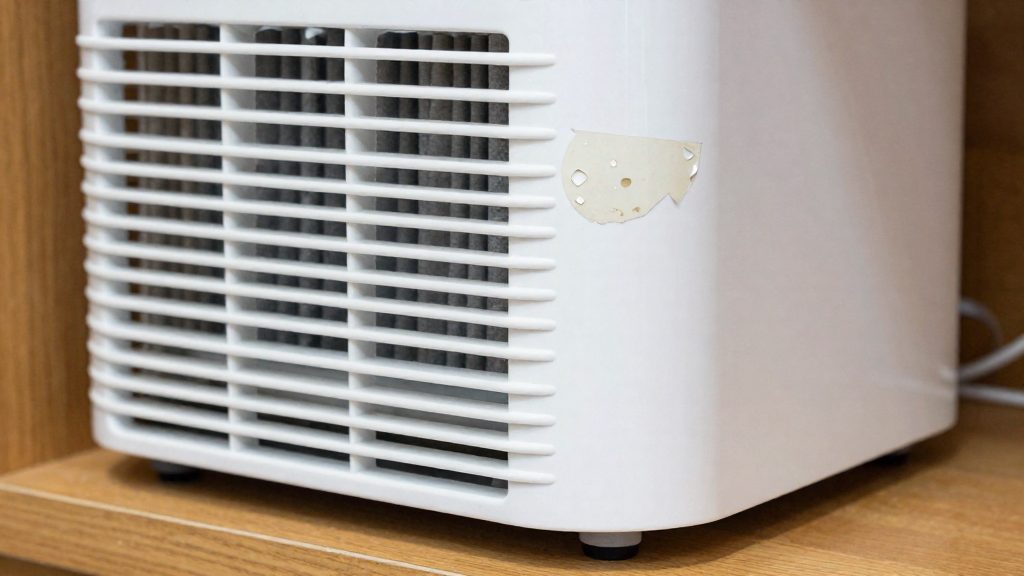
Ozone can become a problem indoors when a device sold as an air cleaner produces it, even though most indoor ozone comes from outdoor air. Health Canada advises against using ozone generators in homes. The ozone they produce may harm health, and they also create other harmful chemicals. Most indoor ozone, however, comes from outdoor air, so the main controllable risk is the ozone a device adds to the room itself.
Why does ozone pose a problem indoors?
Health effects of exposure
Health Canada lists the following effects of ozone exposure (2022-07-06):
- Coughing
- Irritation of the eyes, nose and throat
- Chest discomfort
- Shortness of breath
- Reduced lung function
People with an existing breathing condition are more sensitive to ozone, so the same exposure carries a higher risk for them.
Where indoor ozone comes from
Most indoor ozone originates outdoors. Ozone levels usually peak in the afternoon. To limit exposure during these peaks, Health Canada advises running an air conditioner instead of opening windows (Health Canada, 2022-07-06).
Choosing a device without ozone emissions
When buying a portable air cleaner, Health Canada advises avoiding models that produce ozone (2024-05-31). For devices that have passed ozone-emission testing, it points to the California Air Resources Board (CARB), which publishes that list.
California sets a numeric limit. Under AB 2276, CARB caps ozone emissions from indoor air cleaners at 0.05 ppm (50 ppb). Devices above that limit cannot be sold in the state, and manufacturers must obtain CARB certification to sell them there (IQAir, 2026-03-17).
Health Canada’s older leaflet, “Ozone generators may be dangerous to your health” (catalogue no. H46-2/99-230E-PDF), was revised in September 2000.
What does Health Canada say about ozone generators?
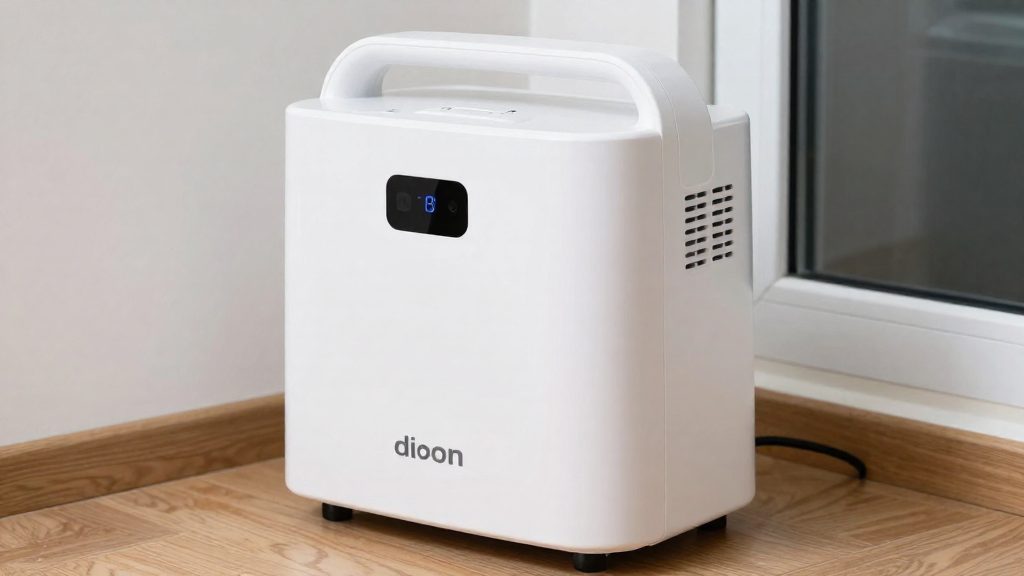
Health Canada advises against using ozone generators in homes. According to Health Canada (2022-07-06), these devices are sold as indoor air cleaners, but the ozone they produce may harm health, and they also create other harmful chemicals. The agency’s position is long-standing: its leaflet Ozone generators may be dangerous to your health (catalogue no. H46-2/99-230E-PDF) is a revised edition dated September 2000.
Selection criteria for portable air cleaners
When buying a portable air cleaner, Health Canada (2024-05-31) says to avoid devices that produce ozone. The practical check is to read the product documentation for any ozone output claim before purchase. A device that presents ozone as a cleaning function falls into the category the agency advises against.
Using the CARB list as a reference
Health Canada (2024-05-31) notes that the California Air Resources Board (CARB) lists air cleaners that have passed ozone-emission testing. California’s rules provide a numeric benchmark:
| Reference point | Limit or status | Source |
|---|---|---|
| Health Canada position | Advises against ozone generators in homes | Health Canada (2022-07-06) |
| CARB list | Air cleaners that passed ozone-emission testing | Health Canada (2024-05-31) |
| California AB 2276 cap | 0.05 ppm (50 ppb) for indoor air cleaners | IQAir, manufacturer summary (2026-03-17) |
Under AB 2276, devices above the 0.05 ppm limit cannot be sold in California, and manufacturers must obtain CARB certification. The CARB list therefore offers a verifiable way to check a specific model, while the Health Canada position applies regardless of whether a model is certified.
What is the indoor ozone limit?
California limits ozone emissions from indoor air cleaners to 0.05 ppm (50 ppb), a device-side cap. That figure applies to what a machine emits, not to the air in a room, so it helps you screen equipment but does not tell you how much ozone is safe to breathe.
California emission cap (AB 2276)
| Parameter | Value |
|---|---|
| Maximum ozone emission from indoor air cleaners | 0.05 ppm (50 ppb) |
| Status of devices above the limit | Cannot be sold in California |
| Certification requirement | Manufacturers must obtain CARB certification |
Checking a device against the cap
- Look for CARB certification on the product or its documentation.
- Check whether the model appears on the California Air Resources Board (CARB) list of air cleaners that have passed ozone-emission testing. Health Canada cites this list when recommending portable air cleaners.
- A product sold outside California is not covered by the state cap, so the CARB list is the practical way to confirm it was tested.
Limiting exposure to outdoor ozone
Most indoor ozone originates outdoors, so exposure depends on outdoor conditions. Ozone usually peaks in the afternoon. During those peaks, keeping windows closed and using an air conditioner limits the amount that enters the home.
Ionizers and Electrostatic Filters: What Are the Risks?
Some ionizers and electrostatic air cleaners may produce ozone, so the same ozone check applies to them. Health Canada advises against using ozone generators in homes. Although they are sold as indoor air cleaners, the ozone they produce may harm health, and they create other harmful chemicals. The key question for any ionizing device is therefore whether it produces ozone at all.
Health effects of ozone exposure
Ozone can cause coughing, irritation of the eyes, nose and throat, chest discomfort, shortness of breath and reduced lung function. People with an existing breathing condition are more sensitive to it.
Ozone limits and certification
| Reference point | Value or status | Source |
|---|---|---|
| California ozone cap for indoor air cleaners (AB 2276) | 0.05 ppm (50 ppb) | IQAir (2026), citing CARB rules |
| Portable air cleaners, Health Canada guidance | Avoid devices that produce ozone | Health Canada (2024) |
| CARB listing | Air cleaners that passed ozone-emission testing | Health Canada (2024) |
Under the California rule, devices above 0.05 ppm cannot be sold in the state, and manufacturers must obtain CARB certification.
How to check an ionizing device
- Check for CARB listing. The California Air Resources Board publishes a list of air cleaners that have passed ozone-emission testing. A device absent from that list has not been shown to meet the state’s limit.
- Read the product specifications for ozone output. Units marketed as generating ozone, or described as “ozone” or “oxidizing” cleaners, fall into the category Health Canada advises against.
- Check the emission data. For ionizers sold outside California, look for a stated ozone emission level in the product documentation before buying.
How to choose an ozone-free air purifier
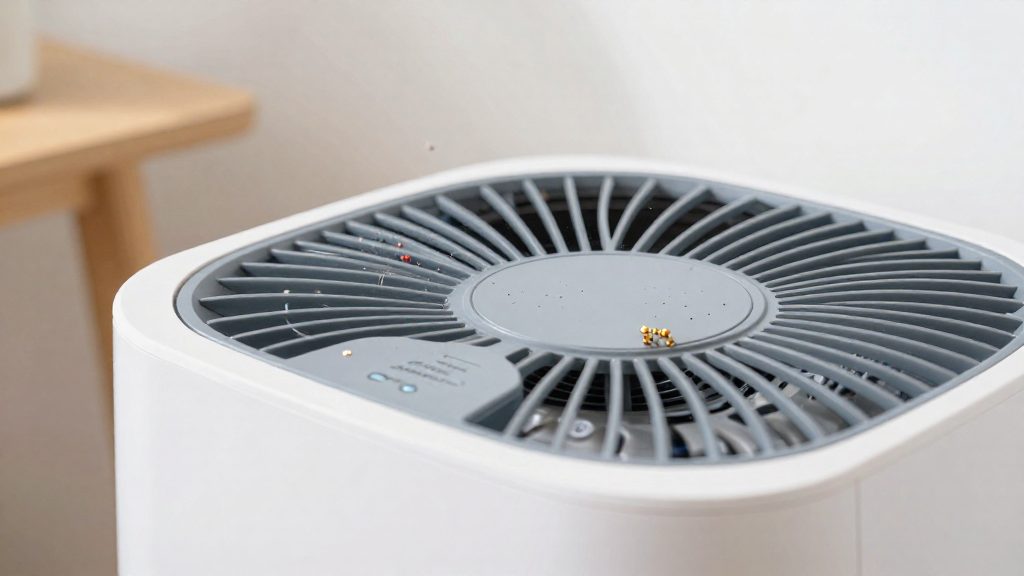
For a portable air cleaner, the first selection criterion is ozone output. Health Canada says to avoid devices that produce ozone, and the checks below help you screen for them before you buy.
| Check | What it tells you | Source |
|---|---|---|
| Ozone output | Avoid devices that produce ozone | Health Canada (2024) |
| CARB listing | The California Air Resources Board (CARB) lists air cleaners that have passed ozone-emission testing | Health Canada (2024) |
| CARB limit | Indoor air cleaners sold in California are capped at 0.05 ppm (50 ppb) of ozone; devices above that limit cannot be sold there | IQAir (2026), citing AB 2276 |
Use the CARB listing as a shortlist filter. A device that appears on it has passed testing, and a manufacturer selling in California must obtain CARB certification, so the certification status is the more reliable signal than a product’s marketing copy.
People with an existing breathing condition are more sensitive to ozone, according to Health Canada (2022). For these buyers, excluding ozone-producing devices matters more, and a wrong choice carries greater risk.
CARB Certification and the Ozone Cap: What the Sources Cover
The California Air Resources Board (CARB) listing is the verifiable reference point for ozone safety in portable air cleaners. Health Canada advises against using ozone generators in homes, and when choosing a portable air cleaner it advises avoiding devices that produce ozone. It points buyers to the CARB list of air cleaners that have passed ozone-emission testing (Health Canada, 2024-05-31).
What CARB Certification Covers
California’s AB 2276 sets a limit on the ozone emission from indoor air cleaners. The key figures are:
| Parameter | Value | Source |
|---|---|---|
| Ozone emission cap | 0.05 ppm (50 ppb) | IQAir (manufacturer), 2026-03-17 |
| Sales rule | Devices above the cap cannot be sold in California | IQAir (manufacturer), 2026-03-17 |
| Certification requirement | Manufacturers must obtain CARB certification | IQAir (manufacturer), 2026-03-17 |
The limit applies to the appliance’s emissions, not to the air in a room. A CARB listing therefore answers one question: how much ozone the device releases. It does not indicate how the device performs against other indoor pollutants.
Using the Labels When You Buy
- Check the product documentation for an ozone-emission statement.
- Search CARB’s list of air cleaners that passed ozone-emission testing, and confirm that the exact model appears on it.
- Treat a UL 2998 mark as a claim to verify in the documentation.
Do Air Purifiers Help Against Mould?
Mould grows where moisture persists, so an air purifier does not address its cause. A portable air cleaner can capture airborne particles, but it does not dry out walls, cold surfaces or damp materials. A purifier should not be treated as a mould remedy. For mould, the relevant work is controlling moisture at its source.
The purifier characteristic that matters most here is ozone output. Some units are sold as indoor air cleaners while producing ozone. Health Canada (2022) advises against using ozone generators in homes, noting that they create other harmful chemicals. Ozone can cause coughing, irritation of the eyes, nose and throat, and reduced lung function, and people with an existing breathing condition are more sensitive to it.
When a portable unit is used for particles, check its ozone rating before buying. Health Canada (2024) advises avoiding devices that produce ozone and points to the CARB-listed air cleaners that have passed ozone-emission testing.
| Device characteristic | What it means | Source |
|---|---|---|
| Sold as an indoor air cleaner but produces ozone | Health Canada advises against using it in homes | Health Canada (2022) |
| Listed by CARB as passing ozone-emission testing | Meets the ozone-emission testing used for listing | Health Canada (2024) |
| Ozone emissions above 0.05 ppm (50 ppb) | Cannot be sold in California; manufacturers must obtain CARB certification | CARB, AB 2276, as reported by IQAir (2026) |
Practical steps for mould, in order:
- Locate and repair the water source, such as a leak or a damp wall.
- Reduce surface condensation by keeping interior surfaces warmer and by ventilating after showers and cooking.
- Use a ventilation system or extractor fan to move humid indoor air outside.
- If you add a portable cleaner for particles, confirm the device does not produce ozone before using it.
Frequently asked questions
Is an ozone generator a safe way to clean the air at home?
No. Health Canada advises against using ozone generators in homes, even when they are marketed as indoor air cleaners. The ozone they release can harm health, and they also produce other harmful chemicals (Health Canada, 2022-07-06).
What can I do on days when outdoor ozone is high?
Health Canada recommends running an air conditioner rather than opening windows when ozone levels peak, which usually happens in the afternoon (Health Canada, 2022-07-06). This keeps outdoor ozone from entering through open windows.
How can I tell whether a portable air cleaner produces ozone?
Health Canada advises avoiding portable air cleaners that produce ozone (Health Canada, 2024-05-31). For models that have passed emission testing, check the list published by the California Air Resources Board (CARB). Under California’s AB 2276, a device must meet a cap of 0.05 ppm and hold CARB certification to be sold in the state (IQAir, 2026-03-17).