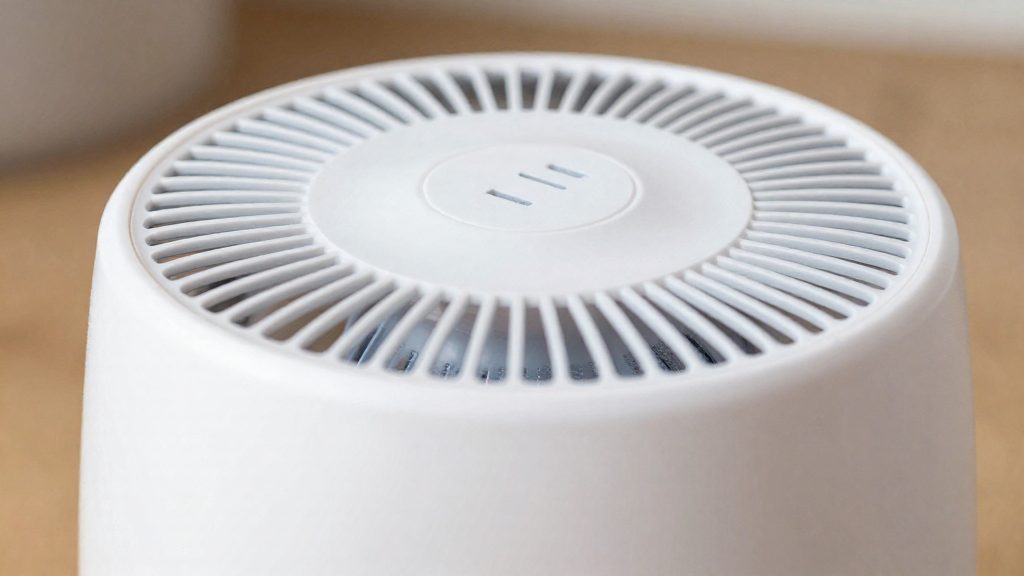
Indoor air in Canada is generally driest in winter. According to Health Canada (2016), relative humidity in homes tends to be lower in winter and higher in summer. For winter, ATCO Energy (January 2026) recommends relative humidity of 30–35% to help prevent condensation on windows, within the 30–50% range that Health Canada and other organizations advise for indoor air.
Why Is Indoor Air So Dry in Winter in Canada?
Health Canada’s publication on indoor relative humidity confirms the seasonal pattern but does not give seasonal figures. The underlying mechanism is physical: cold outdoor air holds less moisture than warm air. When that air is brought indoors and heated, its moisture content stays the same while its relative humidity drops, so a home with few moisture sources can fall well below the recommended range during the heating season.
Target Levels by Season
| Context | Recommended relative humidity | Source |
|---|---|---|
| Winter, to limit window condensation | 30–35% | ATCO Energy (January 2026) |
| General indoor guidance | 30–50% | ATCO Energy (January 2026), citing Health Canada and other organizations |
Choosing a Humidifier Type
- Whole-home humidifiers connect to the furnace and are the easiest long-term option, according to ATCO Energy (January 2026).
- Portable units suit bedrooms and offices, where a single room needs adjusting.
- Portable units need frequent cleaning, because dirty ones can spread bacteria or mold. Check indoor levels with a hygrometer to confirm the output matches the target range.
What humidity level to target in winter?
Indoor air is usually driest in the cold months. Health Canada (2016) notes that relative humidity in homes is generally lower in winter and higher in summer. The right winter target is a balance: enough moisture to limit condensation on cold surfaces, but not so much that mold can grow. Two thresholds define that window.
Target ranges and thresholds
| Level | Relative humidity | Source |
|---|---|---|
| Winter target to limit window condensation | 30–35% | ATCO Energy (2026-01-12) |
| General indoor range recommended by Health Canada and other organizations | 30–50% | ATCO Energy (2026-01-12) |
| Mold risk above | About 55–60% | ATCO Energy (2026-01-12) |
Working within the window
ATCO Energy recommends a winter target of 30–35% relative humidity, which helps prevent condensation on windows. Staying below the mold risk threshold of about 55–60% keeps the upper limit clear. The 30–35% winter target sits at the low end of the general 30–50% indoor range, so in cold weather you should aim for the lower part of that range.
Choosing a humidifier type
ATCO Energy describes two main approaches:
- Whole-home humidifiers, which connect to the furnace and are the easiest long-term option.
- Portable units, which suit bedrooms and offices.
The choice depends on whether you need to humidify one room or the whole house. According to ATCO Energy (2026), whole-home humidifiers connect to the furnace and are the easiest long-term option, while portable units suit bedrooms and offices. The target range is the same for both: ATCO Energy recommends 30–35% relative humidity in winter to help prevent condensation on windows, and says Health Canada and other organizations recommend keeping indoor humidity between 30–50%.
Portable or whole-home humidifier: which to choose
| Factor | Portable unit | Whole-home unit |
|---|---|---|
| Installation | Standalone, plugs into an outlet | Connects to the furnace |
| Typical use | Bedrooms and offices | Whole house |
| Notes from ATCO Energy (2026) | Clean often, because dirty units can spread bacteria or mold | Easiest long-term option |
A portable humidifier suits a single room where you spend long periods, such as a bedroom at night. A whole-home humidifier distributes moisture through the existing heating system, so it covers every room without a separate unit in each.
Regardless of type, a hygrometer is the only way to confirm the actual level. Place it at a typical height in the room, not near the humidifier’s outlet, and compare readings against the 30–35% winter target. Health Canada’s factsheet on indoor relative humidity (2016) notes that levels in homes tend to be lower in winter, so winter readings are likely to be lower than summer ones.
How to prevent condensation on windows?
Condensation on winter windows usually means indoor relative humidity is too high for the cold glass surface. According to ATCO Energy (2026), keeping relative humidity at 30–35% in winter helps prevent window condensation. The same source says Health Canada and other organizations recommend 30–50% for indoor humidity overall. Health Canada’s factsheet on relative humidity (2016) notes that homes generally have lower humidity in winter than in summer, so the winter target is the main concern.
| Reference point | Relative humidity | Source |
|---|---|---|
| Winter target to limit window condensation | 30–35% | ATCO Energy (2026) |
| Recommended indoor range | 30–50% | ATCO Energy (2026), citing Health Canada and other organizations |
| Mold risk threshold (approximate) | Above 55–60% | ATCO Energy (2026) |
Measure before adjusting
Place a hygrometer in the room with the most condensation, away from direct heat sources and outside walls. ATCO Energy advises tracking levels with a hygrometer before making changes, so you know whether the reading is above the 30–35% winter target.
Choose the right humidifier type
ATCO Energy states that whole-home humidifiers connect to the furnace and are the easiest long-term option. Portable units suit bedrooms and offices. Because portable units can spread bacteria or mold when dirty, clean them often, following the manufacturer’s instructions.
How to Maintain Your Humidifier
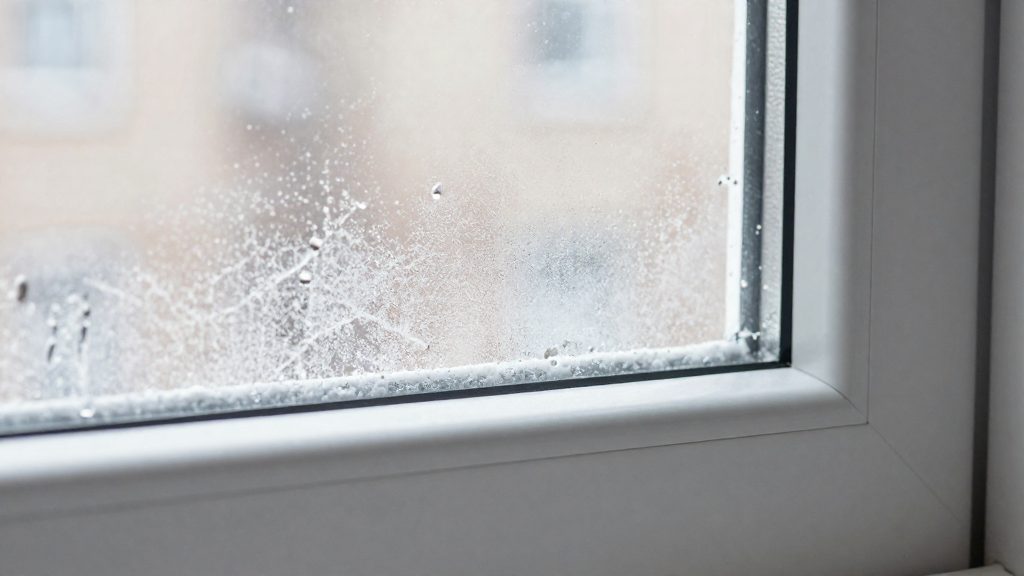
Humidifier maintenance matters because the unit itself can become a source of contamination. ATCO Energy (2026) advises cleaning portable units often, since a dirty unit can spread bacteria or mold into the air it is meant to improve. ATCO Energy describes whole-home humidifiers, which connect to the furnace, as the easiest long-term option. For upkeep, follow the manufacturer’s instructions.
Target Levels Before You Adjust Anything
| Reference point | Relative humidity | Source |
|---|---|---|
| Recommended winter target, to help prevent window condensation | 30–35% | ATCO Energy (2026) |
| Indoor range recommended by Health Canada and other organizations | 30–50% | ATCO Energy (2026) |
| Approximate level above which mold risk rises | 55–60% | ATCO Energy (2026) |
Health Canada (2016) notes that indoor relative humidity tends to be lower in winter, which is why a humidifier is often needed during the heating season.
Cleaning a Portable Unit
Clean the unit on a regular schedule rather than only when it looks dirty. The general steps are:
- Unplug the unit before handling the tank or base.
- Empty any remaining water.
- Scrub the tank and water-contact surfaces to remove residue and biological growth.
- Rinse thoroughly, then let all parts dry before refilling.
Avoid leaving standing water in the tank between uses, because stagnant water is where contamination starts.
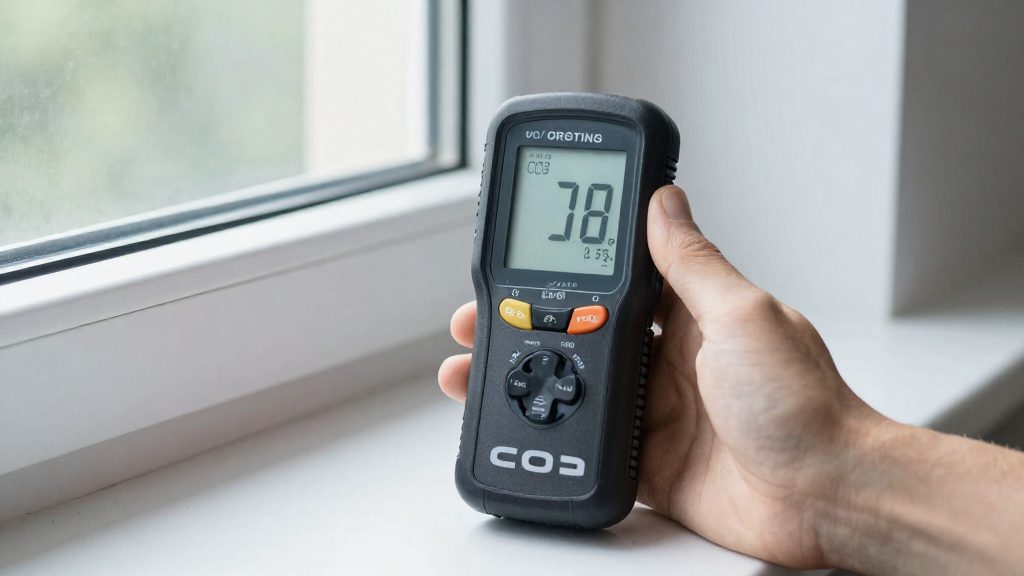
Monitoring With a Hygrometer
A hygrometer shows whether the unit is actually moving humidity toward the target range. ATCO Energy (2026) recommends using one to track levels. Check readings at several points in the home, especially bedrooms and offices where portable units are typically used. If readings climb toward the 55–60% range, reduce output or switch the unit off, because mold risk increases at those levels.
Whole-Home Humidifiers
Whole-home humidifiers connected to the furnace are the easiest option over the long term, according to ATCO Energy (2026). For upkeep, follow the manufacturer’s instructions.
Measuring humidity with a hygrometer
A hygrometer displays relative humidity (RH), the percentage of moisture the air holds compared with the maximum it could hold at that temperature. Because RH tends to be lower in winter than in summer, according to Health Canada (2016), a winter reading is the most useful check when you are deciding whether to run a humidifier. Health Canada’s guidance on indoor humidity does not give a single fixed figure, so the thresholds below come from ATCO Energy’s 2026 guidance.
| Relative humidity | Source | What it indicates |
|---|---|---|
| 30–35% (winter) | ATCO Energy (January 2026) | Recommended winter target to help prevent condensation on windows |
| 30–50% | ATCO Energy (January 2026), citing Health Canada and other organizations | Indoor range that ATCO Energy says these bodies recommend |
| Above about 55–60% | ATCO Energy (January 2026) | Mold risk increases |
How to take useful readings
- Placement: Position the hygrometer at a typical living height, away from windows, exterior walls, radiators, and the outlet of any humidifier. These spots give readings that do not reflect a local microclimate.
- Timing: Record values at different times of day, since a single reading can be misleading. ATCO Energy recommends using a hygrometer to track levels over time.
- Comparison: Compare readings across rooms. A bedroom or office can differ from the rest of the home, which is relevant when choosing between a whole-home unit and a portable one.
Using the readings to adjust humidifier output
Start a humidifier at a low setting and check the hygrometer after a stable period before increasing output. If readings climb above the 30–35% winter target, reduce output. If they approach 55–60%, switch the unit off, because mold risk rises at that level. Readings that stay near the winter target of 30–35% indicate the setting is working. Whole-home humidifiers connect to the furnace and are the easiest long-term option, according to ATCO Energy (2026).
When does humidity become a mold risk?
According to ATCO Energy (2026), mold risk rises when indoor relative humidity (RH) goes above about 55–60%, and cold surfaces such as windows are where condensation shows first. According to ATCO Energy (2026), mold risk rises when indoor RH goes above about 55–60%. Health Canada’s factsheet on indoor relative humidity (2016) says levels in homes tend to be lower in winter and higher in summer.
Winter raises a different risk. Warm indoor air holds more moisture than cold air, so when it meets a cold window pane, the moisture turns into condensation. ATCO Energy recommends 30–35% RH in winter to help prevent condensation on windows, and notes that Health Canada and other organizations recommend keeping indoor humidity between 30–50%.
| RH level | Context | Source |
|---|---|---|
| 30–35% | Winter target to help prevent window condensation | ATCO Energy (2026) |
| 30–50% | Indoor range recommended by Health Canada and other organizations | ATCO Energy (2026) |
| Above about 55–60% | Mold risk rises | ATCO Energy (2026) |
To check where your home stands, place a hygrometer away from heaters and direct sunlight, and read it over several days. Compare the readings with the cold surfaces in the room, because a value that looks acceptable in the middle of the room can still allow condensation on a window.
Frequently asked questions
What relative humidity should I aim for in a Canadian home in winter?
ATCO Energy (January 2026) recommends relative humidity of 30–35% in winter, a level that helps limit condensation on window glass. This sits inside the 30–50% general range that ATCO attributes to Health Canada and other organizations.
Which type of humidifier is simplest for a whole house?
A whole-home humidifier connects to the furnace and treats the entire house, which ATCO Energy (January 2026) describes as the easiest long-term option. Portable units work better for a single room, such as a bedroom or home office, where you only need to adjust one space.
How can I tell if my home has become too humid after adding a humidifier?
Use a hygrometer to check indoor levels, because ATCO Energy (January 2026) places the start of rising mold risk at about 55–60% relative humidity. If readings climb toward that range, reduce the humidifier output before moisture builds up on walls and windows.