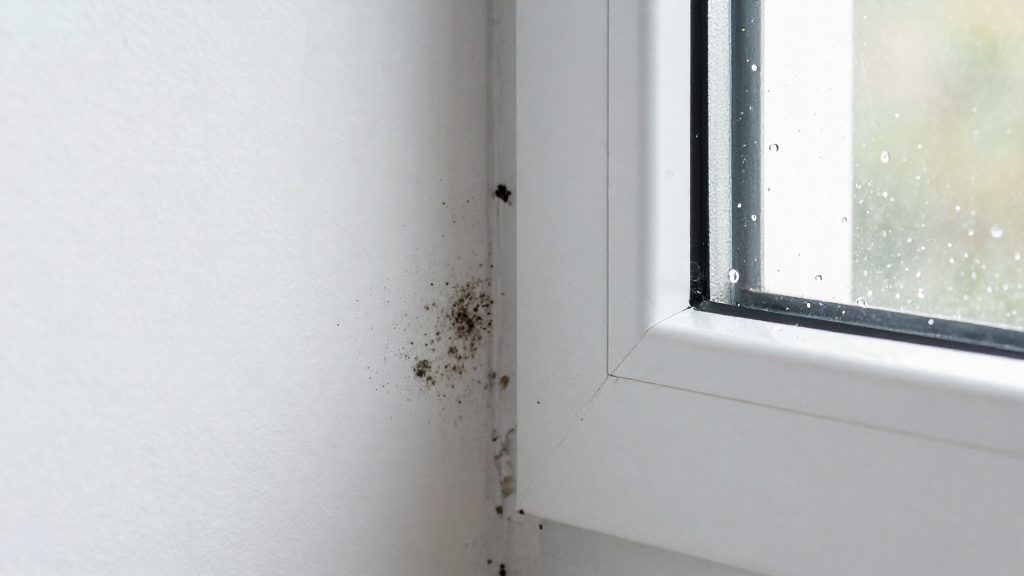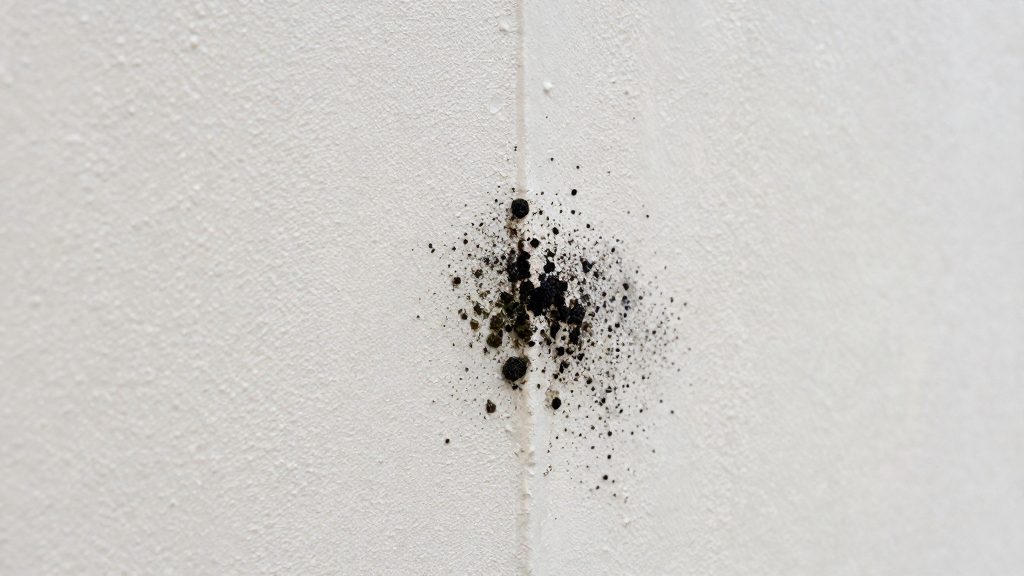
Mould behind wallpaper usually grows on the wall surface under the paper, fed by moisture that the paper traps. Health Canada identifies condensation, plumbing leaks, water infiltration and flooding as the main causes. A sheet that wrinkles or peels is often the first visible sign of excess moisture, but the damage is frequently larger than the stain. Mould exposure in homes is associated with more asthma-related symptoms, such as chronic wheezing and irritation (Health Canada, 2016), so the affected area should be assessed by size before any removal begins.
What Does Mouldy Wallpaper Really Hide?
Warning signs under the paper
Wrinkling is a sign of excess moisture in the wall. Mould can spread beneath an intact-looking surface, so Health Canada recommends thoroughly cleaning all mould, visible or not, and repairing leaks quickly. Mould that returns after cleaning, mould suspected inside the wall cavity, or a single patch over 3 m² calls for professional help.
Sizing the affected area
Health Canada classifies affected zones by size:
| Size category | Affected area | Recommended action |
|---|---|---|
| Small | Three patches or fewer, under 1 m² in total | Cleaning by the occupant is possible |
| Medium | More than three patches, or between 1 and 3 m² | Expert assessment recommended |
| Large | A single patch over 3 m² | Work entrusted to a professional |
Controlling the moisture source
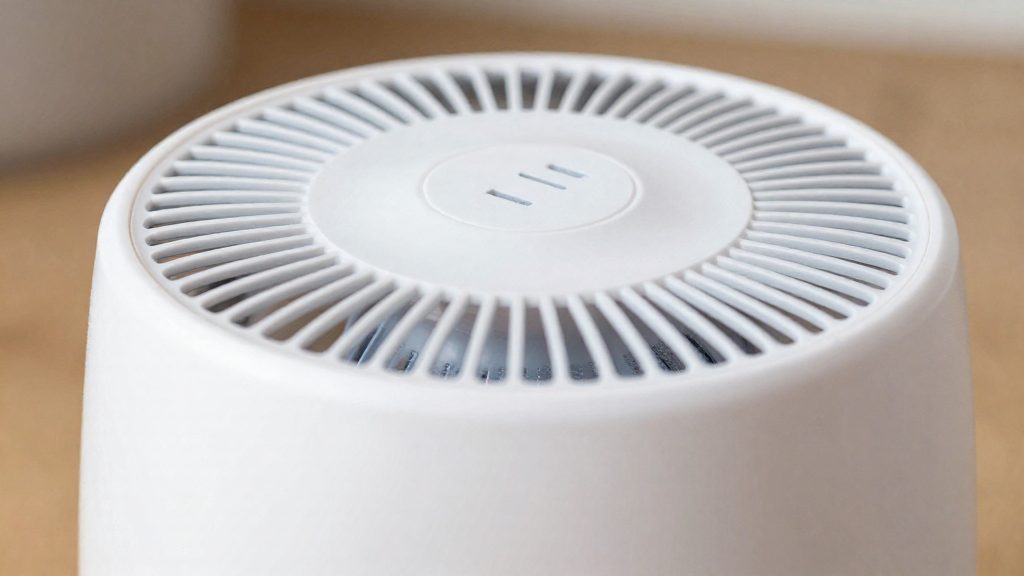
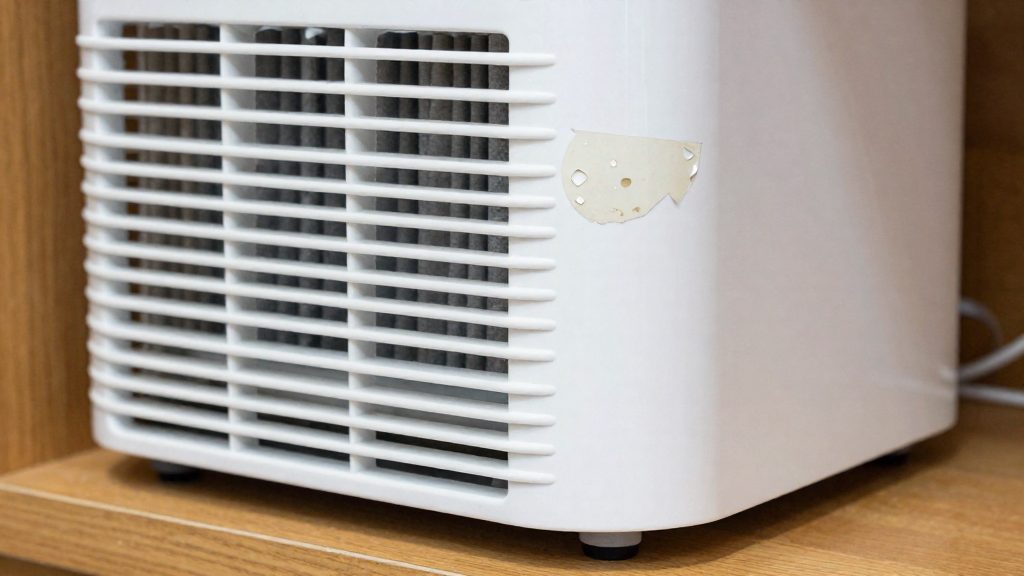
Keep relative humidity between 30% and 50%. Use a dehumidifier when humidity exceeds 50% or when condensation forms on cold surfaces. Poor ventilation contributes to condensation: the source of excess moisture must be removed before new wallpaper is applied, or the problem will return.
Protective equipment
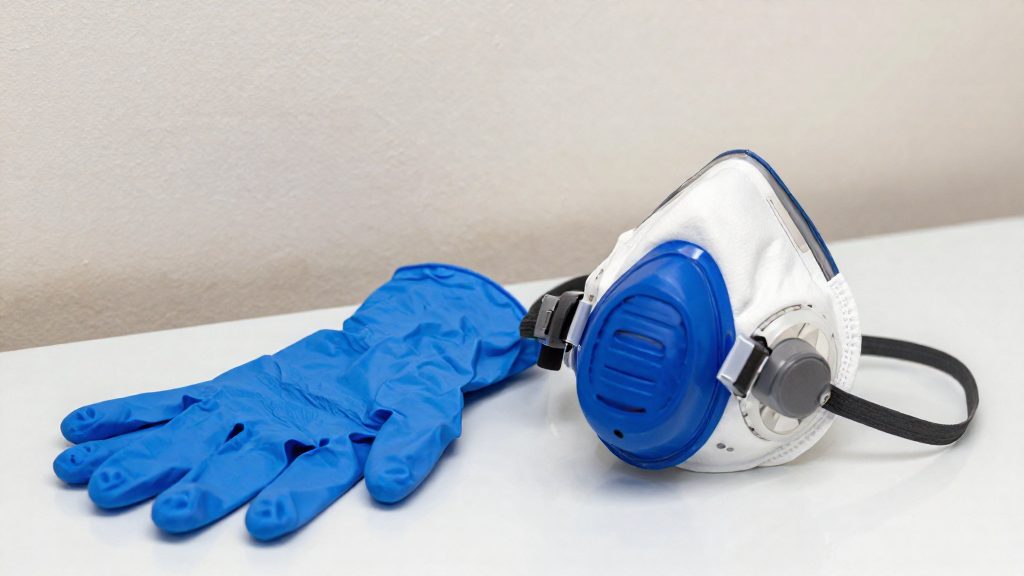
Before disturbing mouldy paper, wear glasses or sealed goggles, a properly fitted disposable N95 respirator (or P100/N100 for higher protection), and disposable gloves.
Black mould behind wallpaper: should you be worried?
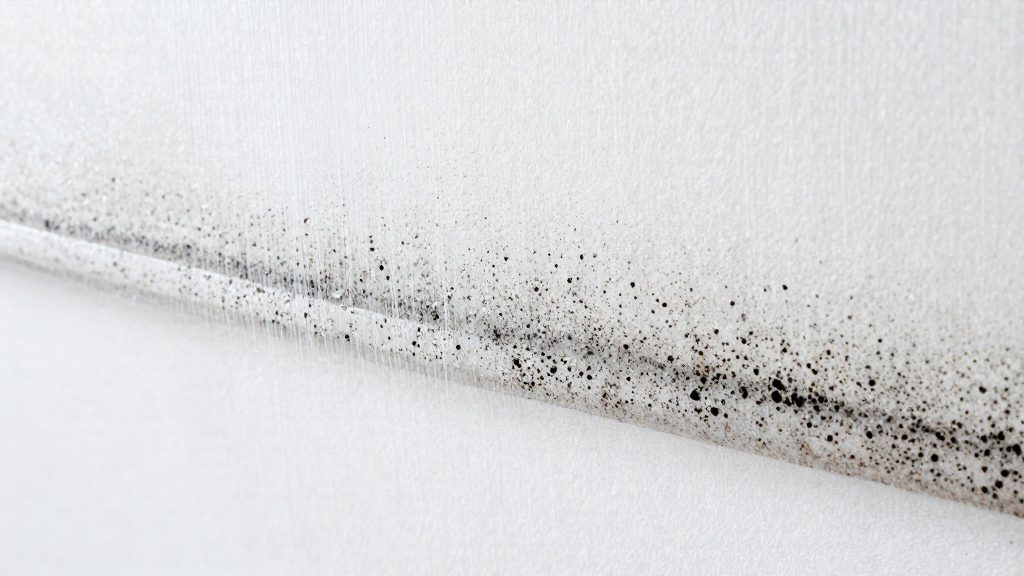
Black mould behind wallpaper is a sign of excess moisture and should be cleaned and its cause addressed, not ignored. Colour alone does not tell you the health risk; size, location and moisture source guide the response. Health Canada sets no exposure limit for mould, because species and individual reactions vary widely, so air test results are not used to judge health risk for occupants. The practical response is to find the moisture source, clean thoroughly, and decide early whether a professional is needed.
Lifting or peeling wallpaper is an early warning. Health Canada identifies it as a sign of excessive humidity. The main causes of mould it lists are condensation (excess humidity, poor ventilation, low temperatures), plumbing leaks, water infiltration and flooding.
Assessing the size of the affected area
Use the size table above. A professional is also needed when mould is hidden inside walls or returns after cleaning.
Controlling the moisture source
Condensation is most likely on cold surfaces, such as the wall behind wallpaper on an exterior wall, so check that wall first when humidity runs high.
Cleaning and protection
Before cleaning, wear the protective equipment listed above. If the affected area falls in the medium or large category, or if the mould is hidden, stop and contact a professional rather than attempting removal yourself.
When to Call a Professional
Health Canada sorts mould problems by the size of the affected area, and that size determines whether a homeowner can handle the cleanup or needs a specialist. Behind wallpaper, a common warning sign is paper that bubbles, lifts, or wrinkles, which indicates excess moisture in the wall. The decision therefore rests on the extent and location of the growth.
Size-Based Thresholds
The thresholds are those in the table in the first section: small areas can be cleaned by the occupant, medium areas call for an expert assessment, and a single patch over 3 m² is work for a professional.
Situations Requiring Professional Intervention at Any Size
Size is not the only criterion. Call a professional when:
- Hidden mould is suspected inside the wall cavity, which is typical when wallpaper hides the growth.
- Mould returns after cleaning, which indicates the moisture source has not been resolved.
- The affected area exceeds 3 m² in a single patch.
Addressing the Underlying Cause
Health Canada recommends repairing leaks promptly. Once the source is fixed, keep indoor humidity in the range given earlier, using a dehumidifier when it rises above 50% or when condensation forms on cold surfaces.
How to Remove Wallpaper Without Spreading Spores?
Removing wallpaper over black mould is a containment task before it is a scraping task. The practical goal is to keep spores out of the air you breathe and out of the rest of the building. Check the size of the affected area first, because it determines whether you can work on it yourself.
Assess the Affected Area
Refer to the size table in the first section. Only the small category is suitable for occupant removal.
Protect Yourself and Isolate the Room
Put on the protective equipment described in the next section. Close the room’s door before you start so spores do not travel to other rooms. Keep the respirator sealed to your face throughout the job, not just during the scraping.
Dampen, Then Lift the Paper
Avoid dry scraping, which can raise dust and spores. If the area is small and visible, work in small sections and peel slowly. Medium or large areas, or hidden mould, call for expert assessment or a professional. Bubbling or wrinkling paper is a visible sign of excess humidity, as Health Canada notes, so the source of moisture should be identified before you reapply any covering.
Clean the Exposed Wall
Clean thoroughly any mould, visible or not, using the agents described in the cleaning section below.
Stop and call a professional if mould is hidden inside the wall, returns after cleaning, or covers a single patch over 3 m². Leaks, condensation, and water infiltration must be repaired quickly, otherwise the mould will return behind any new paper.
What protective equipment should you wear?
Health Canada (2016) lists a minimum set of protective equipment for cleaning mould: eye protection, a respirator and disposable gloves. The guidance applies to cleaning work the occupant can do, i.e. small areas.
| Item | Specification | Purpose |
|---|---|---|
| Eye protection | Goggles, sealed to the face | Blocks spores and cleaning solution from reaching the eyes |
| Respirator | Disposable N95, well fitted; P100/N100 for higher protection | Reduces inhalation of spores |
| Gloves | Disposable | Keeps mould and cleaning products off the skin |
Because exposure is associated with asthma-related symptoms, the minimum equipment should be worn even for a small area.
Fit and sequence
Put on the goggles and respirator before you touch the wallpaper. Keep the disposable gloves on for the whole task, and discard them once work is finished. Do not reuse disposable items on another room.
When the minimum equipment is not enough
The size classification sets the boundary for self-cleaning. Hidden mould inside walls, or mould that returns after cleaning, also falls outside what the basic kit covers.
Cleaning Without Bleach
Health Canada advises against using bleach to clean mould. For washable surfaces, its guidance recommends an unscented soap solution or baking soda instead. Once the wallpaper is stripped, these are the cleaning agents the guide names for the exposed wall.
| Cleaning agent | Guidance | Applies to |
|---|---|---|
| Bleach | Not recommended for mould removal | Not applicable |
| Unscented soap solution | Recommended | Washable surfaces |
| Baking soda | Recommended | Washable surfaces |
Applying the Recommended Agents
Wipe the affected area with a cloth dampened in the solution, working from clean areas toward the mould so it is not spread. Rinse the cloth often in clean water and replace it when it becomes visibly soiled. Let the surface dry completely afterwards, because the guide ties ongoing mould growth to excess moisture, and the cleaning step does not address the cause.
Protecting Yourself During Cleaning
Wear the full protective kit before disturbing the mould.
When the Surface Is Not Washable
The soap and baking soda recommendation applies only to washable surfaces. For porous or non-washable materials, do not improvise with harsh chemicals. Check the size and location of the affected area against the guide’s thresholds before deciding whether to hire a professional.
How to Prevent Mould From Coming Back
Mould that reappears after removing black mould behind wallpaper almost always means the moisture source was never corrected. Prevention therefore depends on controlling the moisture that feeds the growth, not only on treating the surface.
Control indoor humidity
A hygrometer shows whether the humidity level stays in the recommended range over time.
| Cause | Preventive action |
|---|---|
| Condensation (excess humidity, poor ventilation, low temperatures) | Keep relative humidity between 30% and 50%, use a dehumidifier when needed, and improve ventilation |
| Plumbing leaks | Repair them promptly |
| Water infiltration or flooding | Locate the entry point and correct it before covering the wall again |
Inspect the wall before re-papering
Wallpaper that bubbles, peels or wrinkles indicates excessive moisture behind it. Check for this before applying new paper, and confirm the wall is fully dry.
Know when to call a professional
Repeated growth in the same spot usually points to a moisture problem that surface cleaning cannot solve, so the source should be identified first.
What Humidity Level Should You Target at Home?
Health Canada recommends keeping indoor relative humidity between 30% and 50% (Health Canada, 2016). Relative humidity expresses how much water vapour the air holds compared with the maximum it could hold at that temperature. The same moisture level can be harmless in a warm room but cause condensation against a cold exterior wall, where it can soak into the paper and the plaster beneath it. Because you cannot judge humidity by feel, a hygrometer placed in the room gives a reading you can compare directly with the 30% to 50% range.
Health Canada’s guidance sets out a clear response for each situation:
| Condition | Recommended response |
|---|---|
| Relative humidity between 30% and 50% | Maintain the level and keep checking it with a hygrometer |
| Relative humidity above 50% | Run a dehumidifier as needed |
| Condensation forming on cold surfaces | Run a dehumidifier as needed |
| Wallpaper that wrinkles or lifts | Treat as a sign of excessive humidity |
Health Canada links condensation to three factors: excess humidity, poor ventilation and low temperatures. Ventilation is the factor you control most directly, so removing moisture at its source, for example by ventilating during cooking, showering or drying laundry, limits the humidity that reaches the wall behind the paper.