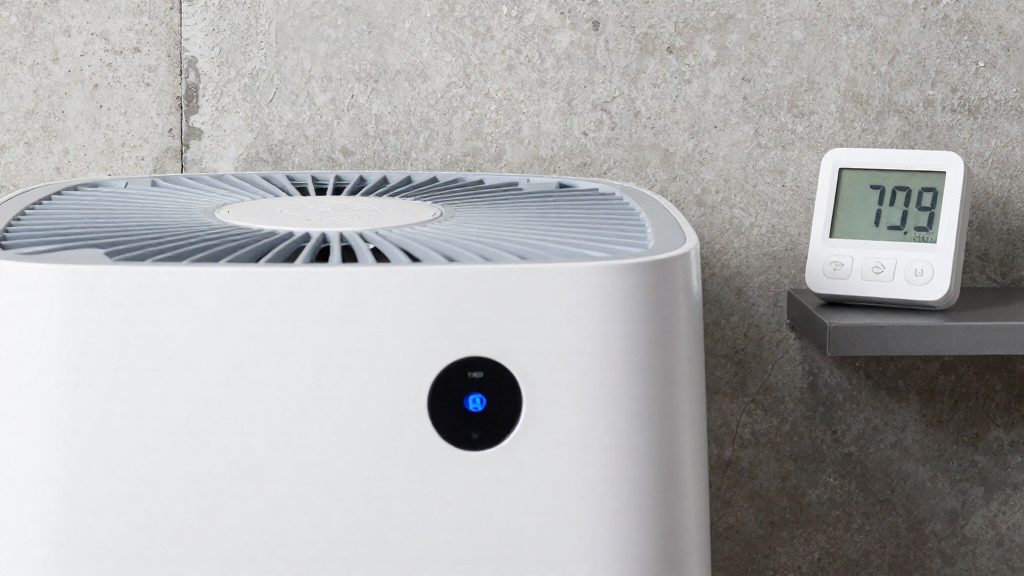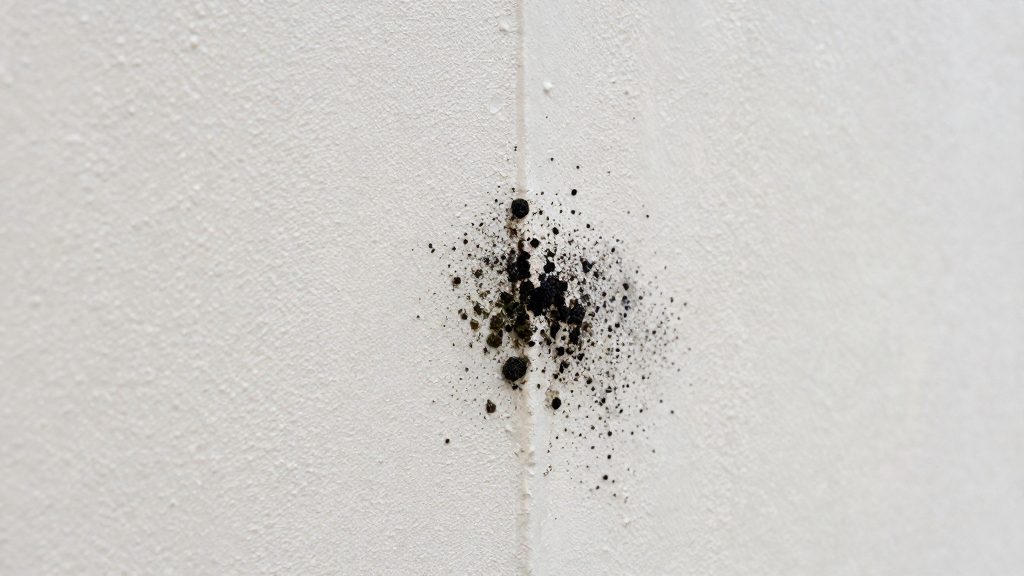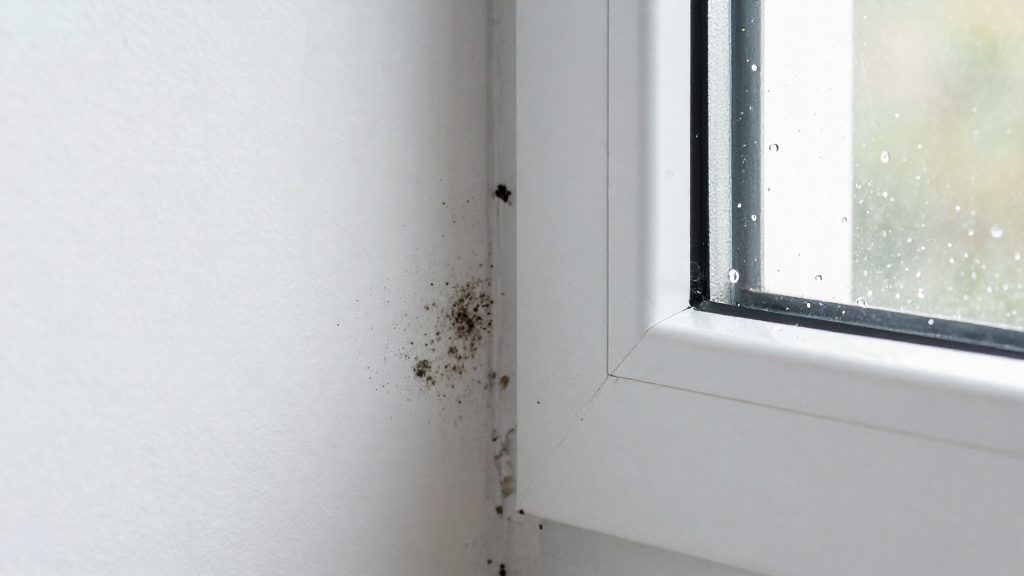
Excess indoor humidity in summer usually shows up as stains on surfaces, a musty smell, and condensation on cold surfaces. Health Canada (2026) advises keeping indoor relative humidity between 30% and 50%, and a hygrometer, an inexpensive tool sold at most hardware stores, can measure it. When readings stay high, Health Canada recommends a dehumidifier or an air conditioner. The signs below help you identify the problem before a hygrometer confirms it.
What are the signs of indoor humidity being too high in summer?
Visible damage is the most common first sign. Health Canada (2026) lists the following indicators and where to look for them:
| Sign | Where to look |
|---|---|
| Surface stains or discolouration | Floors, walls, window panes, fabrics and carpets |
| Peeling paint | Painted walls |
| Wrinkled wallpaper | Papered walls |
| Plaster cracks | Walls |
| Warped wood | Wooden fittings and furniture |
| White, powdery salt deposits | Walls and masonry |
Smell as an early warning
A musty, earthy odour can indicate excess moisture even when no mould is visible. Health Canada (2026) names the places most likely to hold it: basements, closets, window sills, and the areas around sinks, tubs and pipes. Check these spots first, because moisture often collects there out of sight.
Condensation on cold surfaces
Condensation is a direct sign that the air is holding more moisture than surfaces can tolerate. Health Canada (2026) advises running a dehumidifier when condensation forms on cold surfaces or when relative humidity exceeds 50%. Lennox (2026) gives a higher trigger, recommending a dehumidifier if humidity stays above 60%, or whenever you notice musty odours or condensation.
Daily habits that reduce the signs
Keep window coverings open so air can circulate across the glass, and dry window frames and sills every day. Lennox (2026) also recommends using bathroom and kitchen exhaust fans, and notes that an air conditioner removes moisture as it cools the air.
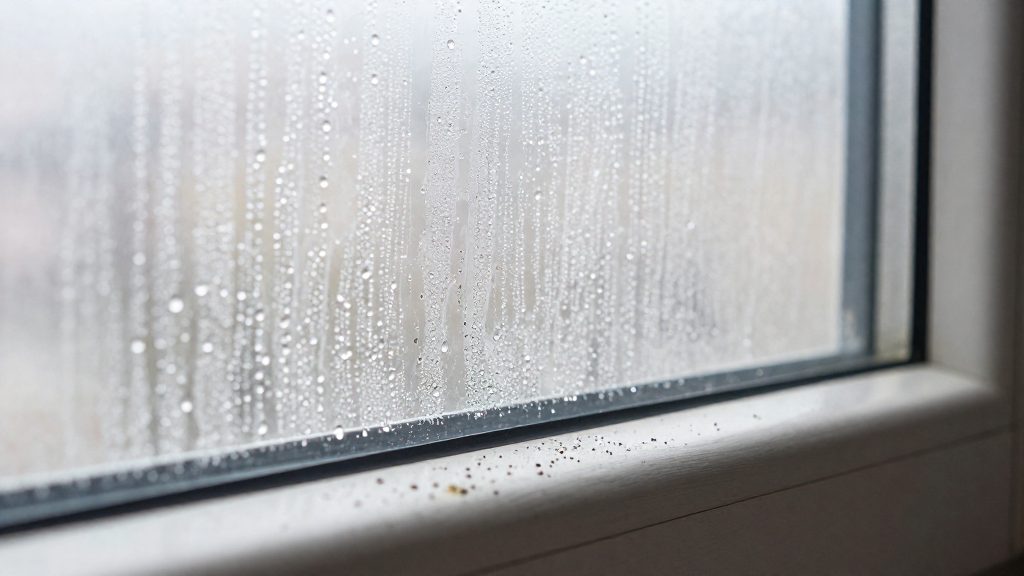
Condensation on Windows and Cold Surfaces
Condensation on cold surfaces is one of the most direct visible signs that indoor air holds too much moisture. Water vapour turns to liquid when it meets a surface cooler than the surrounding air, and window panes are the most common example. Health Canada (2026) lists stains and discolouration on window panes among the signs of excess moisture, so water films or marks on glass should be treated as a warning, not a cosmetic issue.
Where condensation shows up
Windows are not the only place to check. Look for water beads, runs or staining on glass, on window frames and sills, and on walls that sit against cold exterior surfaces. Health Canada (2026) names window sills specifically, and recommends keeping window coverings open and drying frames and sills daily.
Damage from repeated moisture
Persistent condensation leaves physical traces on the building fabric. Health Canada (2026) lists the following as other visible signs of excess moisture:
- Peeling paint
- Wrinkled wallpaper
- Plaster cracks
- Warped wood
- White powdery salt deposits on walls or masonry
When these appear alongside condensation, the moisture problem is likely ongoing rather than occasional.
Thresholds for action
Condensation is also the signal that tells you when to act on the air itself. The triggers named in the sources are summarised below.
| Trigger | Recommended action | Source |
|---|---|---|
| Condensation forms on cold surfaces | Run a dehumidifier | Health Canada (2026) |
| Relative humidity exceeds 50% | Run a dehumidifier | Health Canada (2026) |
| Humidity stays above 60%, or musty odours or condensation appear | Add a dehumidifier | Lennox (2026) |
Health Canada (2026) advises keeping indoor relative humidity between 30% and 50%, and notes that a hygrometer, an inexpensive tool sold at most hardware stores, can measure it. Lennox (2026) adds that bathroom and kitchen exhaust fans remove moisture at the source, and that an air conditioner removes moisture as it cools the air.
Musty Odour and Stains: Signs of Excess Moisture
A musty, earthy smell is one of the earliest signs of excess moisture indoors. According to Health Canada (2026), this odour can signal a problem even when no mould is visible, so a persistent smell justifies checking humidity and inspecting likely spots. Stains and discolouration are the second clue. They appear on floors, walls, window panes, fabrics and carpets when moisture has lingered long enough to mark surfaces.
Measure before you assume. Health Canada (2026) advises keeping indoor relative humidity between 30% and 50%, and a hygrometer, sold at most hardware stores, can measure it. Lennox (2026) gives a higher trigger: add a dehumidifier if humidity stays above 60%, or if you notice musty odours or condensation.
Inspect the spots where moisture typically collects: basements, closets, window sills, and areas around sinks, tubs and pipes. The table below lists the visible signs to look for.
| Sign | Where to look | Source |
|---|---|---|
| Stains or discolouration | Floors, walls, window panes, fabrics, carpets | Health Canada (2026) |
| Musty, earthy smell | Basements, closets, areas around sinks and tubs | Health Canada (2026) |
| Peeling paint | Painted surfaces | Health Canada (2026) |
| Wrinkled wallpaper | Papered walls | Health Canada (2026) |
| Plaster cracks | Plastered walls | Health Canada (2026) |
| Warped wood | Wooden elements | Health Canada (2026) |
| White powdery salt deposits | Walls or masonry | Health Canada (2026) |
Peeling paint, wrinkled wallpaper, plaster cracks and warped wood are signs of excess moisture (Health Canada, 2026). Treat any of these signs as a reason to re-measure relative humidity in that room.
What Indoor Humidity Level Should You Aim for in Summer?
Health Canada advises keeping indoor relative humidity between 30% and 50%, and notes that a hygrometer, an inexpensive tool sold at most hardware stores, can measure it (Health Canada, 2026). Lennox (2026) cites the same 30–50% range, attributing it to the EPA, but sets a different trigger for action: add a dehumidifier if humidity stays above 60%, or if you notice musty odours or condensation. The two sources therefore describe a target band and an intervention threshold rather than a single ideal value.
| Indicator | Recommended response | Source |
|---|---|---|
| Relative humidity between 30% and 50% | Target range for indoor air | Health Canada (2026); Lennox (2026) citing the EPA |
| Relative humidity above 50% | Run a dehumidifier | Health Canada (2026) |
| Relative humidity above 60% | Add a dehumidifier | Lennox (2026) |
| Condensation on cold surfaces | Run a dehumidifier | Health Canada (2026) |
Practical Steps to Stay Within Range
- Measure first. Place a hygrometer in the rooms where moisture is most likely to build up, then compare the reading against the 50% and 60% thresholds above.
- Vent moisture at its source. Lennox (2026) recommends bathroom and kitchen exhaust fans, which remove humid air before it spreads through the home.
- Use air conditioning. According to Lennox (2026), an air conditioner removes moisture as it cools the air, so running it also lowers indoor humidity.
- Escalate to a dehumidifier. When readings stay above the thresholds, or condensation forms on cold surfaces, Health Canada (2026) recommends a dehumidifier.
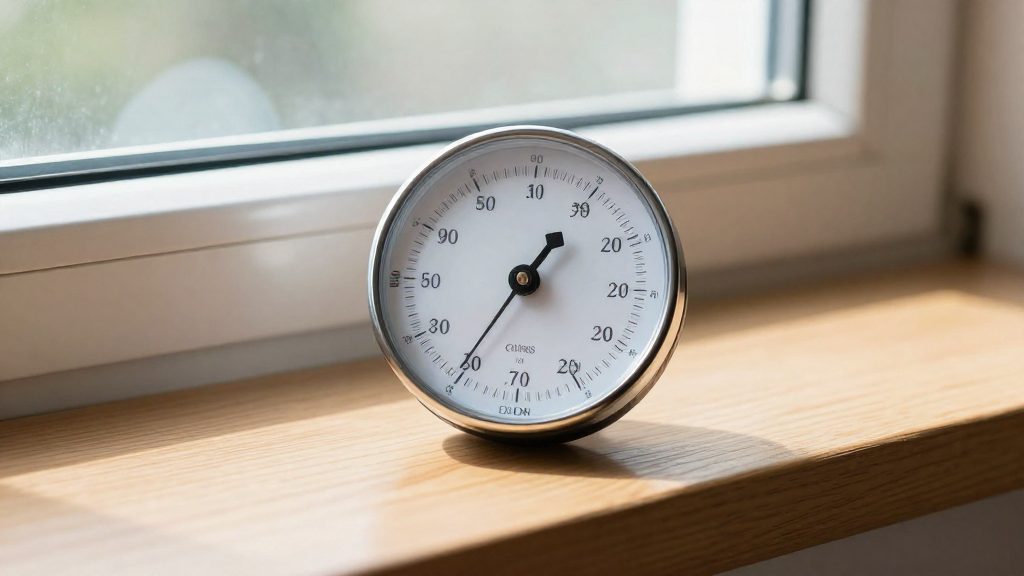
How to Measure Indoor Humidity with a Hygrometer
A hygrometer is the simplest way to check moisture levels at home. Health Canada (2026) describes it as an inexpensive tool sold at most hardware stores, and advises keeping indoor relative humidity between 30% and 50%. Lennox (2026), citing the EPA, gives the same range. Comparing your reading with this band tells you whether the air is within the recommended range before you choose any corrective equipment.
Steps for a Reliable Reading
- Place the hygrometer in the room you are assessing, away from direct sources of heat, moisture and drafts.
- Check the places Health Canada (2026) identifies as prone to excess moisture: basements, closets, window sills, and areas around sinks, tubs and pipes.
- Take readings at different times of day, since showers, cooking and ventilation change humidity levels.
- Compare each value with the 30% to 50% range.
Interpreting the Readings
| Reading | Recommended action | Source |
|---|---|---|
| Between 30% and 50% | Within the recommended range | Health Canada (2026) |
| Above 50% | Run a dehumidifier | Health Canada (2026) |
| Above 60%, sustained | Add a dehumidifier | Lennox (2026) |
| Condensation on cold surfaces | Run a dehumidifier | Health Canada (2026) |
Dehumidifier, Air Conditioner or Ventilation: Which to Choose?
Health Canada advises keeping indoor relative humidity between 30% and 50%, and the Lennox guidance cites the same range from the EPA (Health Canada / Canada.ca, 2026; Lennox, 2026). When humidity stays above that range, the choice depends on whether the problem is a general moisture load or a local source such as a bathroom or kitchen. Health Canada names a dehumidifier or an air conditioner as the remedy when humidity stays too high, while exhaust fans address moisture produced in specific rooms.
Start by measuring. A hygrometer, which Health Canada describes as an inexpensive tool sold at most hardware stores, shows whether the reading stays high over time or only spikes after showering or cooking.
| Option | When the source guidance points to it | Mechanism or practical note |
|---|---|---|
| Dehumidifier | Run when condensation forms on cold surfaces or relative humidity exceeds 50% (Health Canada, 2026). Lennox suggests adding one if humidity stays above 60% or if musty odours or condensation appear (Lennox, 2026). | Removes water from the air directly. |
| Air conditioner | Recommended by Health Canada as an alternative when humidity stays too high (Health Canada, 2026). | Removes moisture as it cools the air (Lennox, 2026). |
| Bathroom and kitchen exhaust fans | Lennox suggests using them alongside other measures (Lennox, 2026). | Exhausts moisture produced in those rooms at the source. |
Whichever unit you choose, water reservoir maintenance matters. Health Canada notes that humidifiers, dehumidifiers and air conditioners hold water and should be cleaned regularly (Health Canada / Canada.ca, 2026).
When should you consult a professional?
The measurable thresholds and visible signs below help you document the problem and decide whether outside help is needed. If anyone in the home has health symptoms, consult a health professional. Health Canada advises keeping relative humidity between 30% and 50%, and the Lennox page cites the same 30–50% range from the EPA (Health Canada, 2026; Lennox, 2026).
Check the readings first
A hygrometer is the only way to confirm the figure. Health Canada describes it as an inexpensive tool sold at most hardware stores (Health Canada, 2026). Take readings in the rooms where you have noticed a problem, not only in the living room.
| Indicator | Threshold or location | Action stated by the source |
|---|---|---|
| Relative humidity | Above 50% | Run a dehumidifier (Health Canada, 2026) |
| Relative humidity | Above 60% | Add a dehumidifier (Lennox, 2026) |
| Condensation on cold surfaces | Any formation | Run a dehumidifier (Health Canada, 2026) |
| Bathroom and kitchen moisture | Ongoing | Use the exhaust fans (Lennox, 2026) |
Inspect the places where moisture collects
Moisture problems often appear first in basements, closets, window sills, and areas around sinks, tubs and pipes (Health Canada, 2026). Look for stains or discolouration on floors, walls, window panes, fabrics and carpets. Check window frames and sills, and dry them daily, as Health Canada recommends.
Look for physical damage as well. Peeling paint, wrinkled wallpaper, plaster cracks, warped wood, and white powdery salt deposits on walls or masonry all point to excess moisture (Health Canada, 2026).
Decide whether the situation has escalated
If the readings stay above 50% after you have run a dehumidifier or air conditioner, or if condensation keeps forming on cold surfaces, the problem is persistent. Note your readings over several days, the rooms affected, and any visible damage, so the information is available if you do need to call one.
Frequently asked questions
Does the 30–50% humidity range apply only in summer?
Health Canada (2026) gives the 30–50% range as general guidance for relative humidity indoors. Measure your home’s readings across the year to see how they shift with the weather.
What should I do if a room smells musty but I can’t see any mould?
Place a hygrometer in that room and take a reading, since a musty odour can point to excess moisture before any mould becomes visible. If the reading is high, Health Canada (2026) recommends a dehumidifier or an air conditioner to bring it down.
When should I contact a professional about moisture problems?
If anyone in the home develops symptoms, consult a health professional, and keep a dated log of your hygrometer readings to document the problem.