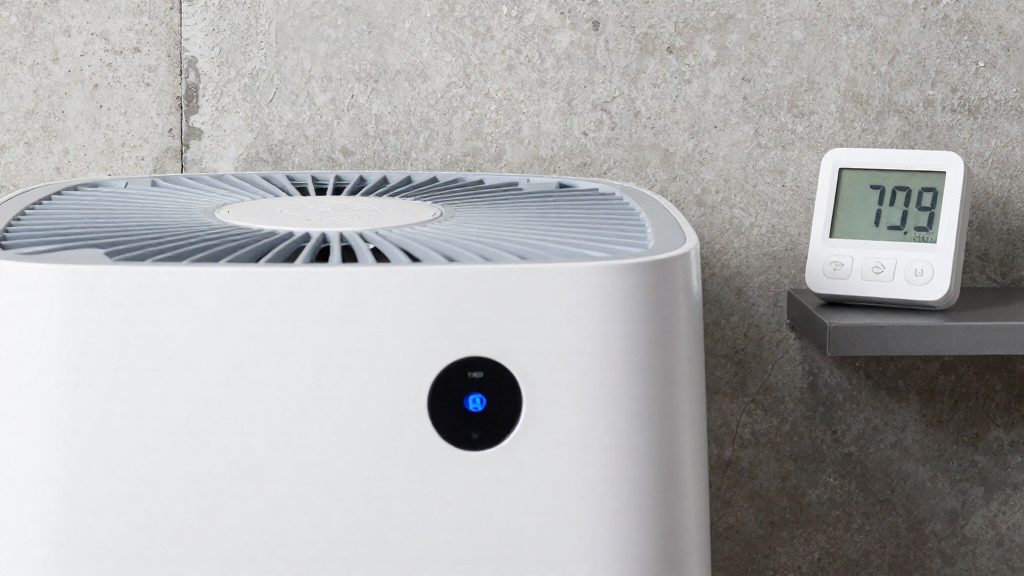
Health Canada advises keeping indoor relative humidity between 30% and 50% (Health Canada, 2023-02-13). Health Canada names basements as a common area of poor ventilation and advises checking them for damp spots, so keeping humidity within this range is especially relevant there. Above 50%, damp surfaces and cold surfaces are more likely to support mould and condensation, and Health Canada’s guidance on both is set out below.
Why should basement humidity stay below 50%?
Why basements are exposed
Health Canada names basements as a common area of poor ventilation and advises checking them for damp spots (Health Canada, 2023-02-13).
Mould on damp basement surfaces
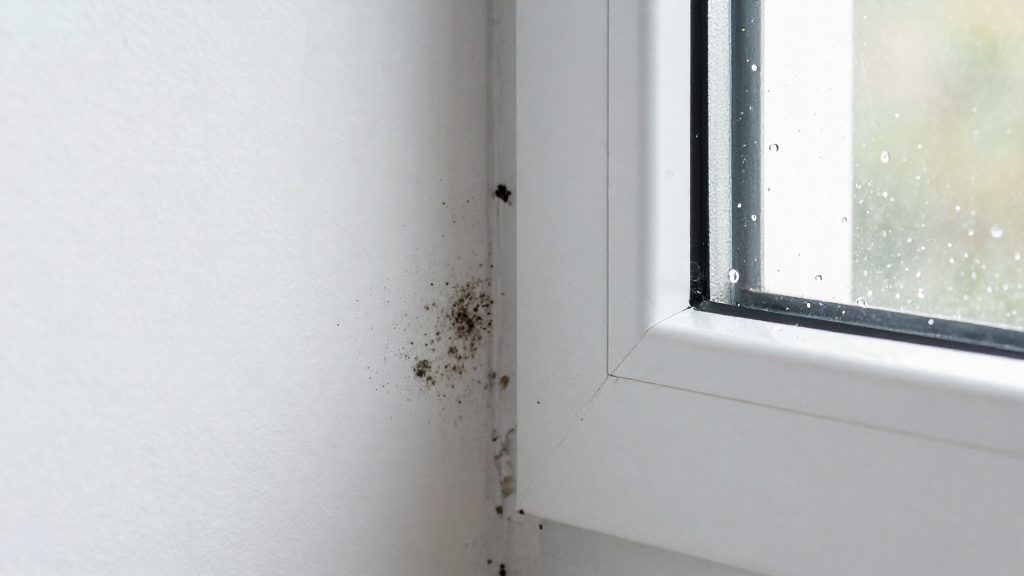
Mould develops on surfaces that stay damp. Health Canada’s specific guidance targets window frames and sills, which should be dried daily to prevent mould (Health Canada, 2020-04-09).
Condensation on cold basement surfaces
Condensation forms when humid air meets a cold surface. Where the source of moisture is an appliance, Health Canada advises that a humidifier causing condensation be unplugged and removed (Health Canada, 2020-04-09).
| Condition in the basement | Health Canada guidance | Source date |
|---|---|---|
| Relative humidity above 50% | Use a portable dehumidifier | 2020-04-09 |
| Moisture condensing on cold surfaces | Use a portable dehumidifier | 2020-04-09 |
| Humidifier causing condensation | Unplug and remove the humidifier | 2020-04-09 |
How do you measure basement humidity?
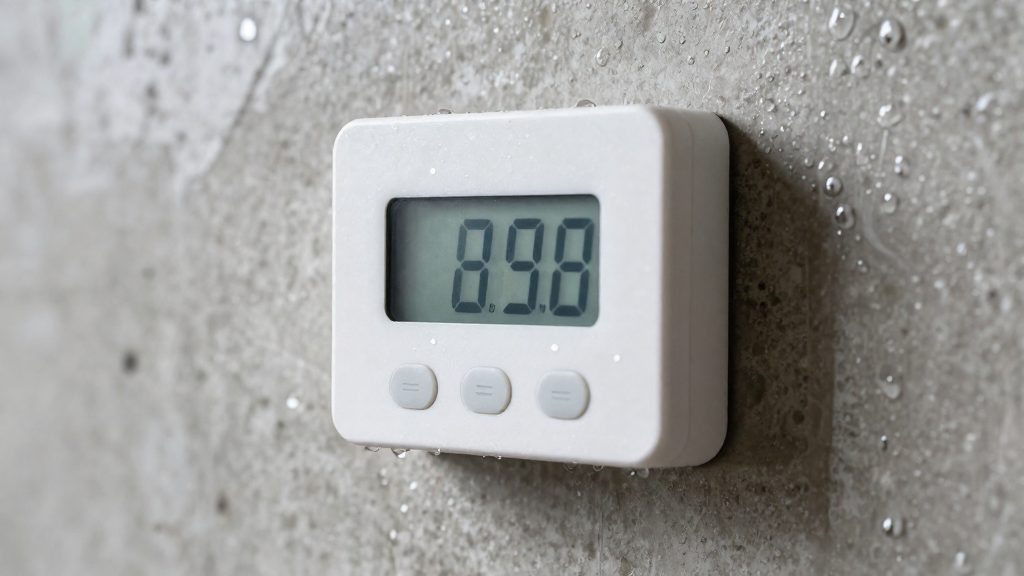
Measuring basement humidity starts with a hygrometer, an inexpensive instrument sold at most hardware stores. A single reading rarely shows the real condition, because basement air shifts with outdoor weather, laundry, showers and heating. An accurate measurement combines a well-placed sensor, a calibration check and readings tracked over time.
Placing the hygrometer
Position the sensor in the open air of the room, away from walls and the floor. Cold or damp surfaces hold moisture that the air near them does not fully reflect, so a sensor placed against an outside wall or on a concrete slab reads the surface rather than the room. Keep it clear of supply vents, dryer exhausts, humidifier and dehumidifier outlets, and direct sunlight through windows. Mount it at roughly the height where people breathe.
Calibrating a digital hygrometer
Digital sensors drift over time, so verify them before trusting their readings. The salt test compares the device against a known reference:
- Place the hygrometer in a sealed container with a small amount of saturated salt solution, keeping some undissolved salt present.
- Let the reading stabilize, which can take several hours.
- Compare the reading with the reference humidity published for that salt at the room temperature.
If the difference stays constant, note the offset and correct future readings by it. If the difference changes from test to test, replace the sensor.
Logging readings over days or weeks
A single snapshot misses daily swings. Logging readings at fixed times, such as morning, afternoon and evening, across several days or weeks reveals the pattern. Record the context beside each entry, because the cause of a peak is often visible in the notes.
| Log element | What to record | Purpose |
|---|---|---|
| Time | Same times each day | Reveals daily swings |
| Activity | Showers, laundry, cooking, heating status | Links peaks to likely causes |
| Weather | Rain or dry conditions outside | Shows outdoor influence |
| Location | Exact sensor spot | Keeps readings comparable |
A high reading that stays constant suggests a continuous moisture source, while sharp rises at specific times point to intermittent activity.
Which sources of moisture should you fix first?
Fix liquid water entering the basement before you adjust the air. Health Canada advises fixing leaks promptly (Health Canada (Canada.ca), 2020-04-09). Water that comes through the structure or pools outside the foundation keeps relative humidity high even when a dehumidifier is running. Address the sources in this order: water seepage through the structure, grading and gutters that send water toward the foundation, then condensing pipes and floor coverings.
Water seepage through walls and floor slab
Walls and the floor slab are the main route for liquid water. Check the wall-floor joints, the base of each wall, and any visible cracks for damp spots.
- Note whether damp appears only after rain or snowmelt. If it does, water entry is the likely cause rather than indoor air alone.
- Seal visible cracks and repair leaks at their source before applying any surface treatment.
- Let the affected area dry completely before closing it up, because sealing wet material traps moisture.
Gutters and grading directing water toward the foundation
Roof runoff and surface water that collects beside the house soak into the soil and press moisture against the foundation. These fixes are outside the basement. Confirm that gutters are clear and discharge away from the walls, and check that the ground slopes away from the foundation. Standing water beside the wall after rain points to a grading problem.
Insulating condensing pipes
Cold water pipes can sweat when warm, humid air contacts their surface. Health Canada advises drying and insulating plumbing pipes that show condensation (Health Canada (Canada.ca), 2020-04-09). Dry the pipe surface, fit an insulating sleeve over it, and check it again after normal household use to confirm that the condensation has stopped.
Removing floor carpet
Carpet on a basement slab holds moisture and hides damp spots. Health Canada suggests considering removing carpet from the basement floor (Health Canada (Canada.ca), 2020-04-09). Once the carpet is up, inspect the slab directly, since dampness that was invisible under the carpet becomes easier to spot.
Is a dehumidifier enough for a damp basement?
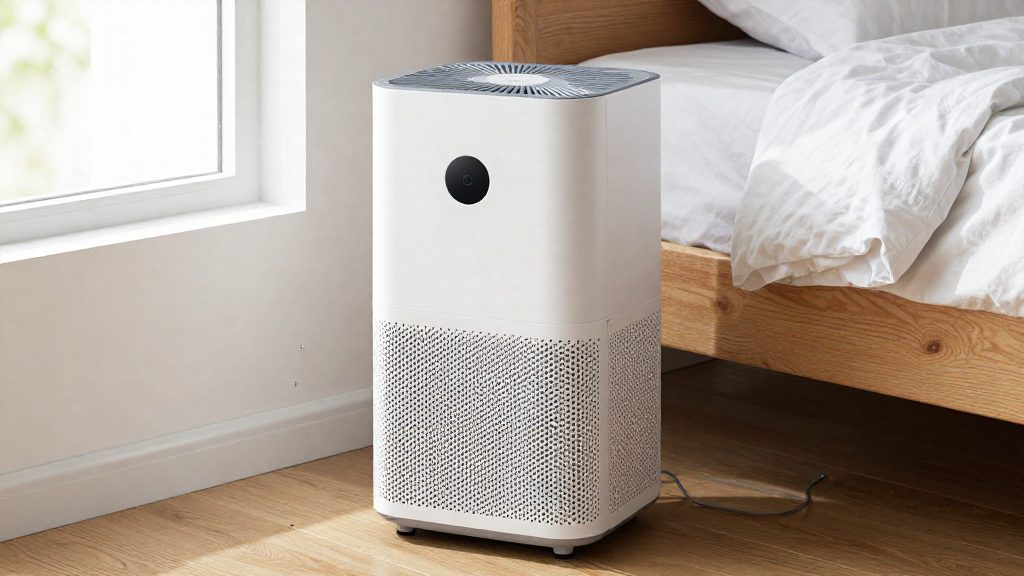
A portable dehumidifier is the recommended tool when moisture condenses on cold surfaces or when relative humidity is too high. According to Health Canada (2020), it should be used when either condition is present, and Health Canada (2023) notes that a dehumidifier or air conditioner can lower humidity that is too high. Whether one unit is enough depends on measured readings, not on the basement’s size.
When to run a portable dehumidifier
Use these indicators to decide:
| Indicator | Threshold | Action |
|---|---|---|
| Relative humidity | Above 50% | Run a portable dehumidifier |
| Condensation | Moisture forming on cold surfaces | Run a portable dehumidifier |
Measure before acting.
Operating rules that keep it effective
- Keep windows closed while the unit runs. Health Canada (2020) gives this instruction directly.
- If necessary, run the dehumidifier in the basement year-round to reduce dampness, according to Health Canada (2020).
Judging whether one unit is enough
Check the readings while the unit runs with windows closed. If relative humidity stays above 50%, or condensation continues on cold surfaces, the single unit is not holding conditions within the target range.
How does ventilation help?
Ventilation removes moist air from the house before it condenses on cold surfaces such as basement walls, floors, and pipes. Much of the moisture in a basement comes from activities inside the home, including showering, cooking, and drying clothes. Health Canada (2020-04-09) recommends capturing that moisture at its source and expelling it outdoors.
| Source | Measure | Key condition |
|---|---|---|
| Bathroom | Run the exhaust fan | At least 30 minutes after a shower or bath |
| Kitchen | Use the range hood | While cooking |
| Clothes dryer | Vent the dryer outside | Exhaust must leave the building |
Bathroom and kitchen exhaust
Bathroom exhaust fans are the most direct tool for shower moisture, which otherwise spreads through the house as humid air. Health Canada specifies running the fan for at least 30 minutes after a shower or bath, because moisture keeps leaving the air after the water is turned off. The kitchen range hood plays the same role during cooking. Running it only while the stove is on captures steam and vapour before they reach the rest of the home.
Dryer venting
A clothes dryer releases a large volume of water vapour with each cycle. Health Canada advises venting the dryer outside, so that this moisture leaves the building rather than staying in the basement or the rest of the home.
Airtight envelopes
A tighter building envelope reduces uncontrolled air leakage, which benefits energy efficiency. Health Canada (2020-04-09) warns, however, that a tighter envelope can raise indoor humidity if ventilation is insufficient. Sealing a basement without a controlled exhaust path means that moisture produced inside has fewer routes out. Each exhaust point should therefore be paired with a working fan or hood that expels air outdoors, and the basement should be checked for damp spots after any sealing work.
How do you store items in a damp basement?
Health Canada’s basement moisture guidance (Canada.ca, 2020-04-09) gives three storage rules: use lidded plastic bins instead of cardboard boxes, never place cardboard boxes directly on the floor, and keep storage free of clutter, especially near outside walls. Together, these reduce the chance that stored belongings absorb moisture from the basement environment.
Choose lidded plastic bins
Use lidded plastic bins for anything you want to keep in a basement. Health Canada specifically recommends them over cardboard boxes. The lid is the part that matters for storage: it keeps the contents enclosed rather than open to the surrounding air. Avoid using cardboard boxes in the basement.
Keep containers off the floor
Never place cardboard boxes directly on the basement floor. Health Canada advises never placing cardboard boxes directly on the floor, where they can pick up dampness. Plastic bins can sit on the floor under the same guidance, but use a raised shelf or pallet if your floor shows dampness.
Keep storage clear of outside walls
Health Canada advises keeping basement storage free of clutter, especially near outside walls. Outside walls are the cold surfaces where condensation most often forms, so keep items a clear distance from them. Leave visible space between the wall and the nearest stored item.
| Storage element | Recommended | Avoid |
|---|---|---|
| Container | Lidded plastic bins | Cardboard boxes |
| Floor contact | Raised shelf or pallet | Cardboard placed directly on the floor |
| Wall position | Space away from outside walls | Items stacked against outside walls |
When should you call a professional?
Dehumidification, ventilation and storage changes can help with basement damp. Some symptoms point to moisture entering through the building itself, which these measures cannot correct. Health Canada (Canada.ca, 2023-02-13) advises keeping indoor relative humidity between 30% and 50%. If readings stay above that range despite correct use of these tools, or if damp returns soon after each fix, the moisture is likely coming from the structure or its drainage. At that point, a qualified inspection is the appropriate next step.
Recurring damp after dehumidification and ventilation fixes
Track humidity over several weeks rather than judging by a single reading. If the dehumidifier runs with windows closed, ventilation is in use, and damp still reappears in the same place, the source is probably a leak or a cold surface rather than the indoor air. Record the location, the date, and the readings. A technician needs this pattern to trace where the water enters.
Structural cracks or visible water ingress through walls
Water coming through a wall is a different problem from condensation on a surface. Health Canada (Canada.ca, 2020-04-09) advises fixing leaks promptly. A wet patch that appears after rain, or a crack that shows moisture or changes over time, should not be treated as a surface issue. Ask a structural engineer or a waterproofing specialist to inspect the wall and the ground drainage around it. The decision should rest on whether the damage is active and whether it is progressing.
Mould covering large wall or ceiling areas
When mould spreads across a large part of a wall or ceiling, or returns after cleaning and drying, persistent moisture is usually the underlying cause. If the affected area is extensive or keeps recurring, have a professional assess both the mould and its moisture source before any removal work begins.
Frequently asked questions
What relative humidity should a basement stay under?
Health Canada advises keeping indoor relative humidity between 30% and 50% (Health Canada, 2023-02-13). Staying under the upper limit matters most in a basement, where damp air tends to collect and ventilation is often weak.
Can I rely on opening windows to dry out a basement?
Health Canada advises running a portable dehumidifier in the basement when relative humidity is above 50% or moisture condenses on cold surfaces, with windows kept closed while it runs (Health Canada, 2020-04-09). Ventilation alone is not presented as a fix for these conditions.
What maintenance does a dehumidifier need to keep working?
Its drain pan must be emptied regularly, or the water must be directed to a drain, so the unit does not overflow or stop collecting moisture (Health Canada, 2020-04-09). If a humidifier in the same space is causing condensation, it should be unplugged and removed.