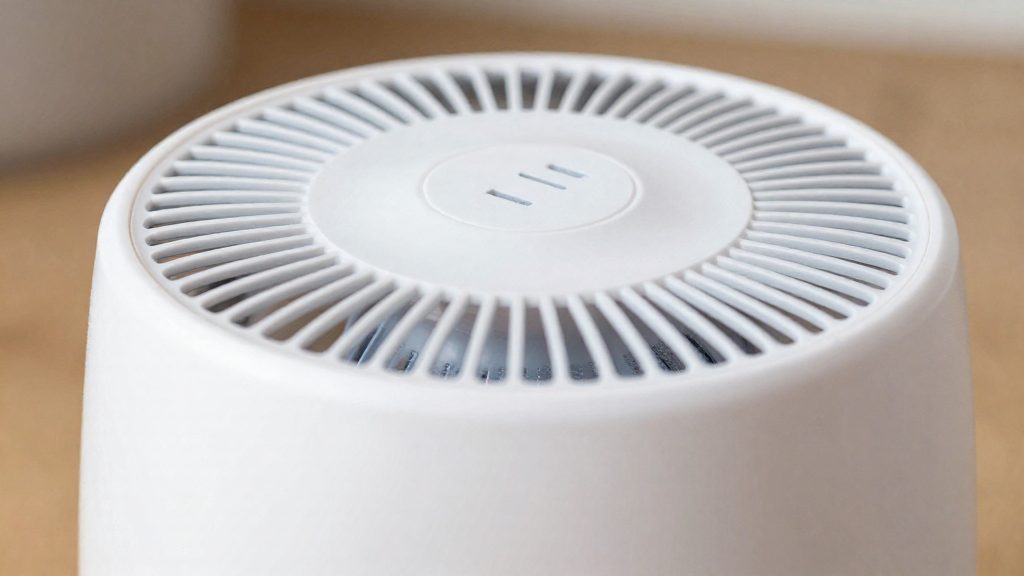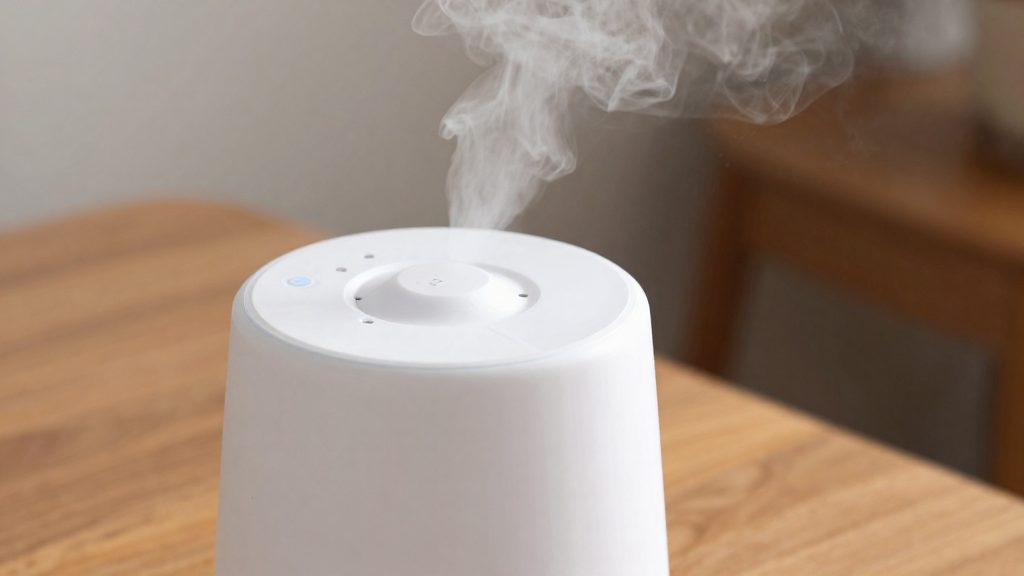
Ultrasonic and evaporative humidifiers both add moisture to indoor air, but they differ in noise, filtration and water requirements. According to Bob Vila (2026), ultrasonic models are noticeably quieter, running below 30 dB, while evaporative models use a fan that runs continuously at roughly 28 to 45 dB, depending on speed. The main trade-off is mineral dust. Ultrasonic units have no filter, so minerals from tap water are released into the room, whereas evaporative units use a wick that reduces this effect.
Ultrasonic or Evaporative Humidifier: The Essentials
Your choice depends on the water you use and the noise you can tolerate. The table below sets out the differences that matter most in daily use.
| Criterion | Ultrasonic | Evaporative |
|---|---|---|
| Operating noise | Below 30 dB | About 28 to 45 dB, depending on fan speed |
| Filtration | No filter | Wick filter, typically replaced every 1 to 3 months |
| Mineral dispersal | Fine white or grey dust, especially with hard water | Reduced by the wick |
| Recommended water | Distilled water, per the EPA as cited by Bob Vila (2026) | Filtered models can generally use tap water |
| Cleaning frequency | At least once a week | At least once a week |
Water choice and mineral dust
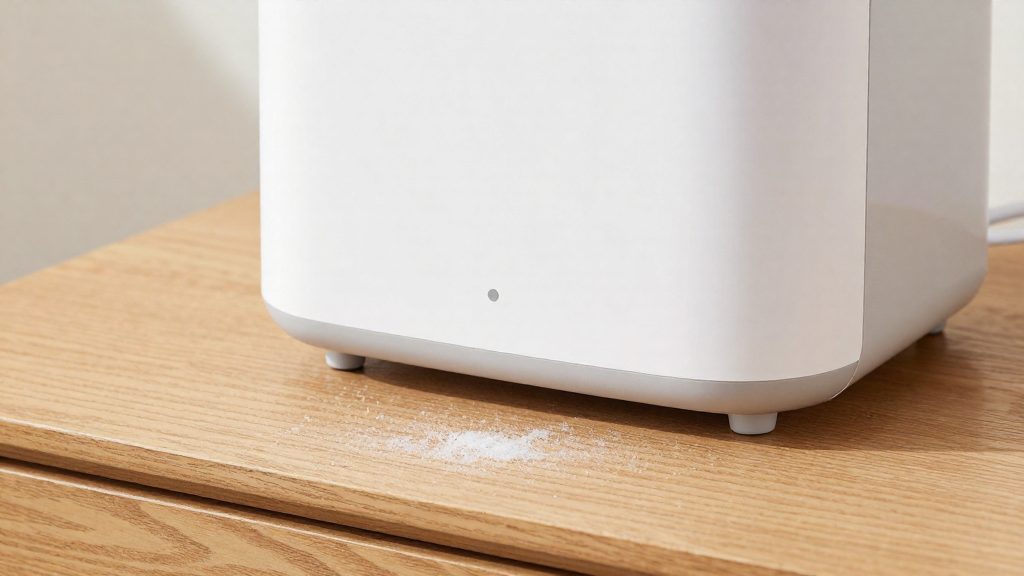
The ultrasonic humidifier is the more sensitive model to water quality. Because it has no filter, minerals dissolved in tap water leave the tank as airborne particles and settle on nearby surfaces. The effect is strongest with hard water. An evaporative unit spreads less of this dust because its evaporative wick retains part of the mineral content.
Choosing by household conditions
- Bedrooms and light sleepers: the lower noise level of ultrasonic models suits quiet rooms.
- Hard-water areas: evaporative models with a filter are less affected by mineral build-up in the room.
- Lowest maintenance cost on water: evaporative models can generally run on tap water, while ultrasonic models rely on distilled water to limit dust.
How Does Each Type Work?
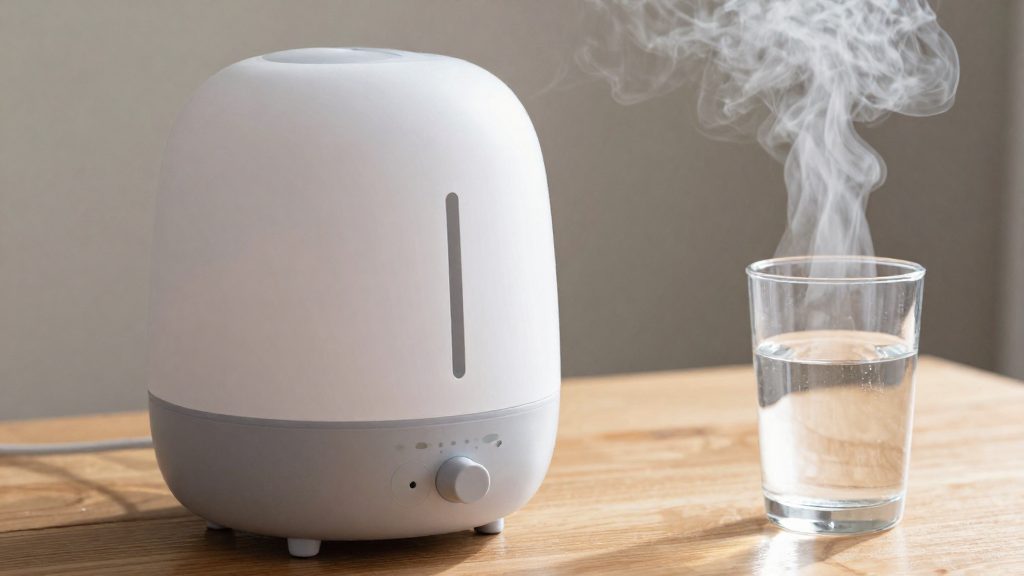
Ultrasonic and evaporative humidifiers add moisture to a room by different routes, and that difference drives most of the practical trade-offs between them. An ultrasonic unit turns water into a fine mist without passing it through a filter, so any minerals dissolved in the water travel into the room with the vapour. An evaporative unit uses a fan to draw air across a wick that stays wet, and water evaporates from the wick into that airflow.
Ultrasonic: Mist Without a Filter
Because ultrasonic units have no filter, dissolved minerals are dispersed as a fine white or grey dust. This effect is strongest with hard water.
Evaporative: Airflow Through a Wet Wick
In an evaporative unit, the fan runs continuously, and the noise it produces is the main difference in operation from ultrasonic models. The wick filter is the component that needs regular replacement.
Operating Characteristics Compared
| Characteristic | Ultrasonic | Evaporative |
|---|---|---|
| Noise level | Under 30 dB | About 28 to 45 dB, depending on fan speed |
| Filter | None | Replaced about every 1 to 3 months |
| Mineral dust | Fine white or grey dust, especially with hard water | Reduced by the wick |
| Water type | Distilled water recommended | Tap water generally usable with filtered models |
| Cleaning frequency | At least once a week | At least once a week |
Source for all figures in this section: Bob Vila (2026).
Noise and comfort: which one is quieter?
Ultrasonic humidifiers are the quieter option. According to Bob Vila (2026), they run at under 30 dB, while evaporative models have a fan that runs continuously at roughly 28 to 45 dB, depending on fan speed. The difference matters most in bedrooms and home offices, where a steady mechanical hum can disrupt sleep or concentration even when the level seems modest.
Where the noise comes from
Ultrasonic units produce a fine mist with a high-frequency vibrating element and have no fan, so their operation is largely silent. Evaporative units draw air through a wick saturated with water. The fan that moves that air is the main source of sound, and it produces noise for as long as the unit is running. Changing the fan speed changes the noise level, so an evaporative unit on its highest setting is noticeably louder than the same unit on low.
Comfort beyond sound
Low noise does not settle the comfort question on its own.
| Criterion | Ultrasonic | Evaporative |
|---|---|---|
| Noise level | Under 30 dB | Approximately 28 to 45 dB, depending on fan speed |
| Source of sound | Vibrating element, no fan | Fan running continuously |
| Mineral dust | Fine white or grey dust, mainly with hard water | Reduced by the wick |
| Water type | Distilled water recommended (EPA) | Tap water generally usable with filtered models |
Choosing the quieter unit for a bedroom
- Compare dB ratings on the spec sheet. For evaporative units, check the figure at the lowest fan setting you would use at night.
- If you can supply distilled water consistently, an ultrasonic unit gives the lower noise level.
- If you rely on tap water, choose a filtered evaporative unit and accept a constant fan sound.
- Place the unit on a stable, level surface away from the pillow, so any residual sound is not concentrated at head height.
Tap Water or Distilled Water: Which to Choose?
The water you add determines whether minerals end up in your room. Ultrasonic humidifiers have no filter, so the minerals in tap water are released as a fine white or grey dust, and the effect is strongest with hard water. Bob Vila (2026) reports that the EPA recommends distilled water for ultrasonic models to limit this dust and scale. Evaporative models use a wick that reduces mineral release, and filtered units can generally run on tap water.
| Humidifier type | Recommended water | Mineral release | Filter |
|---|---|---|---|
| Ultrasonic | Distilled (EPA recommendation, per Bob Vila 2026) | Fine white or grey mineral dust, mainly with hard water | None |
| Evaporative (filtered) | Tap water generally acceptable | Reduced by the wick | Usually replaced every 1 to 3 months |
Practical steps:
- Check your local water hardness before choosing. Hard water increases dust with ultrasonic units.
- If you use an ultrasonic humidifier, fill it with distilled water each time rather than topping up old water.
- With an evaporative unit, follow the manufacturer’s filter schedule, since a worn filter loses its mineral-capturing role.
- Do not mix water types in the same tank without emptying it first.
Maintenance: how often should you clean?
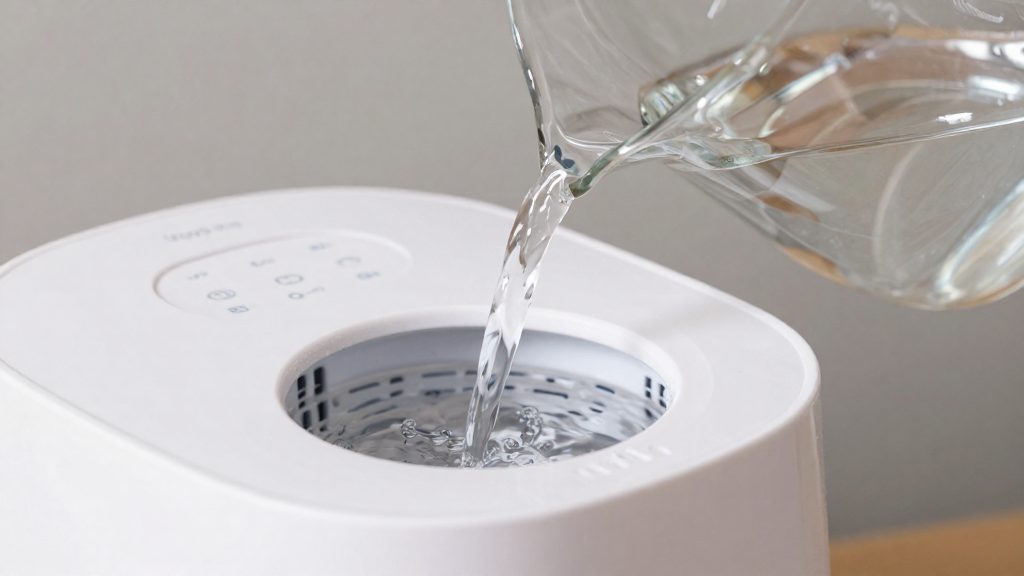
Both ultrasonic and evaporative humidifiers need cleaning at least once a week, according to Bob Vila (2026). The tasks differ because the two technologies handle water differently. An ultrasonic unit has no filter, so its maintenance centres on the tank and water quality. An evaporative unit uses a wick or filter that wears out and must be replaced on a set schedule.
Maintenance schedule by technology
| Task | Ultrasonic | Evaporative |
|---|---|---|
| Minimum cleaning frequency | At least once a week | At least once a week |
| Filter or wick | None | Typically replaced every 1 to 3 months |
| Water type | Distilled water recommended | Tap water usable with filtered models |
| Main residue | Fine white or grey mineral dust, especially with hard water | Reduced by the wick |
Weekly cleaning routine
Cleaning follows the same general steps for both types:
- Unplug the unit and empty the tank completely.
- Scrub the tank and base to remove mineral scale and any slime that has formed.
- Rinse thoroughly so no cleaning residue remains in the water path.
- Let all parts air-dry before refilling, which limits microbial growth between uses.
Replacing the evaporative filter
On evaporative models, cleaning the housing does not replace the filter’s role. The filter collects minerals as water passes through it, so its performance declines over time. Replacing it on the 1 to 3 month schedule keeps the unit’s mineral capture working as designed.
Using a hygrometer to set your humidifier
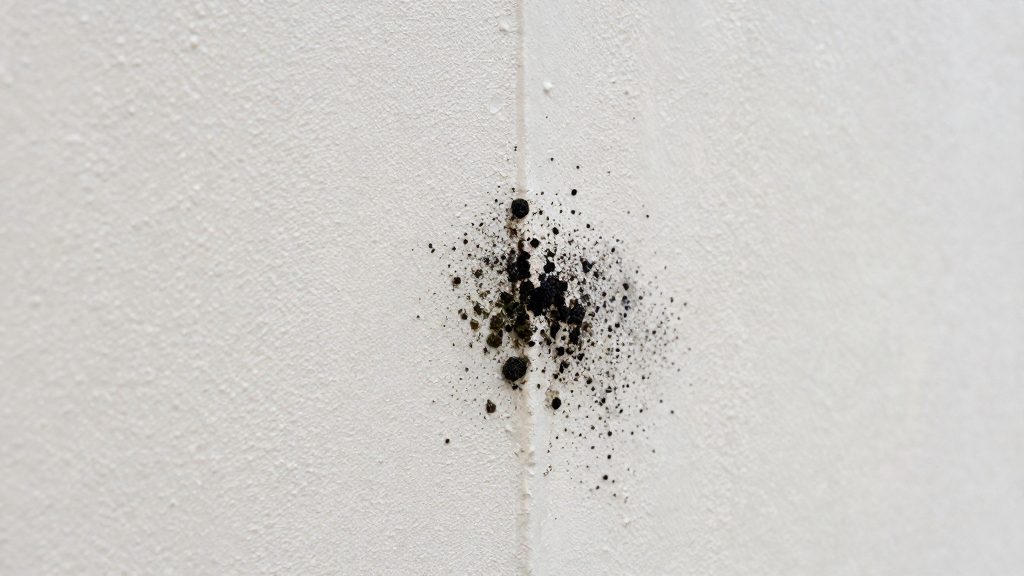
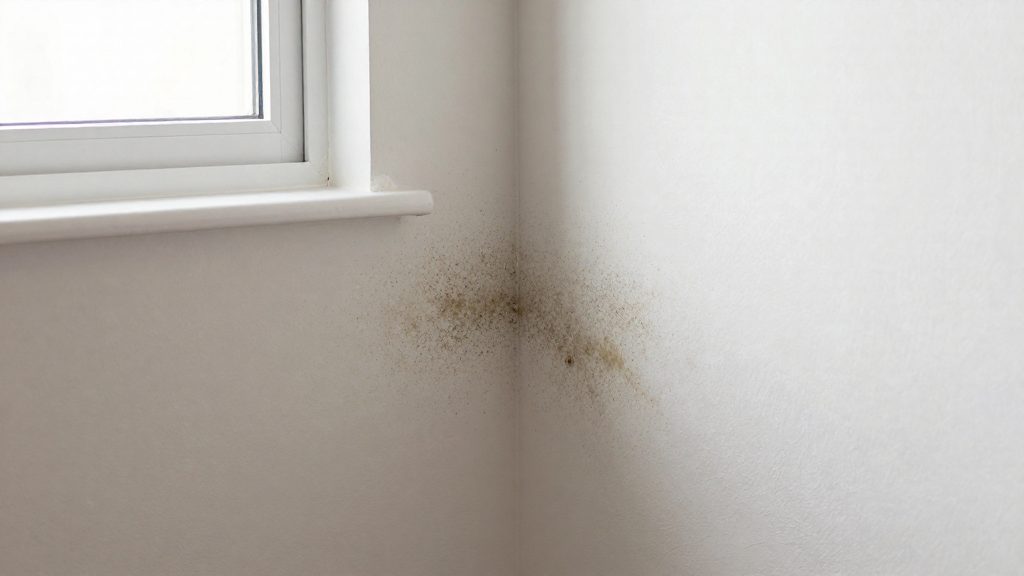
The right setting depends on the room, the season and the signs of moisture in the building. The practical approach is to measure first with a hygrometer, then adjust the humidifier to hold a steady level rather than running it at maximum. Pushing humidity too high raises the risk of condensation on windows and cold walls, which is the first step toward mould.
Noise affects which type suits a bedroom, but the humidity setting should be guided by the hygrometer reading and by signs of condensation. According to Bob Vila (2026), ultrasonic models are much quieter, under 30 dB, while evaporative models produce roughly 28 to 45 dB depending on fan speed. The table below compares the two types on the points that affect running time and setting choice.
| Device type | Noise level | Fan | Filter |
|---|---|---|---|
| Ultrasonic | Under 30 dB | None | None |
| Evaporative | About 28 to 45 dB, depending on speed | Runs continuously | Typically replaced every 1 to 3 months |
How to set the target in practice
- Place the hygrometer in the room, away from the humidifier’s outlet, so the reading reflects the general air rather than the mist plume.
- Observe the reading over several hours or a full day, not a single moment, to see how the room behaves when the humidifier cycles on and off.
- If you see water droplets on glass or window frames, lower the output setting, since the air is already saturated at that spot.
- Increase the setting only when the air feels dry and the hygrometer stays low across the day.
Which Humidifier to Choose for Your Home
The choice between an ultrasonic and an evaporative humidifier depends on three factors: how much noise you can tolerate, the hardness of your tap water, and how much maintenance you are willing to do.
Comparing the Two Types
| Criterion | Ultrasonic humidifier | Evaporative humidifier |
|---|---|---|
| Operating noise | Below 30 dB | About 28 to 45 dB, depending on fan speed |
| Filter | None | Filter or wick that reduces mineral dispersion |
| Tap water | Mineral dust is dispersed as a fine white or grey powder, especially with hard water | Filtered models can generally run on tap water |
| Recommended water (per the EPA) | Distilled water | Tap water for filtered models |
| Filter replacement | Not applicable, since there is no filter | Generally every 1 to 3 months |
Matching the Type to Your Situation
- Bedrooms and nurseries benefit most from an ultrasonic humidifier, because its sub-30 dB operation is the main advantage in quiet rooms.
- Hard water areas call for an evaporative humidifier with a filter, since the wick limits the mineral dust that an ultrasonic unit releases.
- Rooms where some fan noise is acceptable, such as a living room during the day, make an evaporative unit a practical option.
Maintenance Routine for Both Types
Both types need cleaning at least once a week. For evaporative models, replace the filter generally every 1 to 3 months, following the manufacturer’s schedule. Ultrasonic units have no filter to replace, so their upkeep centres on cleaning the water tank and base and on the quality of the water you add.
Frequently asked questions
If I already use tap water in an ultrasonic humidifier, what happens to the white dust?
The mineral dust comes from dissolved minerals that leave the tank as fine particles and settle on nearby furniture and sills. Switching to distilled water, the option the EPA recommends according to Bob Vila (2026), reduces the amount of residue released. Cleaning the tank at least once a week also helps remove deposits before they build up.
Is an evaporative humidifier louder at night than an ultrasonic one?
Usually, yes. Its fan runs continuously at roughly 28 to 45 dB, depending on the speed setting, according to Bob Vila (2026), whereas ultrasonic models run below 30 dB. The fan speed you select determines where the unit falls within that range, so the setting matters more than the model name alone.
Which type requires more ongoing upkeep?
Both types need cleaning at least once a week. An evaporative unit adds a cost and a routine task, since its wick filter typically needs replacing every 1 to 3 months, according to Bob Vila (2026). An ultrasonic unit has no filter to replace, so its maintenance is limited to the tank and water.