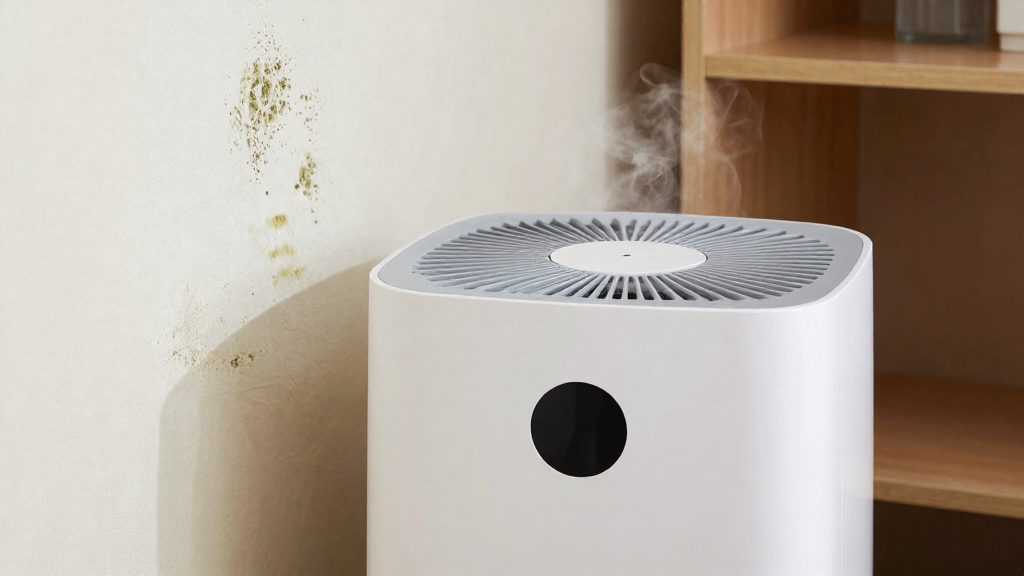
Yes, a dehumidifier helps when moisture is what drives the musty smell in a closet. Damp, poorly ventilated air feeds that odor, and a dehumidifier reduces the moisture behind it. It does not remove odor compounds already absorbed by fabrics, shelves or walls, so it works best alongside cleaning. The U.S. Environmental Protection Agency (2026) advises using air conditioners and/or dehumidifiers when needed to control moisture.
Does a dehumidifier help with musty smell in closets?
When a dehumidifier works
A dehumidifier is effective when the closet is damp and the smell returns after cleaning, because it targets the cause rather than the odor itself.
Where it falls short
- It does not clean. Odor compounds on clothing, shelves and walls stay in place unless the surfaces are wiped down.
- It cannot dry wet items placed back inside.
- Some odors need a professional. According to AOL (originally Martha Stewart Living), by Katie Cloyd (2024-11-14), sour, sulfur, decay or smoke odors may signal gas leaks, animal remains or electrical problems.
Practical routine and timing
Fox’s approach combines moisture control with odor removal. Each step addresses a different part of the problem:
| Step | Detail from the source |
|---|---|
| Run a small-space dehumidifier | Recommended by Fox for a musty closet |
| Wipe down closet surfaces | Addresses residual odor on surfaces |
| Place a baking soda absorber | Replace every 6 to 8 weeks; used alongside moisture control |
Judge progress by whether the closet smells less after each drying cycle, and keep the absorber replaced on schedule so it continues to work.
Why closets get musty
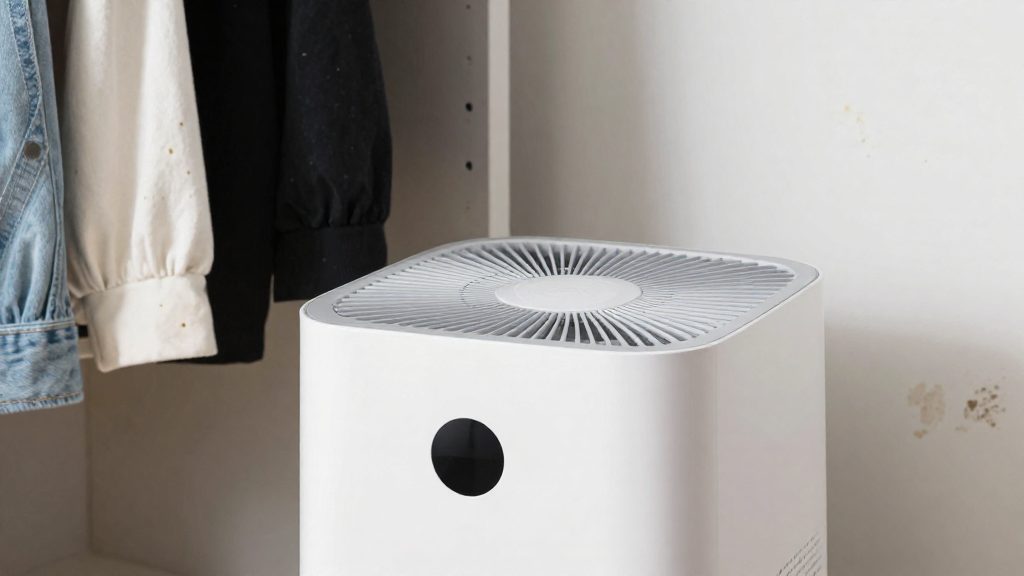
Closets trap moisture because they are small, enclosed and often poorly ventilated. Water vapour from the room, from the building fabric or from stored items settles inside the closet and stays there. The musty smell usually comes from damp surfaces and materials, where microbes can grow. Identifying the moisture source is the first step, because a dehumidifier removes water from the air but cannot stop a leak or a cold wall from supplying more.
Cold exterior walls and surface condensation
Surface condensation is a common source in closets on outside walls. Air holds less water vapour as it cools. When warm, humid room air touches a surface colder than its dew point, the vapour turns into liquid water on that surface. Exterior walls are often the coldest surfaces in a home, so the back wall of a closet can stay damp even when the rest of the room feels dry.
Conditions that make this worse:
- Clothing, shoes or boxes pressed against the back wall, which block air movement across the surface
- A closed door that stops warm air from the room reaching the closet
- Little or no air exchange between the closet and the rest of the home
Leaks from plumbing, roofs and windows
Water leaks add liquid water rather than vapour, so they keep a closet damp regardless of the air’s humidity. The U.S. Environmental Protection Agency (EPA, 2026) recommends fixing water leaks as a core step in preventing mold. Leaks often sit inside the wall or ceiling cavity, so the first sign may be a stain, a bulge in paint or a soft baseboard rather than a visible drip.
Moisture released by damp stored textiles
Fabrics, bedding and stored textiles absorb water and release it slowly into the surrounding air. In an enclosed closet, this released moisture has little room to disperse and can raise local humidity around the stored items. Materials stored in this environment become a secondary source, feeding the odour that is already present.
Summary of moisture sources
| Source | How moisture enters the closet | Typical indicator |
|---|---|---|
| Cold exterior wall | Warm air condenses on the cold surface | Damp patch on the wall, paint or wallpaper lifting, dark marks near the base |
| Plumbing leak | Water seeps into the wall or floor cavity | Staining, swelling of baseboards, odour that persists |
| Roof leak | Water runs down through the ceiling or upper wall | Stains on the ceiling or top shelf, often after rain |
| Window leak | Water passes through the frame or sill | Wet sill, staining below the frame after rain |
| Damp stored textiles | Water evaporates into the enclosed air | Odour concentrated around stored items |
What humidity level should you aim for?
The U.S. Environmental Protection Agency (EPA) recommends keeping indoor relative humidity below 60 percent, with an ideal range of 30 to 50 percent (EPA, 2026). The 60 percent figure is the upper limit. The 30 to 50 percent band is the target. Closets are often more enclosed than the rest of a room, so their air can sit at a different humidity from the room air. A reading taken in the living area therefore does not confirm the level inside a closet.
How to verify the level with a meter
EPA states that a simple moisture or humidity meter can measure indoor humidity (EPA, 2026). A hygrometer is the device used for this check. Work through these steps:
- Place the hygrometer inside the closet rather than in the room, so the reading reflects the air you are trying to control.
- Leave it in place long enough to show a stable value, then note the reading.
- Compare the reading with the EPA bands: 30 to 50 percent is the target, and anything at or above 60 percent exceeds the upper limit.
- Repeat the check at different times, since a single reading may not show the typical level.
Choose a location that keeps the sensor clear of obstructions and away from direct contact with clothing.
How to use a dehumidifier in a closet
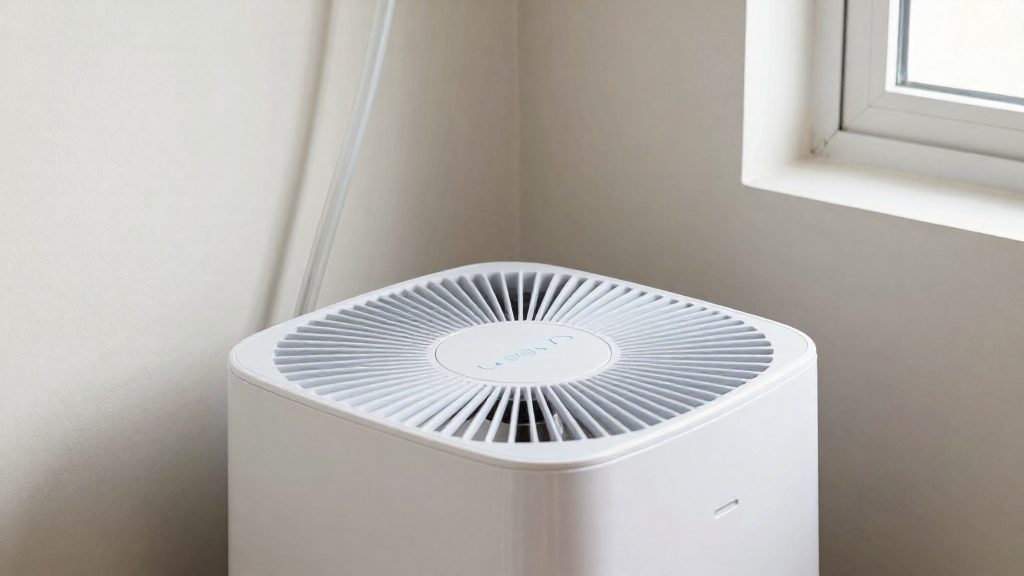
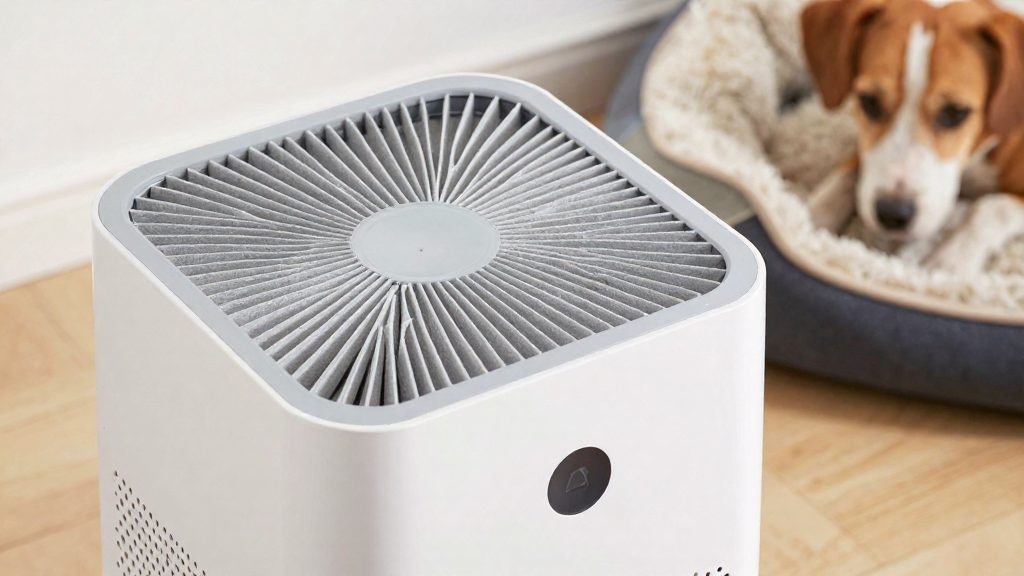
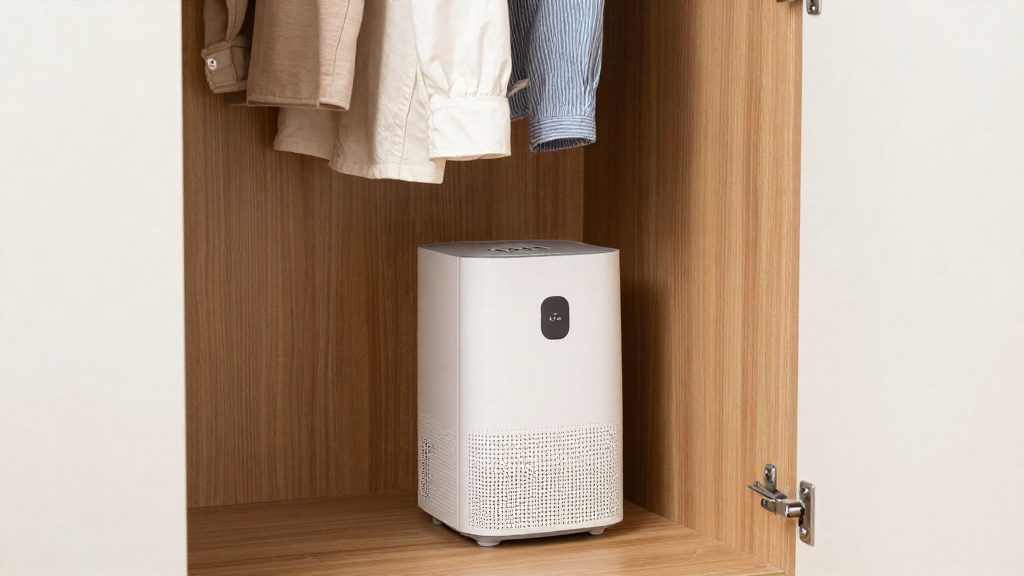
A closet calls for a small-space dehumidifier, the compact unit type designed for enclosed areas. Choose a model labelled for small rooms rather than a full-size room unit. Measure the footprint before buying and confirm the unit fits without pushing against stored items or blocking the door. Place it on a flat, stable floor surface, not on a shelf or on top of folded fabric.
Leave the closet door open while the unit runs. Andy Fox, a 3M indoor air quality specialist, advises this approach for musty closets, as quoted by AOL (originally Martha Stewart Living) in November 2024.
Damp garments add moisture back into the space that the unit then has to remove.
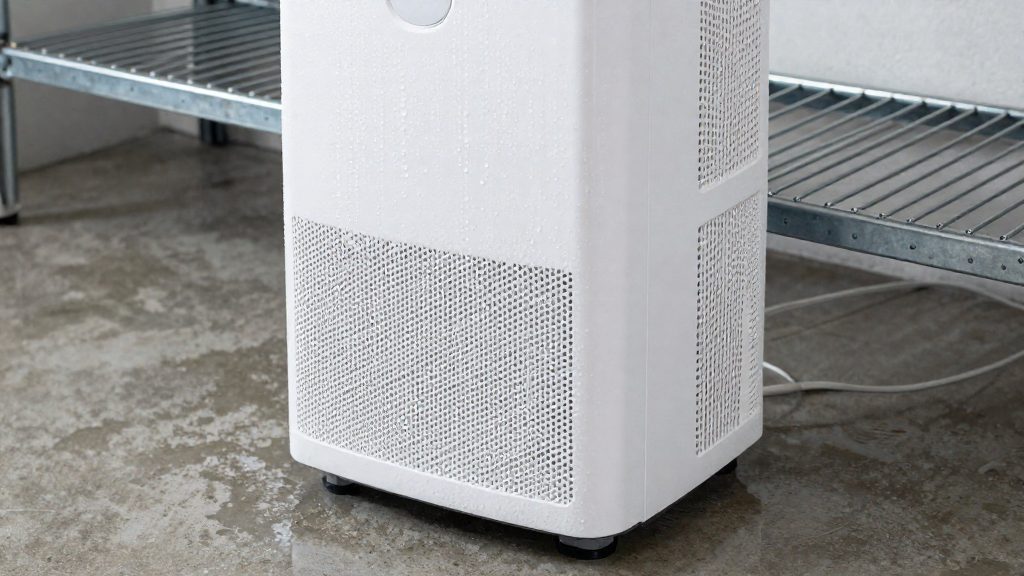
Choosing between tank emptying and continuous drainage
Compact units collect condensed water in one of two ways. Select the method that matches how you can maintain the unit.
| Method | How it works | Practical point |
|---|---|---|
| Tank emptying | Water collects in an internal tank that you remove and empty by hand | Requires regular checks; an unattended full tank stops moisture removal |
| Continuous drain | A hose attached to the drain outlet carries water by gravity to a floor drain or basin | Needs a unit with a drain port, a hose that slopes downward, and no kinks |
Clean the closet and improve airflow
Cleaning and airflow address the surfaces and textiles that hold odor, not only the humidity in the air. The Andy Fox advice reported by AOL (originally Martha Stewart Living, Katie Cloyd, 2024-11-14) combines two steps: wipe down the closet surfaces and run a fan for airflow. Each step covers a different part of the problem.
Wipe shelves, rails and walls
Start by emptying the closet and wiping every accessible surface, including shelves, clothing rails, the back wall, the floor and the door. Use a cleaner suitable for the material, and work from top to bottom so that loosened dust and residue fall onto surfaces you have not yet cleaned. Wipe with a cloth that you rinse or replace regularly, so the surface is not simply smeared with dirty liquid.
Dry the surfaces completely before returning items. Damp panels or fabric-lined shelves can keep a closet musty even after the air has been treated, because the moisture remains in the material.
Use a fan to move air
Once the surfaces are dry, use a fan to keep air moving through the space. A fan that moves air through the space helps replace stagnant air, which is the condition in which a musty smell tends to persist. Position the fan so it does not blow dust from the floor onto stored items.
Dry textiles fully before storage
Clothing, bedding and other textiles should be completely dry before they are hung or folded back into the closet. Damp fabric releases moisture into the enclosed space and can keep the odor in place. Any garment that became wet should be dried promptly rather than stored while still damp.
Are desiccant bags or moisture absorbers enough?
Passive absorbers such as silica gel packs and calcium chloride tubs can take up small amounts of moisture in a closet, but they offer limited, unregulated control. Baking soda boxes are advised for odor, not humidity control. They rely on a fixed absorbing material that fills up, so they suit light, steady moisture rather than a closet that already smells musty. The U.S. Environmental Protection Agency (2026) advises using dehumidifiers when needed to control moisture. Measure first with a hygrometer. If readings stay above the 60 percent limit, a passive product will not close the gap.
How passive absorbers compare with active dehumidification
| Factor | Passive absorbers | Active dehumidification |
|---|---|---|
| Moisture handling | Binds water into the medium until it is saturated | Removes moisture from the air continuously while running |
| Response to changing humidity | Slow and unregulated; no setpoint | Responds to a set humidity level |
| Capacity | Finite | Continuous while powered and operating |
| Suited for | Light, steady humidity | Persistent or high moisture loads |
Silica gel and calcium chloride limits
Silica gel and calcium chloride absorb water until their capacity is used up, then stop working. Check the product label for how long a pack lasts in a given closet. Because some products give no visible signal when saturated, a pack that once worked may no longer provide any benefit.
Baking soda absorbers and replacement timing
Baking soda absorbers are the passive option with a replacement interval given in the Fox advice. Andy Fox, a 3M indoor air quality specialist, advises using a baking soda absorber and replacing it every 6 to 8 weeks (AOL, originally Martha Stewart Living, by Katie Cloyd, 2024-11-14). A box left beyond that window is unlikely to be doing much, so the replacement date should be noted when the box is placed.
When absorbers are inadequate
Absorbers fall short in three situations:
- High moisture loads: Condensation on walls or a damp floor adds more water than a small packet can hold.
- Humidity above the EPA ceiling: Readings above 60 percent call for active dehumidification.
- Wet materials: Damp clothing or fabric releases moisture faster than passive media can absorb it.
When a musty smell signals mold
A musty smell in a closet can come from mold you cannot see. According to the U.S. Environmental Protection Agency (2026), a moldy smell can point to hidden mold when the source is not visible. Mold tends to develop on back walls, under shelving, and behind stored boxes, so a closet that looks clean can still harbor growth. A dehumidifier reduces the moisture that supports growth, but it does not remove a colony that has already formed, so the odor itself is the signal to investigate.
Hidden mold behind surfaces
To locate the source, empty the closet and inspect the back wall, the side walls, and the underside of shelves with a flashlight. Look for discoloration, staining, or fuzzy patches. Check items stored on the floor or against the wall, since they trap moisture against surfaces. If the odor persists after the visible surfaces look clean, the growth is likely behind the finish.
Drying water-damaged items within 24 to 48 hours
The EPA advises that water-damaged areas and items be dried within 24 to 48 hours to prevent mold growth. The window applies to both the closet structure and anything stored in it.
| Situation | Action | Source |
|---|---|---|
| Surface or item got wet | Dry within 24-48 hours | EPA (2026) |
Visible mold or odor after cleanup means failure
If either returns after cleaning, the moisture source or hidden growth has not been resolved, and the surfaces need a second inspection.
Should you call a professional?
Some closet odors are not a moisture problem that a dehumidifier can solve. According to AOL (originally Martha Stewart Living, by Katie Cloyd, 2024-11-14), persistent sour, sulfur, decay or smoke odors may signal mold, gas leaks, animal remains or electrical problems, and these situations need a professional rather than DIY treatment. If an odor continues after the closet has been dried and aired, or if it differs from the ordinary damp-fabric smell, stop treating it yourself and investigate the source.
Possible sources and why they need a professional
| Possible source | Why it needs a professional |
|---|---|
| Gas leak | Sulfur-type odors may signal a gas leak, which is a safety hazard that requires expert inspection. |
| Electrical problem | Smoke or burnt odors may indicate wiring or electrical faults that a licensed electrician must assess. |
| Animal remains | Sour or decay odors may come from remains in concealed areas such as wall cavities, under floors or behind stored items. |
Gas and sulfur odors
A sulfur or gas-like smell near a gas appliance or pipe is the most urgent case in this list. If you smell gas, leave the building immediately without touching light switches, appliances or flames. From outside, call 911 and your gas utility’s emergency line.
Electrical and animal-related odors
Smoke or burnt odors near outlets, wiring or a dehumidifier’s power cord may signal an electrical problem. Unplug the device only if it is safe to do so, stop using that outlet, and have a licensed electrician inspect the circuit before resuming use. If you see smoke, sparks or heat, leave the area and call 911. Decay or sour odors with no visible mold or moisture source may point to remains in a concealed space, which requires a professional to locate and remove.
Frequently asked questions
Should I keep the closet door open while the dehumidifier runs?
Yes. Andy Fox, a 3M indoor air quality specialist, advises keeping the door open and running a fan for airflow, so moist air can leave the closet instead of recirculating inside it (AOL, 2024-11-14). Clothes should also be fully dry before they go back in.
What humidity level should a closet stay at to prevent the smell?
The U.S. Environmental Protection Agency (2026) recommends keeping indoor relative humidity below 60 percent, ideally between 30 and 50 percent. A simple hygrometer or moisture meter can confirm the reading inside the closet, which is often different from the room.
What does it mean if the closet still smells after the dehumidifier has run?
The smell may come from hidden mold the EPA (2026) describes as a possibility when the source is not visible. Persistent sour, sulfur, decay or smoke odors call for professional inspection, since AOL (2024-11-14) links them to gas leaks, animal remains or electrical problems.