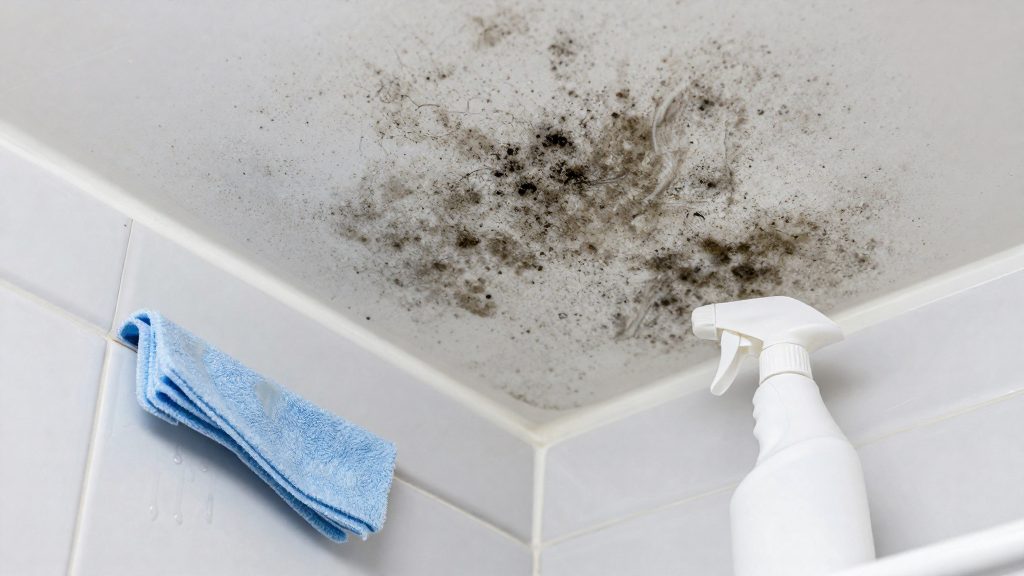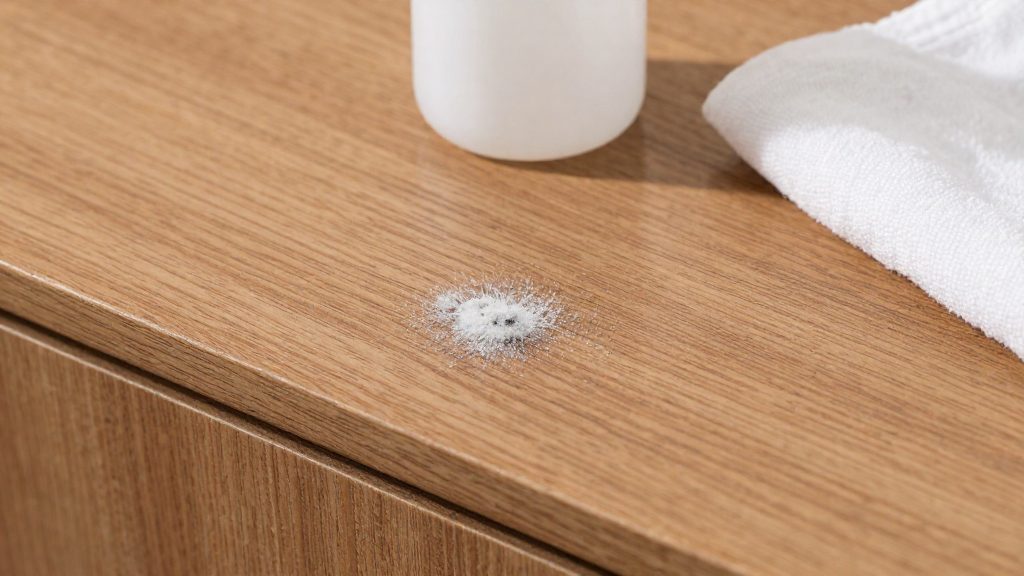
White mold on wood furniture is a surface growth of fungi that appears as fuzzy, cottony or powdery patches, usually on the outer layer of the timber. It feeds on the cellulose and simple sugars naturally present in wood and needs moisture to develop. Because it sits on the surface, it can often be distinguished from harmless salt deposits and from decay that has spread inside the wood, although the difference is not always obvious at first glance.
What is white mold on wood furniture?
Distinguishing fuzzy mold from efflorescence and salt deposits
Efflorescence is a crystalline white residue left when water moves through a material, dissolves minerals, and evaporates at the surface. Mold is a living organism, so its appearance and behaviour differ.
| Feature | White mold | Efflorescence or salt deposit |
|---|---|---|
| Texture | Fuzzy, cottony or powdery | Crystalline, crusty or chalky |
| Origin | Living fungal growth | Minerals left behind as water evaporates |
| Pattern | Often irregular, spreading in patches | Often follows lines of water movement or edges |
| Response to humidity | Tends to return where moisture stays high | Can reappear when water keeps migrating through the wood |
Surface growth versus internal wood decay
White mold colonises the surface and the outer fibres. Wood-decay fungi, by contrast, penetrate deeper and break down the structural components of the timber, which leads to softening, discolouration and loss of strength. Pressing a suspect area with a fingertip or probing it with a blunt tool can reveal whether the wood feels soft or spongy beneath the surface.
Why cellulose and sugars in wood feed mold
Wood is composed mainly of cellulose and hemicellulose, and sapwood also contains residual sugars and starches. Mold fungi use these compounds as carbon sources, which is why untreated timber is a favourable surface for growth. Dust, grime and organic residues on furniture add further nutrients. Moisture, however, is the trigger: without enough water in the wood, these nutrients remain largely unused, so the presence of food alone does not explain an outbreak.
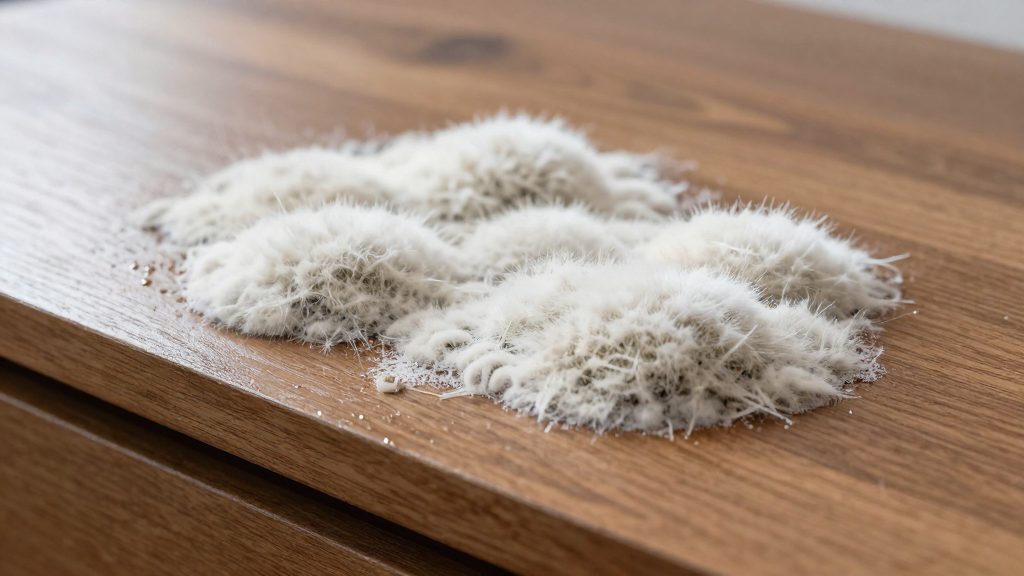
Is white mold dangerous to your health?
White mold on wooden furniture signals excess moisture, and the health concern comes from the spores and fragments it releases into the room air. According to the U.S. Environmental Protection Agency (2026), dead mold can still cause allergic reactions, so a surface that has stopped growing is not automatically safe to leave alone. The risk depends less on whether the colony is alive and more on how much material becomes airborne and how long people breathe it in an enclosed room.
Allergic and respiratory symptoms
People sensitive to mold typically react with allergy-type symptoms such as sneezing, a runny or blocked nose, itchy or watery eyes, and skin irritation. Exposure can also aggravate coughing and breathing discomfort in some individuals. Treat any visible growth as a reason to act rather than trying to judge whether the air level is acceptable.
Higher-risk groups
Some people are more likely to react strongly to mold exposure:
- People with asthma, whose airways can narrow in response to airborne irritants
- People with allergies, including a known sensitivity to mold
- People with weakened immunity, for whom fungal exposure is a greater concern
If someone in these groups uses the affected room, keep them out of it while the furniture is being cleaned and until the piece is fully dry.
Why dead mold still matters
Killing a colony does not remove its allergens. Because dead mold can still trigger reactions, the growth has to be physically removed, not merely stopped.
Wood is not always fully recoverable once the growth has penetrated its surface, so assess the piece’s condition before deciding how much effort to invest in cleaning it.
What you need before cleaning
Protective equipment and a prepared workspace come before any scrubbing of white mold on wooden furniture. According to the U.S. Environmental Protection Agency (2026), the recommended protective gear has three parts: gloves, goggles and a respirator. Each has a specific requirement that determines whether it protects you during cleaning.
| Equipment | Specification (EPA, 2026) |
|---|---|
| Gloves | Natural rubber, neoprene, nitrile, polyurethane or PVC when disinfectants are used |
| Goggles | Goggles without ventilation holes |
| Respirator | N-95, properly fitted |
Glove material and disinfectants
The EPA list of glove materials applies specifically when you use disinfectants. A glove that is not on that list should not be assumed suitable for that purpose. Check the disinfectant product label for the glove material it requires.
Preparing the workspace
Choose the workspace before you start:
- Outdoors if possible: work outside, away from open windows, bedding and food preparation areas. If the piece cannot be moved, use a space that can be aired and is separated from them.
- Ready at hand: have a sponge, a bucket of warm soapy water and a dry rag within reach, so the piece is not left wet while you fetch tools.
How to clean white mold off wooden furniture step by step
The method described by Hunker (2009) follows this order: remove the loose growth while the surface is still dry, wipe the remaining residue with a damp sponge, then let the wood dry completely before the final pass. If mold is still visible after drying, do not keep scrubbing the wood: see the section on when to discard the piece or consult a specialist. The U.S. Environmental Protection Agency (2026) advises scrubbing hard surfaces with detergent and water, then drying them completely.
Step 1: Dry removal of loose mold
Wearing the gloves, goggles and N-95 respirator, take the furniture outdoors and sweep off the loose mold before any moisture touches the surface. Dry brushing releases spores, so keep other people and pets away. Keeping the wood dry at this stage prevents the growth from being smeared across the grain once it is wet. Keeping the wood dry at this stage prevents the growth from being smeared across the grain once it is wet.
Step 2: Damp wiping with warm soapy water
Wipe the surface with a sponge dipped in warm soapy water. The method described by Hunker (2009) specifies wiping rather than soaking, so the wood is never left standing in liquid. Wring the sponge thoroughly so the surface stays damp rather than wet, and discard the sponge and rags afterwards rather than reusing them elsewhere.
Step 3: Complete drying before the final wipe-down
Let the wood dry completely before the last step. Confirm dryness by touch and by checking that no damp patches remain. Once the surface is fully dry, wipe it with a dry rag to remove residue left by the cleaning.
| Stage | Action | Condition before moving on |
|---|---|---|
| 1. Dry removal | Sweep loose mold outdoors | Surface dry, protective gear worn |
| 2. Damp wiping | Sponge with warm soapy water | Wood damp, not soaked |
| 3. Drying | Let the wood dry completely | No damp patches remain |
| 4. Final wipe-down | Dry rag over the surface | Only after full drying |
Should you use bleach or vinegar?
For mold on wooden furniture, chlorine bleach is not the default choice. The U.S. Environmental Protection Agency (2026) does not recommend chlorine bleach or other biocides as a routine part of mold cleanup. Wood is porous, so the cleaning agent matters as much as the scrubbing.
What the EPA position means
The EPA’s objection targets routine use of bleach, not every disinfectant in every situation. The agency’s main concern is removal. A detergent-and-water wipe handles the residue directly, while bleach adds a chemical step that the EPA does not list as routine.
How the sources treat wood specifically
Hunker (2009) describes a gentler method for wooden furniture: dry sweeping, then a damp sponge with warm soapy water without soaking the wood. Hunker (2009) describes a gentler method for wooden furniture: dry sweeping, then a damp sponge with warm soapy water without soaking the wood. The Hunker piece also suggests a fungicide spray and a dehumidifier to prevent regrowth. This article does not recommend the fungicide spray, because the EPA (2026) does not recommend biocides as a routine part of mold cleanup.
| Agent | Position in the sources | Source |
|---|---|---|
| Chlorine bleach | Not recommended as a routine part of mold cleanup | U.S. Environmental Protection Agency (2026) |
| Detergent and water | Scrub hard surfaces, then dry completely | U.S. Environmental Protection Agency (2026) |
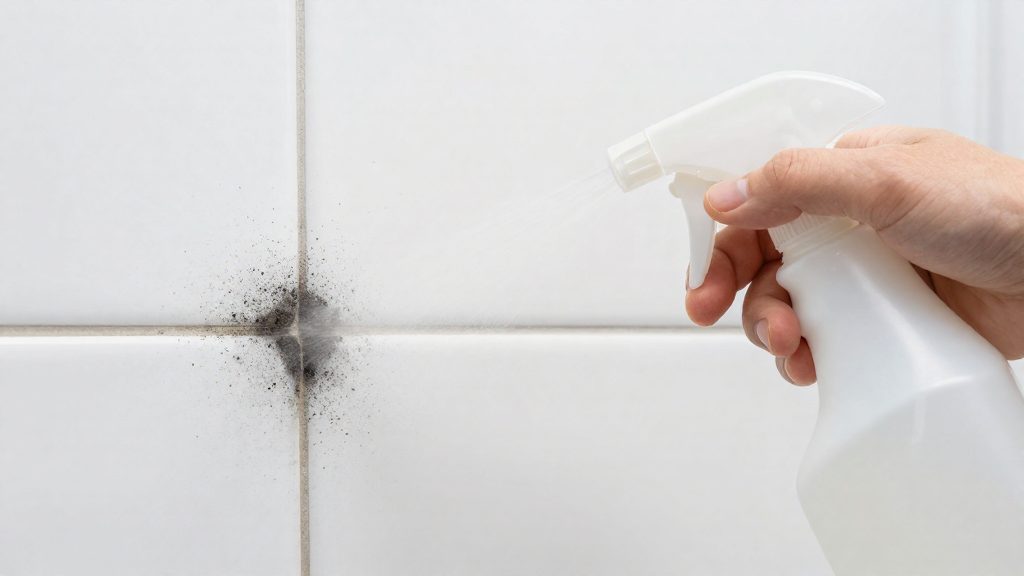
When should you throw the piece away or call a pro?
Wooden furniture may be worth keeping when the mold is only on the surface and the wood underneath is sound. It should be discarded when the mold has entered the material, when the damage is permanent, or when the wood has started to decay. For expensive or sentimental pieces, a specialist should assess the piece before any decision is made.
Porous items that cannot be fully cleaned
Wood is porous, but the risk varies with its finish. Finished surfaces tend to keep mold on the outside, while raw or unfinished wood can let spores settle into its grain. According to the U.S. Environmental Protection Agency (2026), mold can lodge in the empty spaces of porous items and cannot always be fully removed, so those items may have to be thrown away if moldy.
Use this check after surface cleaning and complete drying: if mold is still visible in the grain, joints or cracks, the piece has likely passed the point where surface treatment works.
Permanent stains, wood damage and structural decay
Some signs point to a decision that cleaning cannot change. Mold can also leave permanent stains or damage, according to the EPA (2026).
| Observation after drying | What it indicates | Likely decision |
|---|---|---|
| Dark marks that persist in the grain | Permanent staining | Discard, or keep only if the cosmetic change is acceptable |
| Wood that feels soft, spongy or crumbles under light pressure | Structural decay | Discard |
| Joints that loosen or split | Weakened structure | Discard, or consult a specialist if the piece has high value |
Expensive or sentimental pieces: consulting a specialist
For expensive or sentimental items, the EPA (2026) suggests consulting a specialist rather than deciding alone. A specialist can determine whether the damage is superficial or structural before you commit to a treatment.
How do you stop mold from coming back?
According to the U.S. Environmental Protection Agency (2026), the first step in preventing regrowth is to fix the water source. Cleaning removes the visible growth, but if moisture keeps reaching the wood, mold will return. Preventing recurrence therefore depends on where the moisture comes from and how the furniture sits in the room.
Locate and fix the water source
Mold on wooden furniture usually traces back to one of three moisture routes: a leak, rain or damp entering through a gap, or condensation forming on a cold surface behind or under the piece. Inspect the back panel, the underside, and the wall behind the furniture for damp patches, staining, or a musty smell. These signs often persist after the surface has been cleaned.
| Moisture route | Where to look | Action |
|---|---|---|
| Leak from pipe or roof | Staining or swelling on the wall behind the piece | Repair the leak before returning the furniture |
| Water entering through a gap | Damp patches near windows, skirting boards, or gaps in the wall | Seal the gap and confirm the area is dry |
| Condensation | Cold, damp wall surfaces, often with water beading | Address the cold surface, not just the wood |
Keep furniture away from exterior walls
Exterior walls are generally the coldest surfaces in a room, so moisture condenses on them more readily. Positioning wardrobes, bookcases, and beds with a clear gap from these walls reduces the chance that the back of the piece stays cold and damp. Corners where two exterior walls meet can have poor air movement, so avoid them for large solid pieces where possible.
Maintain airflow around furniture
Solid, closed furniture traps still air against the wood surface. Leave space between the piece and the wall, avoid packing items tightly against the back, and open doors and drawers periodically so the interior air can circulate. Make sure furniture does not block vents or radiators, since this reduces the air movement that helps keep surfaces dry.
Control humidity with a hygrometer and dehumidifier
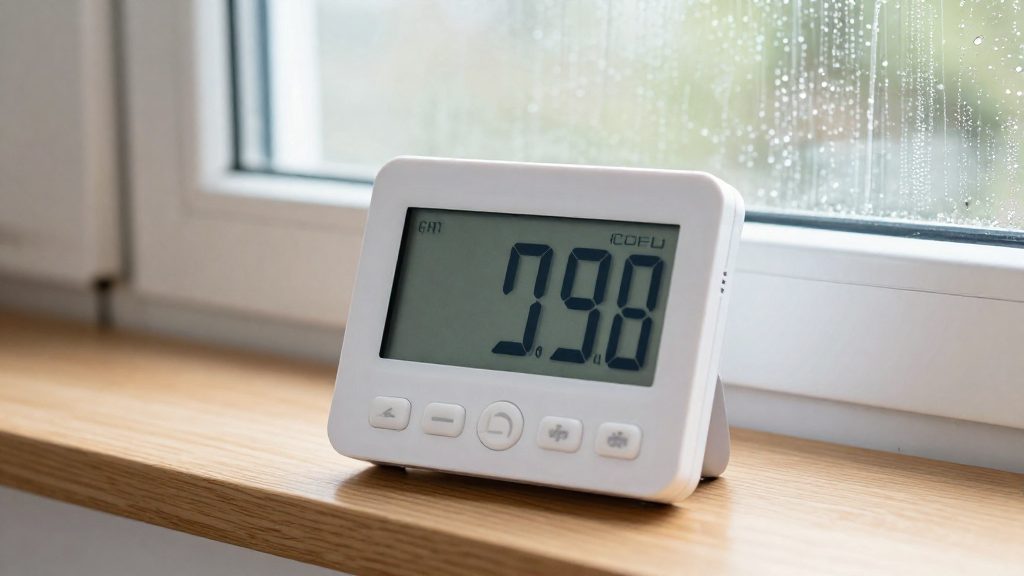
The EPA advises keeping indoor relative humidity below 60 percent, ideally between 30 and 50 percent, and measuring it with a moisture or humidity meter (U.S. Environmental Protection Agency, 2026). Those figures give a working target for wooden furniture: stay under the 60 percent ceiling, aim for the 30 to 50 percent band, and confirm the result with a hygrometer reading rather than assuming the air is dry enough.
Target bands and what the readings mean
| Indoor relative humidity | Status against EPA guidance |
|---|---|
| Above 60 percent | Outside the recommended ceiling; humidity control is needed |
| 50 to 60 percent | Below the ceiling but above the ideal band |
| 30 to 50 percent | Ideal band |
Hygrometer placement and reading
- Place the meter in the same room as the furniture, at roughly the same height, rather than on a windowsill or next to a heater.
- Keep it away from direct sunlight and from exterior walls, where surface conditions can skew the reading.
- Log readings at different times of day. A single reading can miss peaks, so a pattern over several days is more reliable.
Sizing and running a dehumidifier
Match the unit to the room and to the readings rather than to a fixed number. A room that stays well above 60 percent needs more capacity than one that sits just over the ceiling.
- Set the unit’s humidistat setpoint within the 30 to 50 percent band, not at the lowest possible value.
- Run it continuously while readings stay above the setpoint, and check that the collection tank or drain is clear.
- Re-check the hygrometer after several days. If readings stay above 60 percent, the unit is undersized or the room has an external moisture source.
Hunker (2009) suggests using a dehumidifier to help prevent mold from returning to wooden furniture after cleaning, which makes the humidity target a maintenance measure as well as a cleanup step.
Frequently asked questions
Can I use chlorine bleach to remove white mold from wooden furniture?
According to the U.S. Environmental Protection Agency (2026), chlorine bleach is not recommended as a routine part of mold cleanup, and it must never be mixed with ammonia-containing products. Dead mold can still trigger allergic reactions, so the growth has to be physically removed rather than only killed.
What protective equipment should I wear before cleaning?
The U.S. Environmental Protection Agency (2026) recommends gloves made of natural rubber, neoprene, nitrile, polyurethane or PVC (the last two when using disinfectants), goggles without ventilation holes, and a properly fitted N-95 respirator. The respirator only protects you if it seals correctly against your face, so check the fit before you start.
How do I stop white mold from coming back on my furniture?
Mold returns where moisture persists, so the U.S. Environmental Protection Agency (2026) advises keeping indoor relative humidity below 60 percent, ideally between 30 and 50 percent, and checking it with a hygrometer. Fix the water source first, and do not paint or caulk over the area until it is clean and fully dry.