The U.S. EPA does not give separate guidance for overnight use. Its general advice for home humidifiers applies at night: keep indoor relative humidity at or below 50 percent, use low-mineral water, clean the unit as directed, and keep steam vaporizers away from children because they can cause burns. The question is therefore less about running the device at night and more about the device type, its hygiene, and the humidity level it produces.
Is it safe to sleep with a humidifier on?
Overall verdict
The EPA does not declare overnight use safe or unsafe. It sets conditions that apply whenever a humidifier runs:
- Controlled humidity: The unit should be used so that indoor conditions stay within the limits the EPA describes, without pushing moisture to levels that favour growth.
If this condition is not met, the device should not run unattended through the night.
Steam vaporizers and children
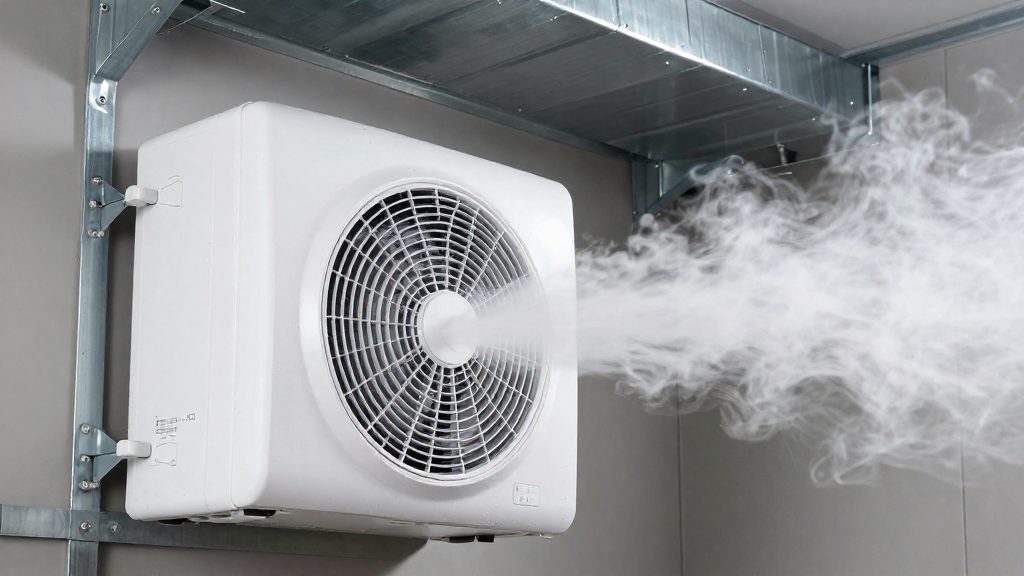
Steam vaporizers are the device type with a direct physical hazard. The U.S. EPA (2025) warns that they can cause burns and should be kept away from children. The EPA advises keeping steam vaporizers away from children. Do not run one in a child’s bedroom.
Bedroom placement and mist direction
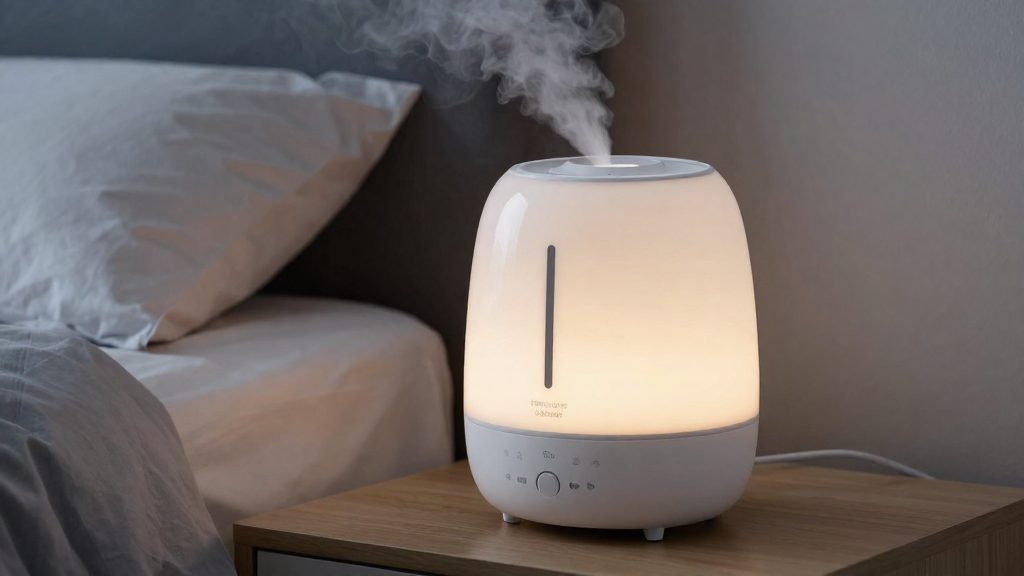
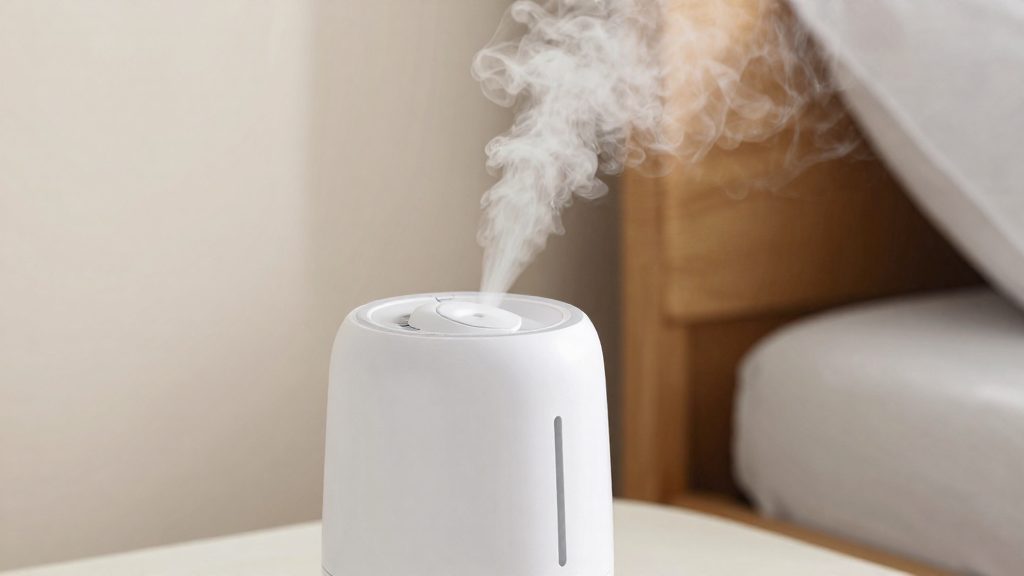
Position changes personal exposure. As a general precaution (not an EPA rule), keep the unit away from the bed so the sleeper is not directly in the output, and avoid aiming the mist at the head or face.
What humidity level is safe overnight?
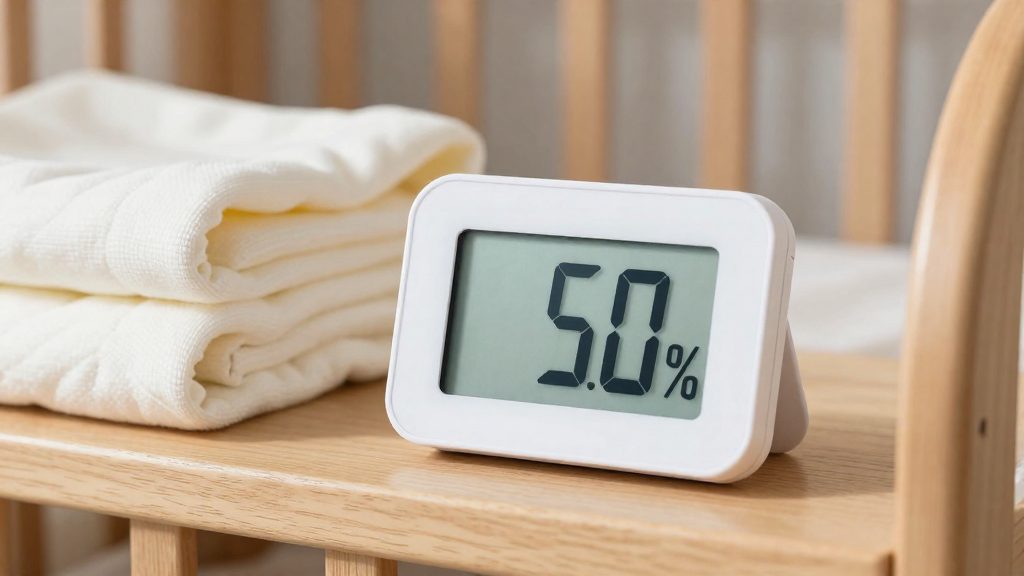
The U.S. Environmental Protection Agency sets a clear upper bound. According to the U.S. EPA (January 2025), you should not humidify to an indoor relative humidity above 50 percent. The ceiling applies whenever a humidifier runs, including during sleep.
Why the 50 percent ceiling exists
The EPA gives its reason directly: higher indoor humidity may encourage biological growth, including mold and other microorganisms that colonize damp surfaces. The 50 percent figure is a threshold for growth risk, not a comfort target.
Dust mites in bedding
The EPA also states that excess moisture can encourage dust mites. Mites are a concern in the fabrics people lie on for most of the night, such as mattresses, pillows and blankets. The EPA says that excess moisture can encourage both mold and dust mites.
Checking the level in practice
Verify the reading with a standalone hygrometer placed in the bedroom, away from the humidifier’s outlet. As a general measurement precaution, a sensor close to the unit can register localized moisture and give a higher reading than the air in the rest of the room.
Can a humidifier cause mold or condensation?
Yes. A humidifier adds water vapor to room air, and that moisture has to go somewhere. When it reaches a surface colder than the surrounding air, such as a window pane, an exterior wall or the glass of a framed picture, the vapor turns back into liquid water. This process is condensation, and it can be a visible sign that the humidifier is adding more moisture than the room can handle.
Where condensation appears
Condensation forms on the coldest surfaces in a room. In most homes, these are window glass, exterior walls and the glass or back panel of framed pictures hung against those walls. The signs to watch for are:
- Water droplets or streaks on window glass
- Damp patches or staining on painted or papered walls
- Moisture behind or beneath framed pictures
Mold risk on cold surfaces and in room corners
Mold needs moisture that stays in place. In general, surfaces that stay cold collect condensation repeatedly, and areas with little air movement disperse moisture more slowly. Act as soon as any condensation appears.
EPA remedies
The EPA advises three adjustments when water condenses on windows, walls or pictures:
| Action | What it changes |
|---|---|
| Move the humidifier away from the affected surface | Places the moisture source away from the cold surface where condensation forms |
| Lower the humidistat setting | Reduces the amount of vapor the unit releases into the room |
| Reduce runtime | Limits how long the unit adds moisture, cutting total vapor output |
Which water should you use?
The EPA recommends low-mineral water, such as distilled water, so that minerals are not released into the air (U.S. EPA, archived snapshot January 2025). A humidifier does not filter dissolved minerals out of the water. It turns the water in the tank into mist, and any minerals in that water travel with the mist into the room. The water you choose therefore affects what enters your air, not only how much moisture it holds.
Why mineral content matters
The EPA recommends low-mineral water so that minerals are not released into the air. The mineral content of tap water varies with its source. Starting with low-mineral water limits this input from the outset, which is the reasoning behind the EPA’s recommendation.
Reading bottled water labels
Bottled water is often sold as spring, artesian or mineral water. According to the EPA (January 2025), water with these labels has not been treated to remove minerals. These labels therefore do not indicate a low-mineral water.
Water types compared
| Water type | Mineral treatment | EPA guidance |
|---|---|---|
| Distilled water | Low-mineral | Recommended |
| Bottled spring, artesian or mineral water | Not treated to remove minerals | Not a low-mineral option |
How often should you clean it?
The U.S. EPA (2025) sets a two-part schedule for portable humidifiers: a daily emptying and drying routine, and a full cleaning every third day. The daily steps keep water from sitting in the tank, while the three-day cleaning targets the scale and microorganisms that build up on internal surfaces. The schedule applies whenever the unit runs, so a humidifier used overnight needs the same routine the following day.
Daily routine
The EPA’s daily steps for portable humidifiers are:
- Empty the tank completely.
- Wipe all surfaces dry.
- Refill the tank with water.
Drying the surfaces matters as much as emptying the tank, because a damp base gives microorganisms a place to settle between uses.
Cleaning every third day
Scale is the mineral residue left behind as water evaporates. It collects on the tank walls and base, and the full cleaning on the three-day cycle is the step designed to reduce it, along with microorganisms. The table below summarises the schedule.
| Task | Frequency | Purpose |
|---|---|---|
| Empty the tank | Daily | Removes standing water |
| Wipe all surfaces dry | Daily | Leaves no damp surfaces between uses |
| Refill with water | Daily | Starts each day with fresh water |
| Full cleaning | Every third day | Reduces scale and microorganisms |
Why standing water matters
Standing water is the main reason for the daily routine. Water that remains in the tank between refills is where microorganisms can multiply. Emptying the tank each day interrupts that process, and refilling with fresh water means the next run starts from a clean reservoir rather than the previous day’s water.
Who should be careful?
The U.S. EPA (2025) identifies four groups as more susceptible to the respiratory effects of humidifier use: children, older adults, people with lung disease, and people with respiratory allergies. The EPA says these groups may be more susceptible. Control what you can: the cleanliness of the unit and the moisture level in the room.
| Group | Reason for caution (U.S. EPA, 2025) |
|---|---|
| Children | Listed as potentially more susceptible to the effects of mist |
| Older adults | Listed as potentially more susceptible to the effects of mist |
| People with lung disease | Listed as potentially more susceptible to the effects of mist |
| People with respiratory allergies | Listed as potentially more susceptible |
Why contaminated mist matters more for these groups
Mist carries whatever has built up inside the unit. According to the U.S. EPA (2025), breathing mist that contains pollutants from a dirty humidifier has been implicated in a type of lung inflammation. Because the groups above may be more susceptible, a dirty humidifier may matter more for them. The EPA does not say that the risk comes only from the unit’s condition.
Respiratory allergies and moisture-driven growth
For people with respiratory allergies, the humidifier creates a second exposure route beyond the mist. Excess moisture can encourage dust mites and mold, so a humidifier that pushes the room above 50 percent may raise exposure for an allergic sleeper even when the unit is clean.
How to monitor humidity with a hygrometer
A hygrometer placed at the right height and read over several nights shows whether a humidifier keeps the bedroom within a safe range. A digital hygrometer is the simplest way to check humidity while you sleep, but only if the sensor is positioned and calibrated correctly.
Placing the hygrometer at bed height
As a general tip, position the sensor roughly at the height of your head while lying in bed, not on the floor or on a high shelf, so the reading reflects the air you breathe.
- Keep the sensor a few feet (about 1 m) from the humidifier outlet, so direct mist does not reach it.
- Avoid placing it on a windowsill, next to a radiator, or in direct sunlight, which can distort readings.
- Keep it away from walls and furniture that block air circulation.
Logging overnight readings
Overnight logging reveals patterns that a single spot check misses. Some models record minimum and maximum values, which lets you review the whole night.
| Observation | What it indicates |
|---|---|
| Readings rising after the humidifier starts | The unit is adding moisture faster than the room removes it |
Checking accuracy with a saturated salt test
Hygrometers drift over time, so an unverified reading can mislead. A saturated salt test checks the sensor against a known reference humidity:
- Place a few tablespoons of salt in a sealed container and add a little water to make a damp slush, so that undissolved salt remains.
- Put the hygrometer inside the sealed container, without touching the salt or water.
- Leave it for several hours until the reading stabilises.
- Compare the reading with the published value for that salt at the room’s temperature.
Check the value for the specific salt you use. If the reading differs significantly, recalibrate the sensor or replace it before relying on overnight data.
When to turn the humidifier off
Stop using the humidifier and contact a physician if you have respiratory symptoms that you think are linked to its use. The U.S. EPA (2025) gives this as direct advice, and it applies to overnight use in a bedroom as much as to daytime use.
The EPA advice does not depend on a specific pattern: if you have respiratory symptoms you think are linked to the humidifier, stop using it and contact a physician. When you speak to a physician, note when the symptoms began, how long the unit had been running, and whether the room was closed. These details help the assessment.
The EPA describes why the device can affect breathing. It states that breathing mist containing pollutants from a dirty humidifier has been implicated in a type of lung inflammation.
Some people are more susceptible. According to the U.S. EPA (2025), children, older adults, and people with lung disease or respiratory allergies may be more affected. If anyone in these groups uses the humidifier in a sleeping area, the EPA’s stop-and-consult advice matters most for them, and they should not wait for symptoms to worsen before acting. For severe difficulty breathing, call 911 or seek emergency care immediately.
Keep the unit off until the symptoms have been assessed. The assessment should come from a physician rather than from trial and error at home.
Frequently asked questions
Can I run a humidifier all night in my bedroom?
The U.S. EPA gives no separate rule for overnight use, so the same conditions apply while you sleep: keep indoor relative humidity at or below 50 percent and clean the unit as directed. A hygrometer checked before bed shows whether the room is within that limit.
What should I do if water appears on my windows or walls in the morning?
According to the U.S. EPA (2025), you should move the humidifier, lower its humidistat setting, or run it less. Water on surfaces is condensation, which means the output is exceeding what the room can absorb.
What if I wake up with breathing symptoms I think come from the humidifier?
Stop using the unit and contact a physician, as the U.S. EPA (2025) advises for respiratory symptoms linked to its use. For severe difficulty breathing, such as trouble breathing, blue lips or chest pain, call 911 or seek emergency care immediately.