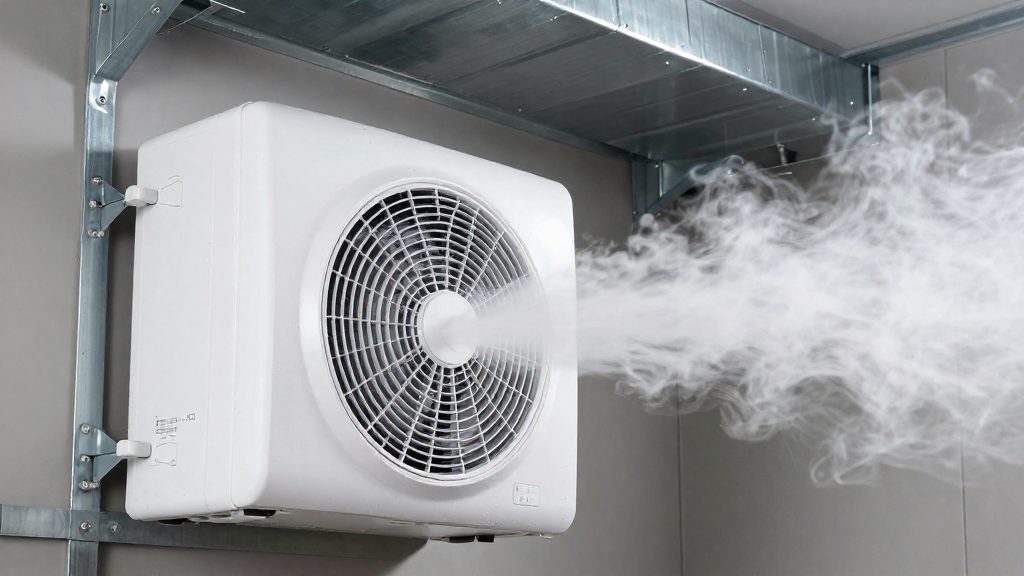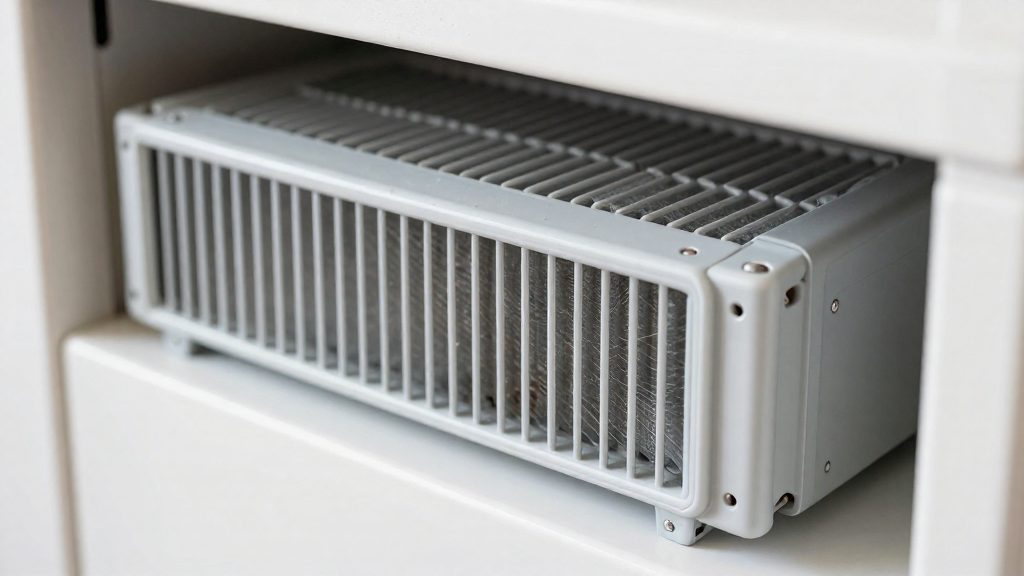
Neglected HRV and ERV units lose ventilation performance in three ways: less fresh air reaches the rooms, contaminants from inside the unit can re-enter the supply air, and the heat exchanger recovers less energy. Routine maintenance addresses all three. The published guidance covers the outdoor hoods, fans, heat exchanger core, cabinet interior and ductwork, and it is these components that determine whether the unit still delivers clean, balanced air to the living space.
Why HRV and ERV maintenance matters for indoor air
Reduced fresh air exchange when airflow drops
A ventilation unit only exchanges indoor and outdoor air if both airstreams move freely. Obstructions at the outdoor hoods and dirt on the fans are the most direct causes of lost airflow.
Less airflow means fewer air changes per hour. Between exchanges, moisture from cooking, showering and breathing, along with CO2 from occupants, accumulates faster. The unit may still run normally, which is why the drop in performance often goes unnoticed without a periodic check.
Pollutant recirculation from dirty internal components
Dust and deposits build up inside the cabinet and ductwork, not only on the filters. The Lifebreath 95MAX manual recommends wiping the cabinet interior twice a year and wiping and vacuuming the ductwork once a year or as needed. Filters are covered in the filter section below.
When these internal surfaces are left uncleaned, the accumulated material is a reservoir that can be carried back into the airstream. The result is that the air being supplied to rooms is less clean than the outdoor air the unit draws in, which undermines the purpose of mechanical ventilation.
Energy penalty from fouled heat exchange surfaces
The heat exchanger core transfers heat between outgoing and incoming air, which is what separates an HRV or ERV from a simple exhaust fan. Deposits on the core reduce how effectively it recovers heat, so the heating or cooling system must make up the difference. The sources differ on frequency:
- Rise Building (2026-06-18): clean the core once or twice a year.
- Lifebreath 95MAX manual: clean the core twice a year.
- Contracting Business (2004-10-01): exchanger cores are typically cleaned annually, following the manufacturer’s guidance.
Because the sources give different intervals, the manufacturer’s manual should set the schedule for a specific unit.
| Component | Routine in the published guidance | Effect when neglected |
|---|---|---|
| Heat exchanger core | Clean once or twice a year (Rise Building, 2026-06-18); annually per manufacturer guidance (Contracting Business, 2004-10-01) | Reduced heat recovery, higher heating and cooling demand |
| Cabinet interior | Wipe twice a year (Lifebreath 95MAX manual) | Dust reservoir that can re-enter the airstream |
| Ductwork | Wipe and vacuum once a year or as needed (Lifebreath 95MAX manual) | Dust reservoir that can re-enter the airstream |
How often should you check and replace HRV or ERV filters?
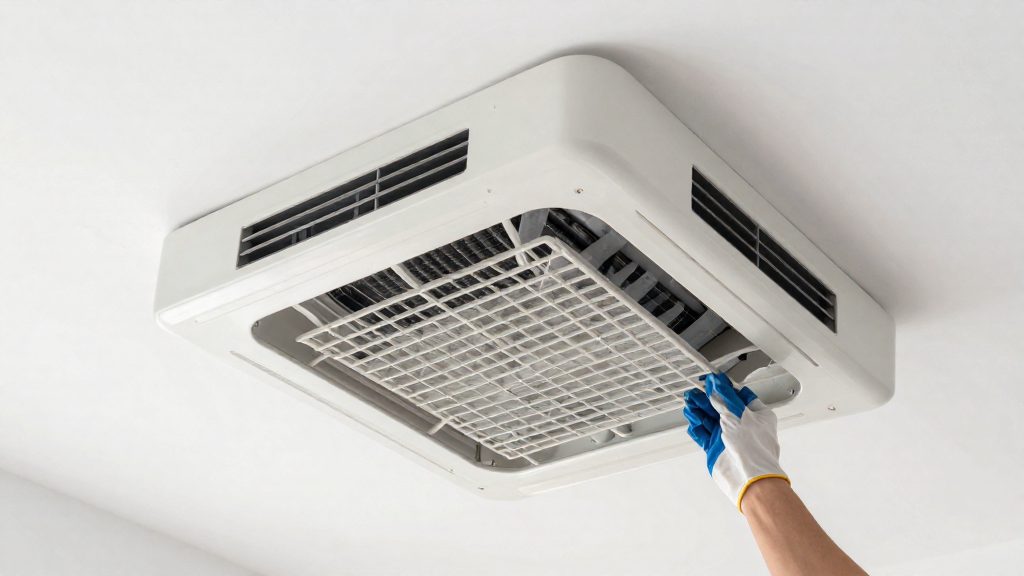
Filter replacement timing depends on the particulate load the unit draws in, the filter type, and how many hours the unit runs. According to Contracting Business (2004-10-01), filters should generally be replaced quarterly or every 2,000 operating hours, depending on particulate levels and filter type. Other sources set different benchmarks, so the table below compares them.
| Source | Benchmark | Condition |
|---|---|---|
| Contracting Business (2004-10-01) | Replace quarterly or every 2,000 operating hours | Depends on particulate levels and filter type |
| Rise Building (2026-06-18) | Inspect every 1–3 months; clean or replace at least every 3–6 months | More often in dusty homes or near busy roads |
| Lifebreath 95MAX HRV manual (ManualsDir) | Clean filters twice a year | Manufacturer routine for this unit |
Operating hours versus calendar time
The 2,000-hour figure matters most for units that run continuously. A unit operating 24 hours a day reaches 2,000 hours in about 83 days, which lines up closely with the quarterly benchmark. A unit set to run only during part of the day, or switched to a lower speed for long periods, will accumulate hours more slowly, so calendar time becomes the more practical reference. Keep a note of the replacement date and check the runtime or fan settings to decide which benchmark applies to your installation.
Inspection every one to three months
Rise Building (2026-06-18) recommends inspecting filters every 1–3 months, even when replacement is not yet due. An inspection means removing the filter and checking it for visible dust build-up, discoloration, and any sign that airflow through the filter is restricted. A filter that looks loaded before its scheduled date should be replaced early. Inspection is the only reliable way to adjust the interval to actual conditions, because the same filter can clog much faster in one home than in another.
Shorter intervals in dusty homes or near roads
Rise Building (2026-06-18) advises cleaning or replacing filters more often in dusty homes or near busy roads. Outdoor air near heavy traffic carries more fine particles, and homes with ongoing dust sources, such as nearby construction work, load filters faster. In these cases, the 3–6 month range from Rise becomes the upper limit rather than the target, and inspection every month is a sensible approach until the loading pattern is known.
How do you clean an HRV or ERV core?
The heat exchanger core is the part of an HRV or ERV that transfers heat between outgoing stale air and incoming fresh air. When dust and debris build up on its channels, airflow drops and the unit moves less air for the same fan speed. Cleaning frequency and method depend on the manufacturer’s procedure, but published guidance ranges from once to twice a year.
Cleaning frequency
The sources consulted give the following guidance:
| Source | Core cleaning guidance |
|---|---|
| Contracting Business (2004) | Cores are typically cleaned annually, following the manufacturer’s guidance |
| Rise Building (2026) | Clean the core once or twice a year |
| Lifebreath 95MAX HRV manual | Clean the core twice a year |
A household in a dusty area, or one with frequent cooking or construction nearby, should follow the upper end of this range (twice a year). Cleaning on a fixed calendar schedule, such as each spring and autumn, makes the task easier to remember.
Washing and drying the core
The general method is:
- Remove the core using the access panel and the sequence in the manufacturer’s manual. Do not force it out of its guides.
- Remove loose dust first with a soft brush or vacuum, following the manufacturer’s manual.
- Clean the core only as the manufacturer’s manual directs. Some cores, particularly ERV enthalpy cores, may not be washable, so check the manual before using water or any cleaner.
- Dry the core completely before reinstalling it. A core that is still damp can encourage the mould growth that the unit is meant to help prevent.
The core must be fully dry before it goes back in. Reinstalling a damp core can trap moisture inside the unit.
Cleaning the fans
Fan cleaning is a separate task from core cleaning. The Lifebreath 95MAX manual says to clean the fans when dirt causes imbalance, vibration or reduced airflow. A fan that has become unbalanced often produces a noticeable vibration or hum, and this is the signal to inspect it before the next scheduled service.
The same manual states that the motors are maintenance-free. Fan maintenance therefore means cleaning the fan wheel and its housing, not lubricating or servicing the motor. Remove any accumulated dust from the blades so the wheel turns freely and remains balanced.
Condensate drain and exterior hood checks
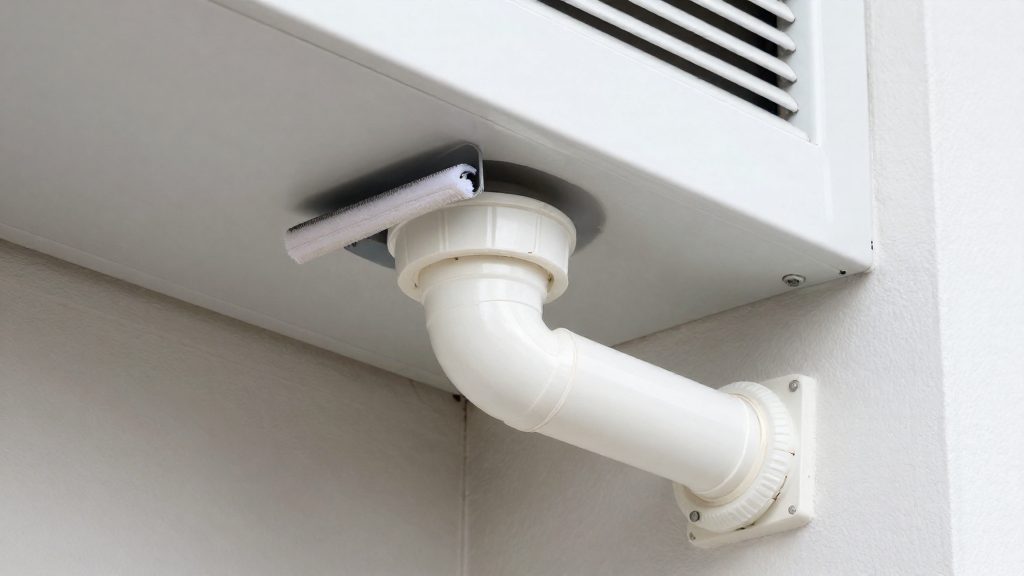
The condensate drain removes water that forms inside the unit when warm, humid indoor air meets the cooler exchanger surfaces. If the drain line, spout or trap becomes blocked, that water can back up into the unit instead of leaving it. Maintenance for this part of the system has two layers: a visual check of the outside of the unit, and a cleaning of the drain path itself.
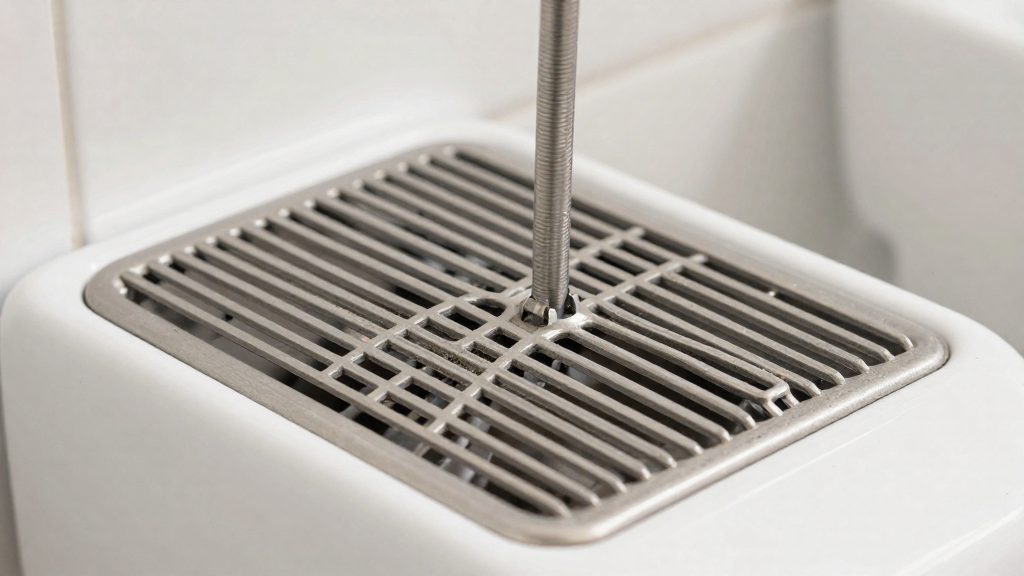
The Lifebreath 95MAX HRV manual sets the cleaning task at once a year. The technician or owner clears the drain line, the spout and the P-trap, which is the curved section that holds a small water seal and stops air from passing through the drain. Because the trap is where debris tends to settle, it should be checked during the same annual pass.
Inspection is more frequent than cleaning. Rise Building (2026-06-18) advises inspecting and clearing the condensate drain and trap every season, with twice a year as the minimum. The seasonal check confirms that water flows freely and that the drain has not partly closed since the last visit.
The exterior hoods, the outdoor openings where air enters and exits the building, need a separate visual check. The Lifebreath manual calls for inspecting them at least monthly, and Rise Building (2026-06-18) gives the same monthly interval. Each check should confirm that the openings are free of leaves, dust, nesting material and other debris, and that nothing has shifted or been damaged. A partly blocked hood reduces airflow even when the internal parts are clean.
| Task | Frequency | Source |
|---|---|---|
| Visual check of exterior hoods | At least monthly | Lifebreath 95MAX manual; Rise Building (2026-06-18) |
| Inspect condensate drain and trap | Every season, twice a year minimum | Rise Building (2026-06-18) |
| Clean drain line, spout and P-trap | Once a year | Lifebreath 95MAX manual |
What should a seasonal maintenance checklist include?
A seasonal checklist for a heat recovery ventilator (HRV) groups the cabinet, ductwork and safety steps into one calendar, so each task runs at a fixed interval instead of only after airflow drops. The Lifebreath 95MAX HRV manual gives the interval for the cabinet and ductwork, and Contracting Business (2004) gives the safety rule that applies to every visit.
Power isolation before any servicing
Power isolation comes first on every visit. According to Contracting Business (2004), power should be cut before servicing. Switch the unit off at its supply and confirm it is isolated before removing any cover or panel. Apply this rule to quick wipes as well as full cleaning, because a brief task still exposes the fan and internal wiring.
Cabinet interior: twice a year
According to the Lifebreath 95MAX HRV manual, the cabinet interior should be wiped twice a year. Open the access panel, then wipe the inner surfaces with a slightly damp cloth and let them dry fully before closing the unit. Dust left inside the cabinet can later move toward the core and filters, so this step keeps the interior from becoming a secondary source of debris.
Ductwork: once a year or as needed
The same manual specifies that ductwork should be wiped and vacuumed once a year, or as needed. Work on the accessible duct sections only, wipe the interior surfaces you can reach, and make sure all duct sections are dry and correctly reconnected before restarting the unit.
Fans: check when airflow changes
Fans are cleaned when dirt causes imbalance, vibration or reduced airflow (see the fan section above).
Consolidated seasonal calendar
| Task | Frequency | Source |
|---|---|---|
| Power isolation | Before every servicing task | Contracting Business (2004) |
| Cabinet interior wipe | Twice a year | Lifebreath 95MAX HRV manual |
| Ductwork wipe and vacuum | Once a year, or as needed | Lifebreath 95MAX HRV manual |
When should you call an HVAC professional?
Owner maintenance covers filters, the core, the fans, the cabinet, the ductwork, the drain and the exterior hoods. Three conditions fall outside that scope and call for a qualified HVAC technician. Once a fault persists after the fans have been cleaned, dirt is no longer the likely cause, and the owner should stop repeating the routine and arrange a diagnosis.
| Condition | Owner action | Call a technician when |
|---|---|---|
| Imbalance or vibration | Clean the fans once, as the manual directs | The problem returns or continues after cleaning |
| Electrical or motor control faults | None beyond observation | The unit runs intermittently, fails to start or its controls respond unpredictably |
| Water or mould in ductwork | Wipe and vacuum accessible ductwork | Moisture or growth appears inside the ducts, or reaches beyond the reachable sections |
Persistent imbalance or vibration
A fan that still vibrates or runs unevenly after cleaning may have a bent blade, a loose mounting, or a wheel that has shifted on its shaft. None of these are resolved by the owner-level cleaning described in the manual. A technician can check the mounting and the fan assembly directly and decide whether the component needs repair or replacement.
Electrical faults and motor controls
A motor or control problem is not a routine task for the owner. Intermittent operation, failure to start, or controls that respond inconsistently point to a fault in wiring, a control board or the motor itself. Opening electrical enclosures and testing live components requires training, so these repairs belong to a qualified professional.
Water or mould inside ductwork
Rise Building (2026-06-18) recommends inspecting and clearing the condensate drain and trap every season, while the Lifebreath manual sets drain cleaning at once a year. If water, staining or mould appears inside the ducts, the source may be condensation, a blocked drain or a leak. Persistent moisture inside the ducts needs professional inspection to locate the origin before cleaning is attempted. The official sources consulted do not specify a threshold for when mould inside ducts requires remediation.
Do humidity and CO2 readings show a maintenance problem?
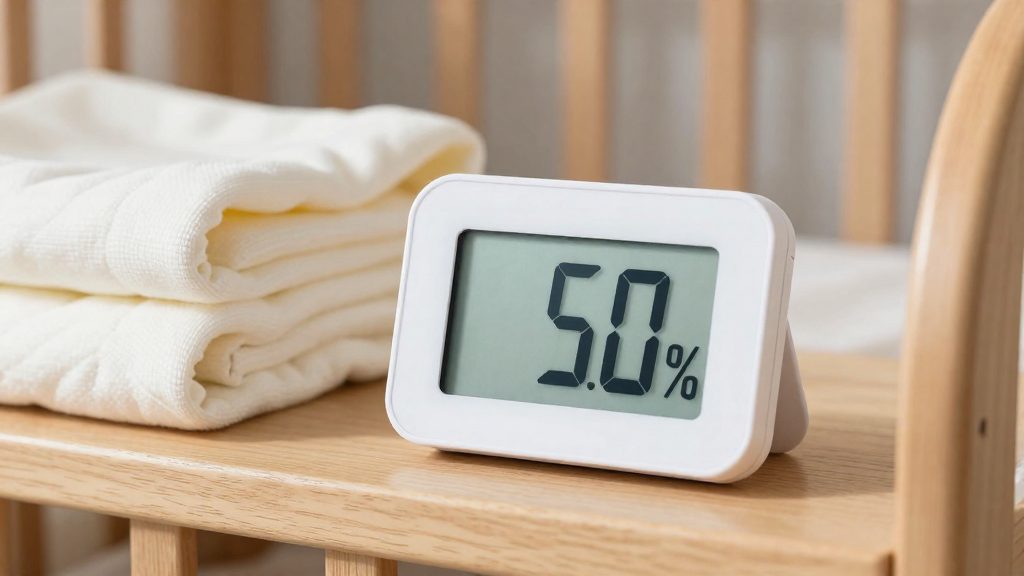
Possibly. Trends in humidity and CO2 from a hygrometer or CO2 sensor can hint at a ventilation fault before visible signs such as condensation on windows or mould appear, but they do not identify the cause on their own. A heat recovery unit that moves less air or drains poorly changes the indoor air balance, and the sensors register that change first. A single reading says little, so the useful signal is the trend over several days.
What rising humidity can indicate
A steady rise in indoor humidity, while outdoor conditions stay similar, points to reduced moisture removal. Two fault areas are common:
- Reduced exchange: less air is extracted, so moisture from cooking, bathing and breathing stays indoors.
- Drainage faults: the condensate drain or trap can block.
What elevated CO2 can indicate
A CO2 rise at constant occupancy suggests the fresh air supply is insufficient. CO2 reflects air exchange rather than moisture, so a CO2 rise with stable humidity points more toward airflow than drainage. The official sources consulted do not specify CO2 thresholds, so judge the trend against your own baseline rather than a fixed value.
Comparing readings before and after maintenance
Record humidity and CO2 in the same rooms, at comparable times and occupancy, for several days before servicing and again afterwards. A flattening or reversing post-service trend suggests the work helped, provided weather and occupancy were comparable. Keep the sensor in the same position throughout, because moving it changes the readings without any change in the unit.
| Reading pattern | Likely fault area |
|---|---|
| Humidity rising while outdoor conditions are unchanged | Possible reduced exchange (for example a blocked hood or dirty fan) |
| Humidity rising, drain not recently cleared | Condensate drain or trap |
| CO2 rising at constant occupancy | Possible reduced airflow (hoods, filters, fans or ducts) |
Frequently asked questions
How often should the filters be checked and replaced?
Rise Building (2026-06-18) advises inspecting filters every 1 to 3 months and cleaning or replacing them at least every 3 to 6 months, sooner in dusty homes or near busy roads. Contracting Business (2004-10-01) gives a different benchmark of quarterly replacement or every 2,000 operating hours, depending on particulate levels and filter type.
Do I need to switch the unit off before cleaning it?
Yes. Contracting Business (2004-10-01) recommends cutting the power supply before any servicing, so the fans and heat exchanger core are stationary while you work.
How can I tell when a fan needs cleaning?
The Lifebreath 95MAX manual says to clean the fans when dirt causes rotor imbalance, vibration or reduced airflow, rather than on a fixed schedule. The same manual describes the motors as maintenance-free, so the cleaning task targets dirt on the fan assembly.