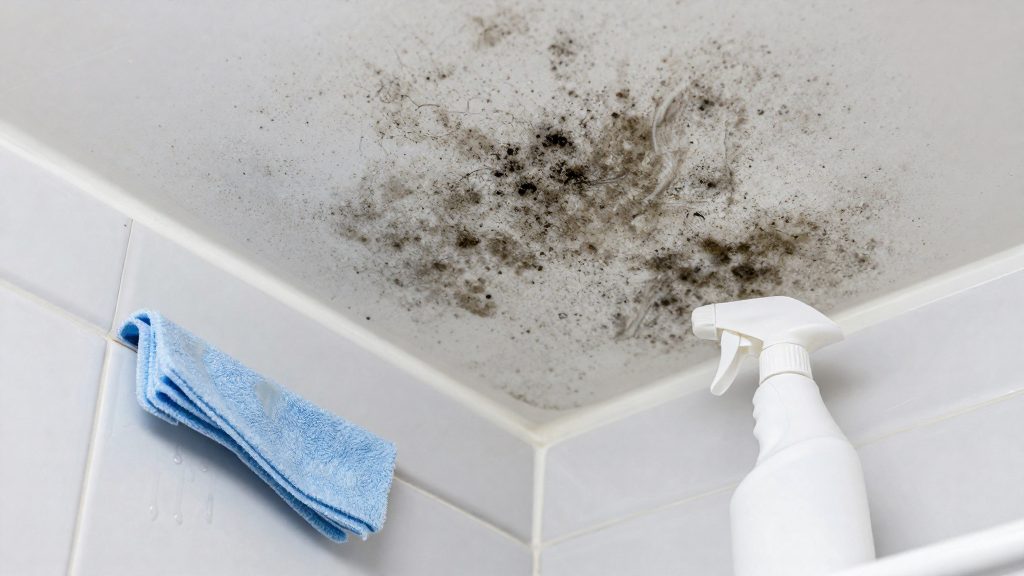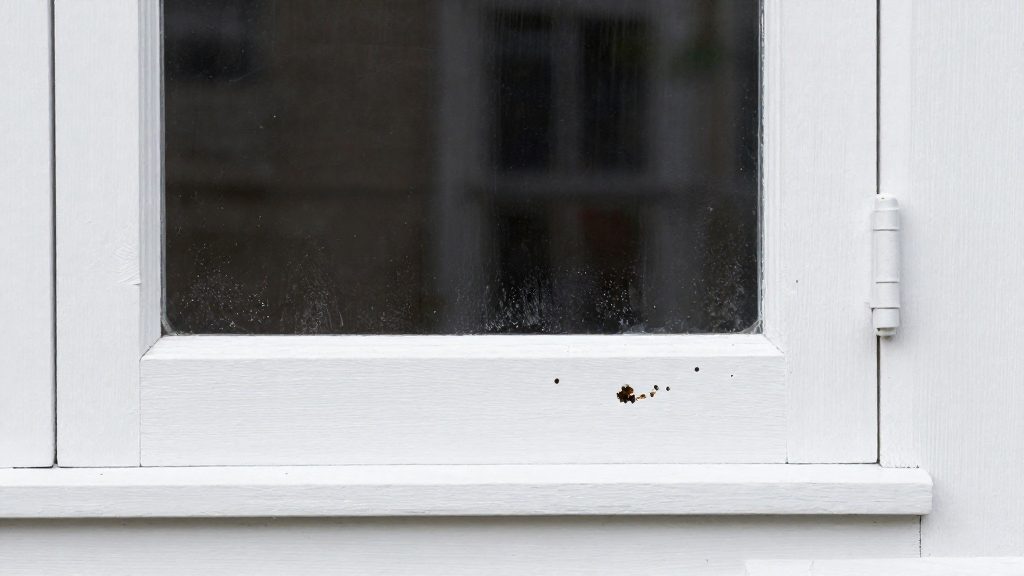
Mold grows on bedroom window sills because its spores are present in nearly every home, and a sill can supply the one condition they lack: sustained moisture on a material they can use as food. Spores need water to germinate, so moisture is the limiting factor. The U.S. EPA (2021) states that controlling indoor mold means controlling moisture, because eliminating all indoor mold is not practical.
Why does mold grow on bedroom window sills?
Spores are always in the air
Spores are microscopic particles that circulate in indoor air and enter through doors, windows, clothing and ventilation. A spore that lands on a dry surface remains dormant. Germination only starts once the surface stays damp for a sustained period, which is why spore presence alone does not explain an outbreak.
Moisture is the limiting factor
Germination and early colony growth depend on water. A sill that dries quickly after a damp episode gives spores too little time to establish. A sill that stays wet, or repeatedly re-wets, lets colonies develop. The practical lever is therefore the duration of dampness, not the number of spores in the room.
Organic dust and paint as nutrient sources
Organic dust is the main food source on a sill. Dust settles on the horizontal ledge and contains organic debris such as skin cells, textile fibres and food particles. Wood, paint films and some surface coatings also contain organic components that mold can digest. Once a film of dust is present on a damp surface, colonies have both water and nutrients.
Surfaces where spores settle and germinate most readily
| Surface feature | Why it favours germination |
|---|---|
| Horizontal sill ledge | Dust and spores accumulate where air movement is low |
| Painted or unsealed wood | Organic components in wood and paint provide nutrients |
| Joints between sill and frame | Water can remain trapped and dry slowly |
| Edges and corners of the sill | Dust collects and moisture pools in small recesses |
How condensation forms on cold glass
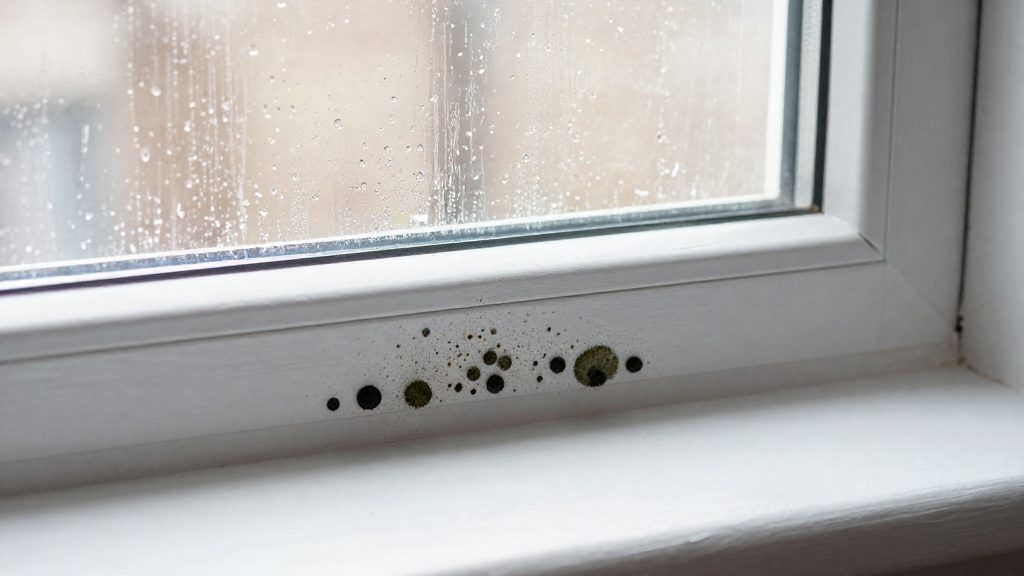
Condensation on a window appears when the glass surface cools below the dew point, the temperature at which the water vapour already in the air turns into liquid. Warm air can hold more water vapour than cold air. For a given amount of vapour in the room air, the dew point is the temperature at which that air becomes saturated, and condensation forms on any surface colder than that temperature. The window does not need to be cold in absolute terms. It only needs to be colder than that dew point, and the air touching it must be humid enough to reach it. According to the U.S. EPA (2025), excess moisture condenses on window glass because the glass is cold.
Why the sill sits near the coldest surface
Window glass, especially single-pane glass, is usually colder on its interior face than the surrounding walls, so the sill next to it shares that low surface temperature. The window sill, which sits directly against that glass and the frame, shares its low surface temperature. Moisture produced in the room, including the water breathed out overnight with the door closed, tends to drift toward these cold points and settle there first.
Factors that lower glass surface temperature
| Factor | Effect on the glass | Result on the sill |
|---|---|---|
| Single-pane glass | One layer offers little resistance to heat loss | Interior surface drops toward the outdoor temperature |
| Worn or failed seals | Gaps let cold outdoor air reach the glass edge and frame | Cold spots form along the perimeter and sill |
| North-facing orientation | Receives little direct sun, so the glass gains less heat | Surface stays cooler for longer periods |
| Heavy drapes | Hold a pocket of cooled air between fabric and glass | Humidity concentrates in a small, cold zone |
Older single-pane windows combine several of these factors. Inspect and Test (2026) identifies old single-pane windows or worn seals, north-facing windows, and heavy drapes trapping a cold, humid pocket as common causes of bedroom sill mold.
How drapes create a cold, humid pocket
Heavy drapes that hang close to the glass can trap a cold, humid pocket of air against the window, according to Inspect and Test (2026). Room air then circulates less across the glass and sill, so moisture is more likely to settle there and keep the sill damp for longer.
Bedroom habits that add moisture
Most of the water vapor in a bedroom comes from the people and activities inside it, and it builds up most overnight, when windows and doors stay closed. According to Inspect and Test (2026), overnight breathing moisture with the door closed is a recognised cause of mold on bedroom window sills. Once the room is sealed, the vapor has nowhere to go, so it settles on the coldest surfaces, which are often the glass and the sill below it.
Overnight breathing and perspiration
A sleeping person releases water vapor through breathing and perspiration for the whole night. With the door shut, that moisture stays in the bedroom instead of spreading through the rest of the home. Leaving the door slightly open, or ventilating the room before bed, lets moist air leave the space and reduces how much accumulates by morning.
Drying laundry indoors
Hanging wet clothes on radiators or across a bedroom releases moisture straight into the room air as the fabric dries. Damp textiles left in place are a problem in their own right. Drying laundry in a ventilated room, or outdoors when weather allows, keeps this moisture load away from the sleeping area.
Showers, cooking and exhaust fans
Hot showers and cooking produce large amounts of steam that spread quickly to adjoining rooms, including bedrooms. U.S. EPA (2025) notes that a tight, energy-efficient house holds more moisture inside, so this vapor is less likely to escape on its own. The agency recommends exhaust fans vented outdoors in bathrooms and kitchens, which removes steam at its source instead of letting it circulate through the home.
What humidity level is safe?
The U.S. EPA advises reducing indoor relative humidity to between 30% and 60% to decrease mold growth, according to U.S. EPA (2021). A reading inside the 30-60% range lowers the risk of growth, but it does not replace keeping surfaces dry.
Treating 60% as a ceiling, not a setpoint
60% is the upper limit of the EPA range, not a target. A room held at 60% has no margin for colder periods or for the moisture added by everyday activity. Aim for a value in the lower part of the band and treat 60% as the level not to exceed.
Lowering humidity in cold weather
Glass temperature falls as outdoor temperatures drop, so a humidity level that causes no problems in mild weather can produce condensation in winter. When outdoor temperatures fall, lower the indoor reading toward the bottom of the 30-60% range, then check the glass for moisture.
| Factor | Effect on moisture | Measure cited by U.S. EPA (2025) |
|---|---|---|
| Cold window glass | Moisture condenses on the interior surface | Storm windows, caulking and insulation warm the surface and reduce condensation |
| Tight, energy-efficient house | Holds more moisture inside | Exhaust fans in bathrooms and kitchens vented outdoors, not into the attic |
| Dehumidifier in use | Reduces indoor moisture | Must be maintained so it does not become a source of biological pollutants |
Responding when moisture reaches a surface
Drying quickly matters more than the exact humidity reading once water has already reached a surface.
How do you stop window sill mold from coming back?
Preventing recurrence means changing the conditions that let moisture collect on the sill. On a bedroom window, the moisture source is usually the cold glass. The fixes below aim either to keep the room-side glass warmer or to replace the parts that let cold air reach the sill.
Warm the interior glass surface
According to U.S. EPA (2025), storm windows, caulking and insulation warm the interior surface and reduce condensation. In practice, these are three separate measures:
- Storm windows: a secondary pane installed over the existing window, which keeps the room-side glass warmer than a single pane alone.
- Caulking: sealing the joints around the frame so that cold outdoor air does not reach the sill area.
- Insulation: insulating the surrounding wall and window reveal so the interior surface stays at a higher temperature.
Replace single-pane glazing and renew worn seals
Bedroom sill mold guidance from Inspect and Test (2026) lists old single-pane windows and worn seals among the common causes. Replacing single-pane units removes the thin, cold glass that condenses most readily. Renewing worn seals addresses the gaps that let cold air reach the frame. Look for cracked or hardened sealant, gaps around the frame, and drafts at the sill edge, then repair or replace the affected seal before the next humid period.
Keep sills clear
Furniture, books, plants, and stored items placed on the sill or pushed against the window block air from moving across the glass. This leaves a pocket of still, moist air against the cold surface. Keep the sill and the wall below it open so air can circulate.
Hygrometers, dehumidifiers and ventilation
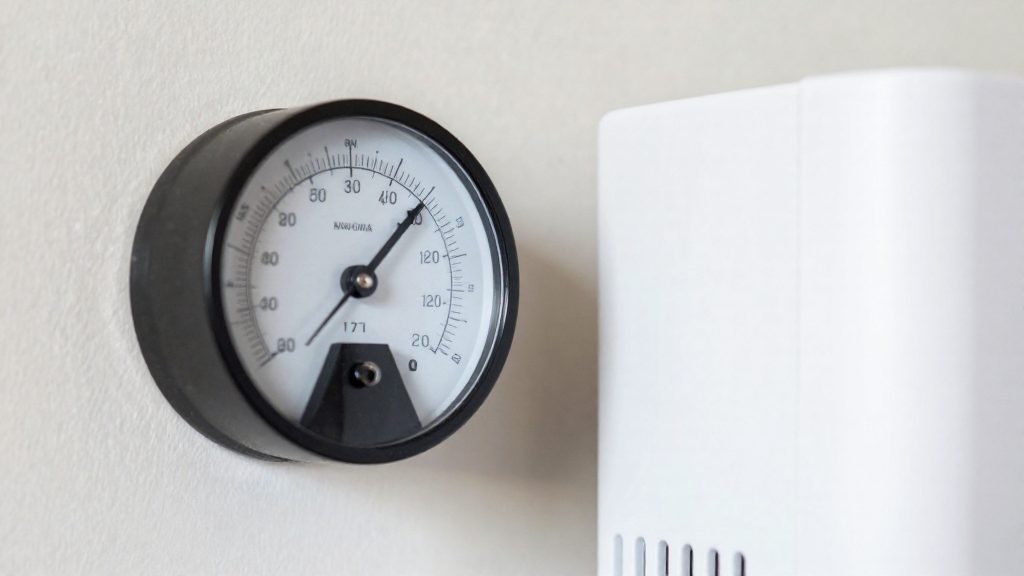
Measuring indoor humidity before adjusting any equipment shows whether a window problem comes from the room air or from a cold surface. The U.S. EPA (2025) recommends using a humidity indicator to measure indoor relative humidity. A hygrometer, a small digital sensor that reports the percentage of moisture in the air, is the usual tool for this. Read it at bed height, away from the window, because a sensor placed next to cold glass gives a distorted reading and does not reflect the room air.
Take readings over several days, including the morning, when condensation is most visible. A reading that stays high overnight, even while the window looks dry, suggests that moisture from breathing and bedding is accumulating in the room. A reading in the 30-60% range while the glass stays wet suggests that the cold window surface is a major factor, which is covered in the section on stopping window sill mold from coming back. One reading does not rule out room humidity, though. Repeat it over several days and in cold weather, and if the glass keeps getting wet, lower the humidity toward the bottom of the range.
Checking the humidistat setting
A humidistat is the control on a dehumidifier or humidifier that switches the unit on and off at a set humidity level. The U.S. EPA (2025) states that a humidistat is set too high if excessive moisture collects on windows and other cold surfaces. If the window is wet and the hygrometer confirms high humidity, lower the setpoint in steps and re-check the glass after each change, rather than changing it in one large move.
Keeping a dehumidifier from adding pollution
The U.S. EPA (2025) notes that dehumidifiers help reduce moisture but must be maintained so they do not become sources of biological pollutants. A unit that is left to run with a full or stagnant water tank, or with a dirty filter, can release microorganisms into the room it is meant to dry. Routine upkeep includes:
- Emptying and rinsing the water tank, and drying it before refitting it
- Cleaning or replacing the air filter as the manufacturer’s manual specifies
- Wiping the internal coil and drain path so that water does not sit in them
- Placing the unit so that its air intake and outlet are not blocked by furniture or drapes
When is mold more than a cleaning job?
Surface cleaning is enough when growth is small, limited to the sill, and the material beneath it is dry. It stops being enough when the wet material cannot dry quickly, when growth spreads beyond the sill, or when it returns after each cleaning. A professional assessment becomes necessary once growth has spread beyond the sill, onto the frame or wall, or when the material stays wet and cannot be dried.
Wet materials that do not dry within 24-48 hours
U.S. EPA (2021) advises that damp or wet materials should be cleaned and dried within 24-48 hours to prevent mold growth. This window is the first threshold. If the sill or adjacent material is still wet after that period, or becomes wet again, the problem is no longer a one-time cleaning task.
Growth spreading into the frame or wall
When growth moves past the sill onto the window frame, the wall below the window, or the material behind the finish, the source is usually not confined to the visible surface. Wiping the sill cannot reach that material. Growth beside or below the window is a clear signal to escalate.
Recurring growth despite cleaning
Regrowth after cleaning means the moisture source has not been corrected. Regrowth after cleaning means the moisture source has not been measured or corrected. Check indoor relative humidity against the 30-60% range. Repeated cleaning without this measurement treats the symptom only.
| Threshold | Observation | Action |
|---|---|---|
| Material stays wet | Wet after 24-48 hours | Dry fully and reassess |
| Spread beyond sill | Growth on frame or wall | Professional assessment |
| Recurring growth | Returns after cleaning | Measure humidity and correct the moisture source |
Frequently asked questions
How do I tell whether room humidity or the cold glass is the real cause?
Place a hygrometer at bed height, away from the glass, because a sensor next to cold glass gives a distorted reading. If the room reads within the 30-60% range while the glass still runs wet, the cold window surface is probably the main factor, so repeat the check over several cold days before ruling out room humidity.
Will a dehumidifier stop sill mold on its own?
A dehumidifier lowers the moisture in the room, which helps keep relative humidity in the 30-60% range, but it does not change the temperature of the glass. The U.S. EPA (2025) notes that dehumidifiers must be maintained, since a neglected unit can itself become a source of biological pollutants.
Can keeping the bedroom door closed at night cause sill mold?
Yes. Inspect and Test (2026) lists overnight breathing moisture with the door closed as a cause of bedroom sill mold. Water vapour released by sleepers stays concentrated in a closed room, so it is more likely to reach the cold glass and settle on the sill.